
Litigation in Generic Markets: How Patent Disputes Delay Affordable Medicines
Dec, 30 2025
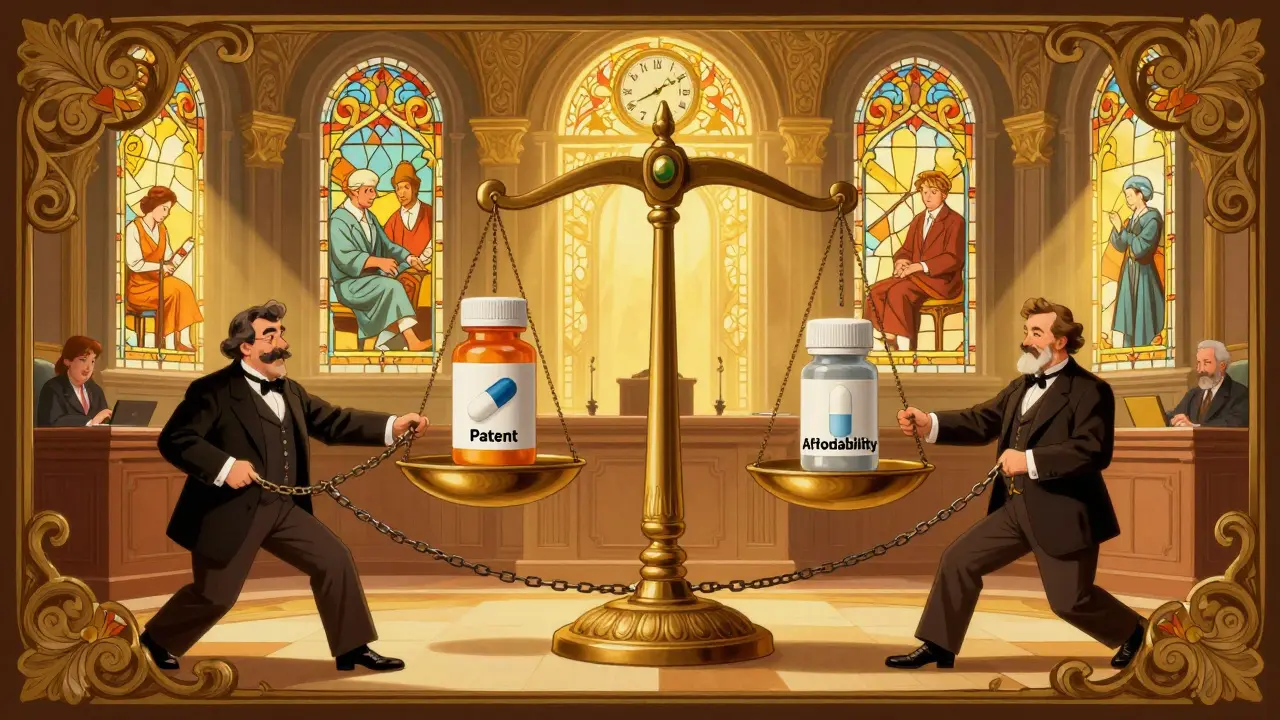
When a brand-name drug’s patent expires, you’d expect cheaper generic versions to hit the market quickly. But in reality, it often takes years longer - not because the science is complicated, but because of legal battles fought in courtrooms and patent offices. This isn’t about innovation. It’s about control. And it’s costing patients billions.
How the System Was Supposed to Work
The Hatch-Waxman Act of 1984 was meant to strike a balance. It gave drug companies a way to extend their patent protection slightly in exchange for creating a fast-track path for generics. Generic manufacturers could file an Abbreviated New Drug Application (ANDA), proving their version was bioequivalent without repeating expensive clinical trials. But there was a catch: if they believed a patent was invalid or not infringed, they could file a Paragraph IV certification. That triggered a 30-month clock. During that time, the FDA couldn’t approve the generic - even if the patent was weak. That 30-month stay was designed as a buffer, not a barrier. But over time, it became a weapon.The Orange Book: A Tool for Delay
The FDA’s Orange Book lists patents tied to brand-name drugs. Only patents covering the active ingredient, formulation, or specific medical use are supposed to be included. But companies have found loopholes. They list patents for inhaler devices, packaging, or manufacturing equipment - things that have nothing to do with the drug itself. In 2025, a federal judge in New Jersey ruled in Teva v. Amneal that six patents on a dose counter for ProAir® HFA were improperly listed. The drug was albuterol sulfate. The counter? Not part of the drug. The ruling was a wake-up call. Experts estimate 15-20% of Orange Book listings now fall into this gray zone - patents that shouldn’t be there. The Association for Accessible Medicines (AAM) found that brand companies are using these weak patents to file serial lawsuits. One drug faced 12 separate patent challenges over seven years. Each lawsuit resets the 30-month stay. The generic? Stuck in limbo.Where the Lawsuits Happen
Not all courts are created equal. The Eastern District of Texas has become the go-to venue for patent lawsuits. In 2024, it handled 38% of all pharmaceutical patent cases - more than double the Western District of Texas and nearly three times the District of Delaware. Why? It’s known for faster trials, juries sympathetic to patent holders, and judges who’ve heard hundreds of these cases. Generic manufacturers hate it. They call it forum shopping. Brand companies love it. It’s a legal advantage they’ve built into their strategy.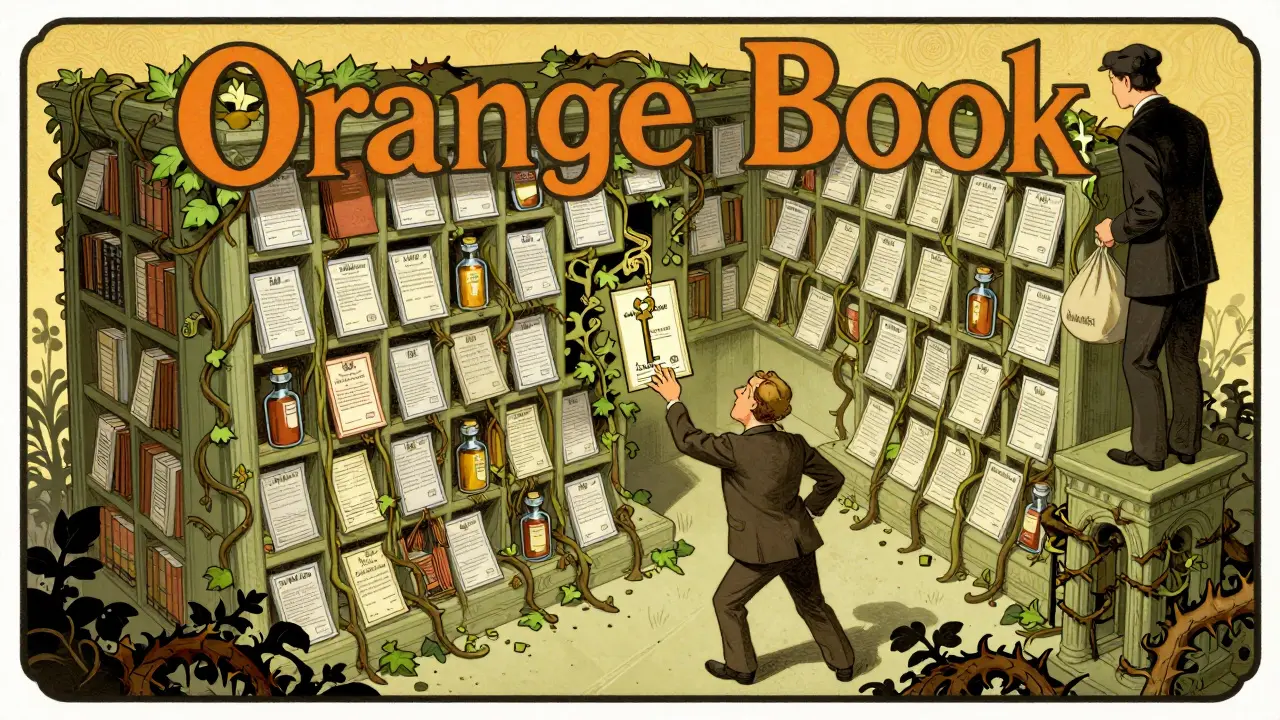
Settlements That Don’t Help Patients
You might think settlements end the fight. But many don’t. Some are called “pay-for-delay” deals. The brand company pays the generic maker to stay out of the market - sometimes for years - even after the patent expires. The FTC has challenged over 300 improper Orange Book listings in 2024 alone. They’ve issued warning letters to seven major drugmakers, including Teva and Amgen, for listing patents that don’t qualify. Their estimate? These practices delay generic entry for about 1,000 drugs every year. That costs the U.S. healthcare system $13.9 billion annually. But here’s the twist. Some studies, including one from IQVIA, say settlements actually speed up generic entry - by more than five years on average. How? Because without the chance to settle, generics might not even file a challenge. Why risk a lawsuit if you can’t win or afford the legal bill? It’s a paradox. Settlements can be bad. But the threat of no settlement might be worse.The Patent Thicket Problem
One drug, Eliquis (apixaban), has 67 patents protecting it. Semaglutide (Ozempic, Wegovy, Rybelsus) has 152. Oncology drugs average 237. That’s not innovation. That’s a patent thicket - a maze of overlapping claims designed to confuse and exhaust generic challengers. Each patent adds another layer of legal cost. Each one can trigger another 30-month delay. The average time from brand approval to first generic entry has doubled since 2005 - from 14 months to 28 months. For cancer drugs, it’s worse. On average, generics wait 5.7 years after the patent expires before they can launch. Law firms like Fish & Richardson and Quinn Emanuel are making bank. Their patent litigation revenue jumped 35-40% in 2024. That’s not a sign of healthy competition. It’s a sign of a system rigged for profit.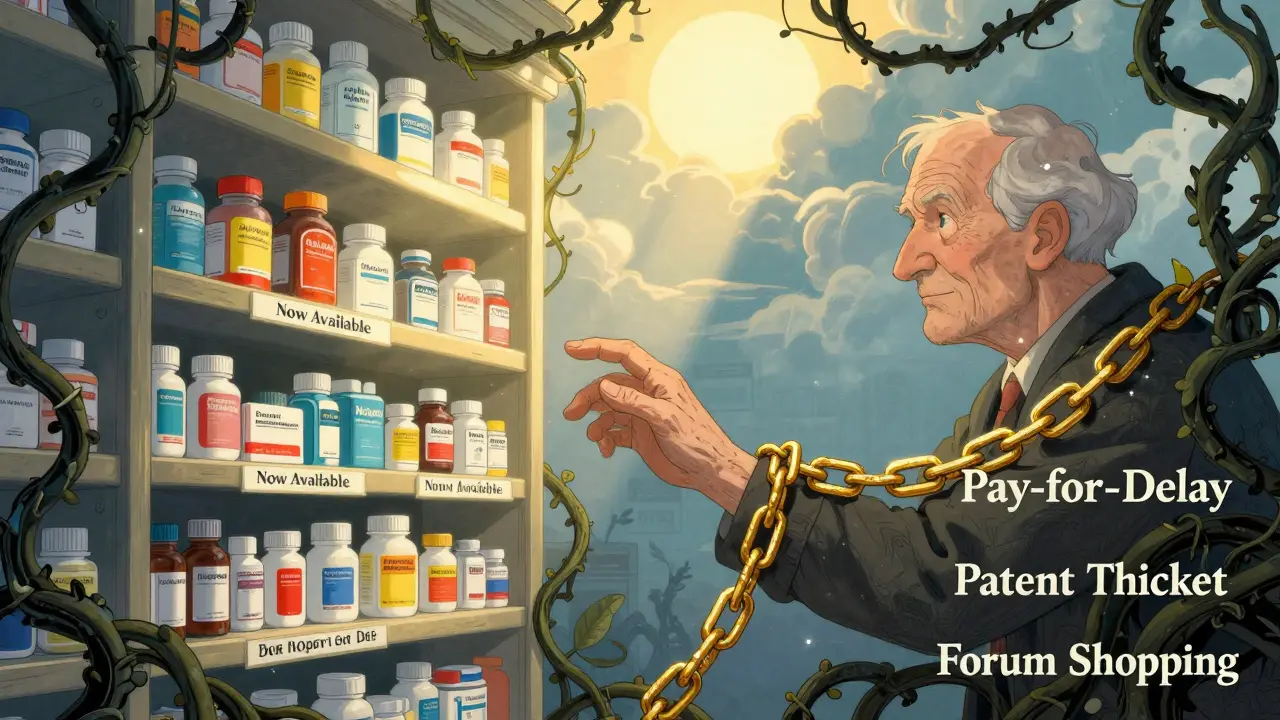
What’s Changing?
The FDA is pushing back. New rules expected in Q2 2026 will require brand companies to certify under penalty of perjury that every patent listed in the Orange Book meets legal standards. That’s a big deal. If they lie, they could face criminal charges. Generic makers are also turning to the Patent Trial and Appeal Board (PTAB). Inter partes reviews (IPRs) let them challenge patents outside of court. IPR filings against pharma patents jumped 47% from 2023 to 2024. But the Supreme Court’s April 2025 ruling in Smith & Nephew v. Arthrex made it harder for generics to file these challenges unless they’re directly affected. That’s a setback. The FTC and DOJ held joint hearings in March 2025. Twelve generic manufacturers testified about how patent listing abuse blocked their products. The message was clear: this isn’t just legal. It’s a public health crisis.Who Pays the Price?
Patients pay. Insurers pay. Taxpayers pay. When a drug stays expensive longer, people skip doses. They ration. They go without. A 65-year-old with high blood pressure shouldn’t have to choose between their medication and their groceries because a company filed a patent on a pill bottle. A child with asthma shouldn’t wait years for a cheaper inhaler because a company listed a patent on a counter that doesn’t affect how the medicine works. The system was built to encourage competition. Now it’s built to delay it. And the longer it goes on, the more people suffer.What Comes Next?
The next few years will be critical. If the FDA’s new certification rule sticks, we could see a wave of patent delistings. If Congress acts to limit serial litigation, the 30-month stay might be capped at one per drug. If courts continue to side with generics on improper listings, the tide could turn. But none of this happens without pressure. Patients need to know: the reason your prescription is still expensive isn’t because it’s hard to make. It’s because someone is fighting to keep it that way.Why do generic drugs take so long to come out after a patent expires?
Generic drugs often face legal delays through serial patent lawsuits. Even after a patent expires, brand companies file new ones - sometimes on unrelated parts like packaging or devices - to trigger a 30-month FDA approval hold. Multiple lawsuits can stretch delays for years, even when the patents are weak or invalid.
What is the Orange Book and why does it matter?
The Orange Book is the FDA’s official list of patents linked to brand-name drugs. Only patents covering the drug’s active ingredient, formulation, or medical use should be included. But many companies list patents for delivery devices, packaging, or manufacturing methods - things that don’t affect the drug’s function. These improper listings are used to block generic competition.
What are pay-for-delay settlements?
Pay-for-delay settlements happen when a brand drug company pays a generic manufacturer to delay launching its cheaper version. Instead of competing, the generic agrees to stay out of the market for years. These deals are illegal under antitrust law, but they’ve been common. The FTC has challenged over 300 such practices since 2020.
Why is the Eastern District of Texas so important in these cases?
The Eastern District of Texas has become the top venue for pharmaceutical patent lawsuits, handling 38% of all cases in 2024. It’s known for fast-tracked trials, juries that favor patent holders, and judges with deep experience in IP law. Generic companies argue this is unfair forum shopping, while brand companies use it to gain legal advantages.
How do patent thickets affect generic drug access?
Patent thickets are dense clusters of overlapping patents - sometimes over 100 per drug - that make it nearly impossible for generics to enter without facing multiple lawsuits. For example, Ozempic has 152 patents. Each one can delay approval. This strategy keeps prices high and limits competition, even after core patents expire.
What’s being done to fix this system?
The FDA plans to require brand companies to certify under penalty of perjury that every patent listed in the Orange Book is legally valid - a rule expected in mid-2026. The FTC is also cracking down, issuing warning letters to companies with improper listings. Generic manufacturers are using PTAB reviews to challenge patents outside court. But without stronger laws, these efforts may not be enough.


