
Prescriber Attitudes Toward NTI Drugs and Substitution Practices

Jan, 29 2026
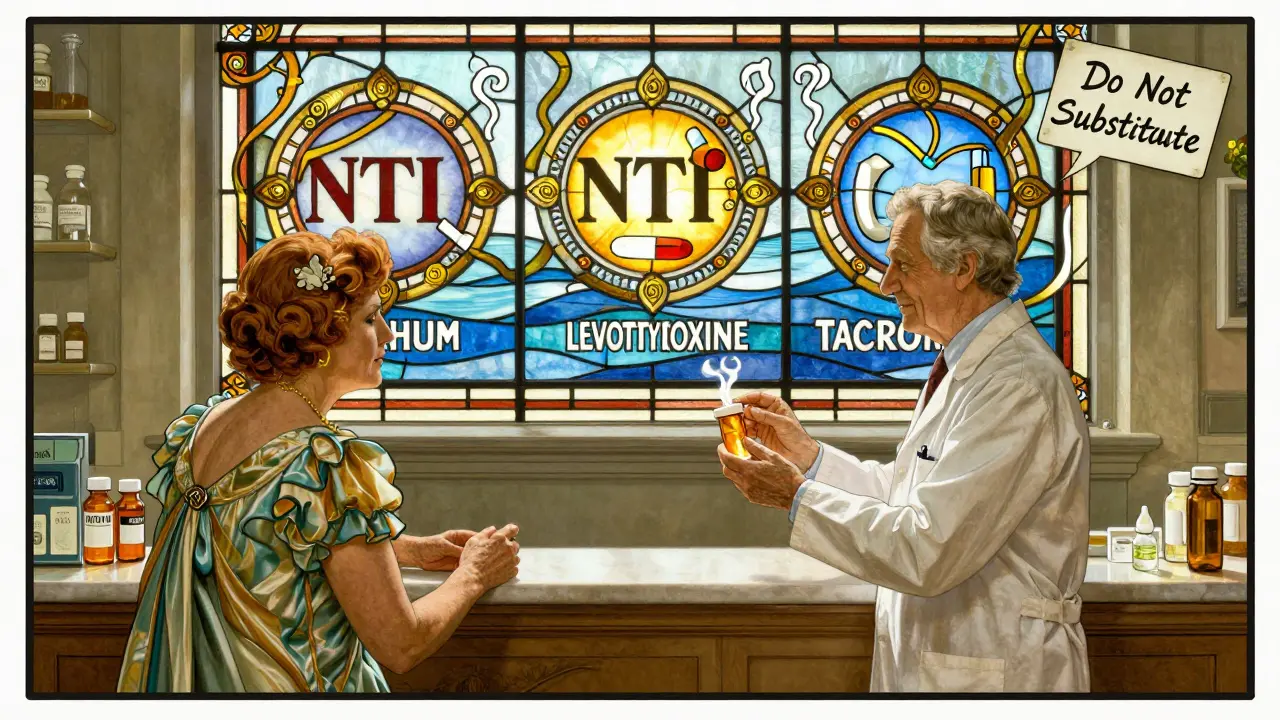
When a doctor writes a prescription for a drug like warfarin, lithium, or levothyroxine, they’re not just picking a medicine-they’re choosing a tightrope walk. These are Narrow Therapeutic Index (NTI) drugs, where a tiny change in dose can mean the difference between healing and hospitalization. Even a 10% shift in blood levels might trigger dangerous side effects or make the drug useless. That’s why, when a pharmacist swaps the brand-name version for a cheaper generic, it’s not just a paperwork change. It’s a clinical decision-and many prescribers are deeply uneasy about it.
What Makes a Drug an NTI Drug?
NTI drugs are defined by a razor-thin margin between the lowest dose that works and the lowest dose that harms. The FDA sets the bar at a ratio of 2:1 or less between the toxic and effective concentrations. That’s far tighter than most medications. For example, amoxicillin? You can take a little more or less and it’s fine. But with warfarin, a blood thinner used after heart attacks or for atrial fibrillation, even a small drop in concentration can lead to a clot. A small spike? Bleeding in the brain.
The FDA doesn’t just label these drugs lightly. In 2019, they tightened the rules for generic versions. Instead of accepting bioequivalence within 80-125% of the brand-name drug (the standard for most generics), NTI generics must now stay within 90-111%. That’s a big deal. It means the generic isn’t just "close enough"-it has to be nearly identical in how the body absorbs and uses it.
But here’s the catch: even with those stricter standards, many doctors still don’t trust the swap. A 2021 survey of 710 pharmacists found that while 94% believed physicians thought generic NTI drugs were just as safe, only 60% of pharmacists actually substituted them for refills. Why? Because once a patient is stable on a brand-name drug, doctors fear rocking the boat.
Why Do Doctors Resist Substitution?
It’s not fear of generics in general. Most doctors have no problem switching to generics for antibiotics, statins, or blood pressure meds. But NTI drugs are different. The stakes are higher, and the consequences of error are severe.
Transplant specialists are among the most cautious. A 1997 survey of 59 transplant pharmacists found that 92% believed bioequivalence testing should happen in actual patients-not healthy volunteers, which is the norm for FDA approval. Why? Because a kidney transplant patient on tacrolimus isn’t a healthy adult. Their metabolism, organ function, and immune response are all altered. A generic that works for a 30-year-old in a clinical trial might not work the same for a 65-year-old with a new transplant.
Neurologists feel the same way about phenytoin, used for seizures. One study showed that 68% of physicians worried about switching patients on phenytoin to generics, fearing seizure breakthroughs. Psychiatrists are wary of lithium, where a small change can cause tremors, confusion, or even kidney damage. And endocrinologists? Levothyroxine is the most substituted NTI drug, yet 25% of patients still get the brand name. Why? Because even slight shifts in thyroid hormone levels can cause weight gain, fatigue, or heart rhythm problems.
It’s not just about science-it’s about trust. Many doctors have seen patients crash after a switch. A 2022 AMA report found that 41% of physicians had patients come in confused or panicked after a generic swap. Some reported increased office visits for blood tests, costing an estimated $127 per incident. That’s not just money-it’s time, stress, and disrupted care.
State Laws and the Patchwork of Rules
The rules around substitution aren’t the same across the U.S. As of 2023, 28 states have specific laws for NTI drugs. Some require the prescriber to write "Do Not Substitute" on the prescription. Others demand that pharmacists notify the doctor before swapping. A handful, like Texas and Florida, keep official lists of NTI drugs and block automatic substitution entirely.
States with "affirmative patient consent" laws-meaning the patient must agree to the switch-saw 23% fewer generic substitutions for NTI drugs, according to a 2022 study. That’s a clear signal: when patients are involved, doctors and pharmacists slow down. They want to be sure.
But not everyone agrees these laws help. The Academy of Managed Care Pharmacy says restricting substitution doesn’t improve safety-it just drives up costs. They argue pharmacists, working with prescribers, should use professional judgment. Meanwhile, the American Society of Health-System Pharmacists says pharmacists should always notify the doctor. In their 2021 survey, 78% of hospital pharmacists said they did exactly that.
So you’ve got a mess of rules. One state lets pharmacists swap freely. Another requires a phone call. A third demands a signed form. For doctors who treat patients across state lines-or for pharmacies that ship meds across borders-it’s a logistical nightmare.
What Do the Experts Really Say?
The FDA insists generic NTI drugs are safe. Their 2020 data showed 98% of generic NTI drugs perform within 3-4% of the brand name. Janet Woodcock, former head of the FDA’s drug center, said they’ve strengthened monitoring and communication with providers. That’s reassuring-on paper.
But real-world data tells another story. The Institute for Safe Medication Practices recorded over 1,200 NTI-related medication errors between 2015 and 2020. Nearly 37% of those involved substitution. And while only 8% led to harm, that’s still hundreds of patients who had to be rushed to the ER, had their blood tested repeatedly, or suffered avoidable complications.
Meanwhile, the American Academy of Neurology, the American College of Clinical Pharmacy, and the American Society of Clinical Oncology all say: proceed with caution. For drugs like levothyroxine, phenytoin, and certain oral cancer drugs, they recommend prescriber involvement before switching. The American Medical Association, however, stands firm: they don’t see a need for stricter rules. They believe most patients can switch safely, especially with therapeutic drug monitoring.
And that’s the core tension: Is it safe enough? Or is it risky enough to justify the extra cost and hassle?
Market Trends and the Cost of Caution
Despite all the debate, the market is slowly shifting. Medicare Part D data from 2022 shows that brand-name NTI drugs still hold 23% of the market-far higher than the 8% for non-NTI drugs. Tacrolimus leads the pack, with 32% of prescriptions still going to the brand. Warfarin? 28%. Levothyroxine? 25%.
Why? Because doctors are still choosing brand. A 2023 survey of internists found that 57% would prescribe the brand name when starting a high-risk patient on an NTI drug. Their top reason? Stability. They don’t want to risk an INR spike, a seizure, or a rejected transplant.
But there’s a financial cost. The Congressional Budget Office estimates that blocking NTI substitution could add $1.2 billion to Medicare spending each year. The generic drug industry argues that if more doctors trusted generics, we could save $127 billion over ten years.
It’s a trade-off: safety versus savings. And right now, many doctors are betting on safety.

What’s Changing? New Data and New Rules
Things are shifting. In March 2023, the FDA added 12 new drugs to the NTI list and removed 3 based on new evidence. That’s not just bureaucratic housekeeping-it’s a sign they’re listening to real-world data.
And the PRESCRIPT-NTI trial, now enrolling 1,200 patients across 42 U.S. sites, is the first large-scale study to track actual clinical outcomes after NTI substitutions. Preliminary results are due in mid-2024. If this trial shows no difference in hospitalizations or lab values between brand and generic, it could change everything.
CMS, the agency that runs Medicare, is also moving. In November 2023, they proposed a rule requiring prescriber notification for every NTI substitution under Medicare Part D. That’s a big step. It means even if a pharmacist can legally swap, they’ll have to tell the doctor first. It’s not a ban-but it’s a pause button.
Industry analysts predict NTI generic use will climb from 62% in 2023 to 78% by 2028. That growth won’t come from fear-it’ll come from better communication. Electronic alerts. Clear labeling. Real-time lab results. Doctors are more likely to accept substitution if they’re not left in the dark.
What Should Prescribers Do?
There’s no one-size-fits-all answer. But here’s what works in practice:
- Label clearly. If you don’t want substitution, write "Do Not Substitute" or "Brand Necessary" on the prescription. It’s simple, legal, and respected.
- Use electronic prescribing. Many EHR systems now flag NTI drugs and let you set substitution preferences. Use them.
- Communicate with pharmacists. Most pharmacists want to help. They’re not trying to cut corners-they’re trying to save money. Give them a way to reach you quickly if they have questions.
- Monitor patients closely. If you do allow a switch, schedule a follow-up blood test within 1-2 weeks. Don’t wait for the patient to come back sick.
- Talk to your patients. Explain why you’re choosing a brand-or why you’re okay with a generic. Patients who understand the risk are less likely to panic if they notice a change in pill shape or color.
The bottom line? NTI drugs aren’t like other medications. They demand more attention, more communication, and more caution. But they don’t demand a blanket refusal of generics. The future lies in smart, informed substitution-not fear, not politics, but evidence and partnership between doctors, pharmacists, and patients.
Are generic NTI drugs really as safe as brand-name ones?
The FDA says yes-98% of generic NTI drugs perform within 3-4% of the brand name based on post-market data. But safety isn’t just about averages. For some patients-especially those with complex conditions like transplants or seizure disorders-even a small variation can cause harm. That’s why many doctors prefer to stick with the brand until more real-world evidence confirms safety across diverse populations.
Can a pharmacist substitute an NTI drug without telling the doctor?
It depends on the state. In 28 states, laws require either prescriber notification, patient consent, or prohibit substitution entirely for certain NTI drugs. In other states, pharmacists can swap without notice-but many do notify anyway. A 2021 survey found 78% of hospital pharmacists always inform the prescriber, even when not legally required.
Why do some doctors still prescribe brand-name NTI drugs?
Stability. Once a patient is doing well on a specific brand, doctors fear that switching-even to an FDA-approved generic-could disrupt their condition. This is especially true for drugs like warfarin, lithium, and tacrolimus, where small changes in blood levels can lead to serious consequences. Many doctors also report increased patient anxiety and follow-up visits after substitutions.
What’s the most common NTI drug that gets substituted?
Levothyroxine is the most commonly substituted NTI drug, yet it still has a 25% brand-name prescription rate. Warfarin and tacrolimus follow closely. Despite widespread generic availability, doctors remain cautious because even minor fluctuations in thyroid hormone or immunosuppressant levels can cause major health issues.
Will NTI drug substitution become more common in the future?
Yes, but slowly. Industry analysts predict generic use for NTI drugs will rise from 62% in 2023 to 78% by 2028. Growth will come not from forced substitution, but from better communication tools-like electronic alerts, standardized labeling, and real-world outcome data from studies like PRESCRIPT-NTI. As doctors see fewer problems after swaps, trust will grow.


