
Alcohol and Sleep Medications: The Hidden Danger of Combined Sedation

Jan, 12 2026
Combining alcohol with sleep medications isn’t just a bad idea-it’s a silent killer. Many people think having a glass of wine to help them unwind before bed is harmless, especially if they’re already taking a pill to fall asleep. But what they don’t realize is that alcohol and sleep meds don’t just add up-they multiply. And that multiplication can shut down your breathing, send you into a coma, or cause you to wake up miles from home with no memory of how you got there.
Why This Combination Is So Dangerous
Both alcohol and prescription sleep medications work by slowing down your central nervous system. They boost the effects of a brain chemical called GABA, which calms neural activity. When you take them together, they don’t just work side by side-they team up. The result? Your brain slows down far more than either substance could on its own. This isn’t a mild increase in drowsiness. It’s a dangerous drop in oxygen levels, a sharp decline in breathing rate, and a high risk of losing consciousness completely.Studies show that even one standard drink-about 14 grams of alcohol, or the amount in a 12-ounce beer-can double the sedative effect of drugs like zolpidem (Ambien). Clinical trials at the University of California San Francisco found that with just 0.02% blood alcohol concentration (BAC)-less than what you’d get from half a drink-zolpidem’s half-life jumped from 2.5 hours to over 6 hours. That means the drug stays in your system longer, and its effects grow stronger, not weaker.
When combined with eszopiclone (Lunesta) and a BAC of 0.08% (the legal driving limit), breathing rates dropped from 16 breaths per minute to just 9.3. Oxygen saturation fell to 84.7%, a level that can cause brain damage if sustained. These aren’t rare cases. They’re repeatable, measurable, and predictable outcomes.
Which Sleep Medications Are Most Dangerous?
Not all sleep aids are created equal when mixed with alcohol. The biggest risks come from three categories:- Z-drugs (zolpidem/Ambien, eszopiclone/Lunesta, zaleplon/Sonata): These are the most dangerous. They act fast, bind tightly to specific brain receptors, and dramatically amplify alcohol’s effects. Ambien-alcohol combinations account for 63% of all emergency visits related to sleep med interactions, even though they’re only 38% of prescriptions.
- Benzodiazepines (lorazepam/Ativan, clonazepam/Klonopin, temazepam/Restoril): These are older but still widely prescribed. They’re slightly less risky than Z-drugs, but still cause 1.9 times more driving impairment than alcohol alone.
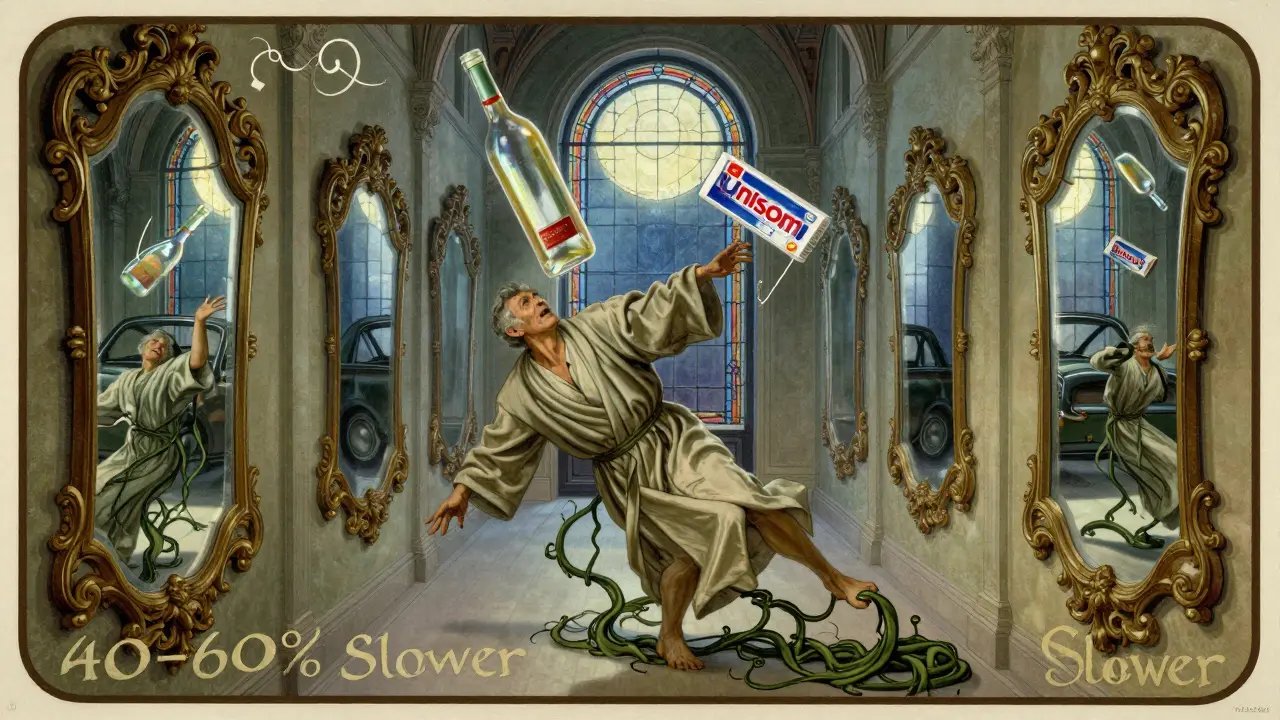
- OTC antihistamines (diphenhydramine in ZzzQuil, doxylamine in Unisom): These are often seen as “safe” because they’re over-the-counter. But they’re especially deadly for older adults. Mixing them with alcohol increases fall risk by 300% in people over 65. Emergency room visits for hip fractures from this combo rose from 12.7 to 51.3 per 100,000 people in just four years.
Even melatonin-a supplement many consider harmless-can make next-day drowsiness 35% worse when mixed with alcohol. It’s not life-threatening like the others, but it still impairs judgment and coordination.
Real People, Real Consequences
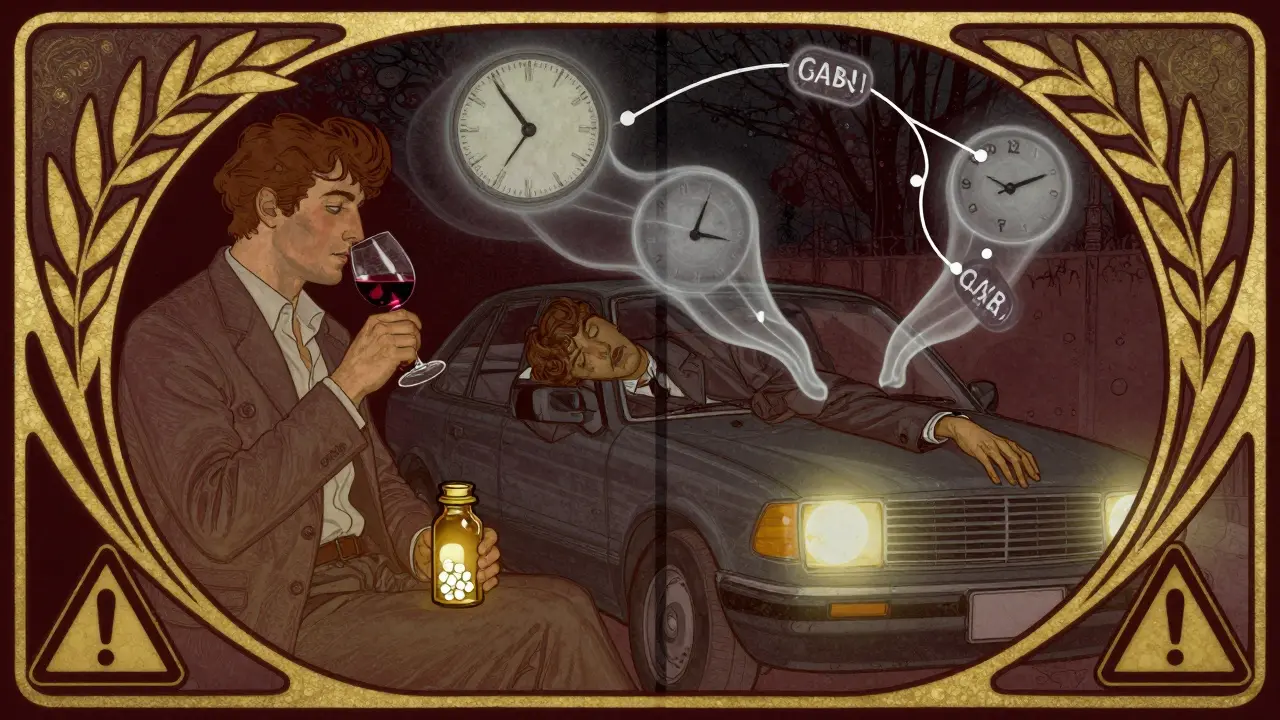
Behind the statistics are real stories. On Reddit, hundreds of users share terrifying experiences: waking up in strange places, driving while asleep, or not remembering entire nights. One user, u/SleepWalker99, described driving two miles after taking half an Ambien with two glasses of wine-then waking up with no memory of the drive. That’s not a myth. It’s a documented side effect called “complex sleep behavior,” which jumps from 0.15% with Z-drugs alone to 2.4% when alcohol is involved.The FDA received over 1,800 consumer complaints in 2021 alone about alcohol-sleep med interactions. Nearly two-thirds of those people reported “no memory of events.” Almost a third needed emergency care. On Drugs.com, Ambien has a 1.8 out of 5 safety rating when combined with alcohol. The most common complaint? “Extreme drowsiness lasting 12+ hours.” For Lunesta, it’s “confusion and memory loss.”
Older adults are hit hardest. In AARP forums, 73% of posts from people over 65 describe severe disorientation, hospitalization, or delirium after mixing even small amounts of alcohol with OTC sleep aids. Why? Because as we age, our liver processes alcohol and sedatives 40-60% slower. That means the drugs stay in the body longer, and the risk skyrockets.
What the Experts Say
The medical community is unified: this combo is unacceptable. The FDA added a Black Box Warning to all Z-drugs in 2022-the strongest warning possible-stating that combining them with alcohol is contraindicated. That means doctors should never prescribe them together.Dr. Bankole Johnson from the University of Maryland studied 372 fatal cases between 2015 and 2020. The median blood alcohol level in those deaths? 0.051%. That’s below the legal driving limit. People weren’t drunk. They were just having a glass of wine. And it was enough to kill them.
Dr. Lorenzo Cohen of MD Anderson Cancer Center called it “medical negligence” to not warn patients. The American Academy of Sleep Medicine says even one drink with a Z-drug can trigger sleepwalking, sleep-driving, or other unconscious behaviors. And these aren’t isolated incidents. They’re a direct result of the drug’s chemistry.
How to Stay Safe
If you’re taking any prescription sleep medication, here’s what you need to do:- Don’t drink at all. No exceptions. Not one glass. Not one beer. Not one sip.
- Wait at least 6 hours after drinking before taking a Z-drug. For benzodiazepines, wait 12 hours. Pharmacokinetic models from the University of Pittsburgh show this is the minimum time needed for alcohol to clear enough to reduce-but not eliminate-risk.
- For adults over 65: avoid alcohol completely if you’re on any sleep aid. Your body processes both substances slower. The margin for error is zero.
- Ask your pharmacist. Since 2022, U.S. pharmacies are required to give a MedGuide with every sleep med prescription. They’re supposed to verbally warn you about alcohol. If they don’t, ask. 68% of patients say they weren’t warned properly.
- Consider alternatives. Newer drugs like lemborexant (Dayvigo) show only a 15% increase in half-life when mixed with alcohol-far less than the 150-200% rise seen with Ambien or Lunesta. Non-GABA treatments are now in development, aiming to treat insomnia without sedating the brain.
The Bigger Picture
This isn’t just about one bad habit. It’s a public health crisis. Alcohol-sedative combinations now cause 18% of all prescription drug overdose deaths-up from 9% in 2015. In 2022, 58.7 million Z-drug prescriptions were filled in the U.S. That’s more than ever before. And while doctors are getting better at warning patients, many still don’t. A 2022 survey found that 68% of patients said they received “inadequate counseling” about alcohol risks.The FDA responded by requiring all new patient guides to include the phrase “Do not consume alcohol while taking this medication” in 14-point bold font. That’s because previous warnings were ignored by 63% of users in a Johns Hopkins study.
Research is moving toward safer options. The NIH just launched a $4.7 million project to find biomarkers that can predict who’s most at risk. Meanwhile, seven of the 12 sleep medications currently in clinical trials use non-sedative mechanisms-targeting brain systems that regulate sleep without depressing breathing or consciousness.
But until those new drugs are widely available, the safest choice is simple: don’t mix them. Your life depends on it.
Can I have one drink if I take my sleep medication at night?
No. Even one drink can dangerously amplify the effects of sleep medications like Ambien or Lunesta. Alcohol slows how your body breaks down these drugs, causing them to build up and depress your breathing more than intended. The risk of overdose, memory loss, or sleep-driving is real-even at low alcohol levels below the legal driving limit.
Is it safe to drink alcohol the next morning after taking a sleep med?
It’s not safe. Sleep medications like zolpidem can stay in your system for 8-12 hours, and sometimes longer depending on your age, liver function, or other medications. Even if you feel fine, your coordination, reaction time, and judgment may still be impaired. The safest rule is to avoid alcohol entirely while taking any sleep aid.
What about melatonin? Is it safer with alcohol?
Melatonin doesn’t cause the same dangerous CNS depression as prescription sleep meds, so it’s not life-threatening when mixed with alcohol. But it still increases next-day drowsiness by 35%, which can affect your ability to drive or operate machinery. It’s not a free pass-just less risky.
Why are older adults at higher risk?
As we age, our liver processes alcohol and sedatives 40-60% slower. This means both substances linger longer in the body, creating prolonged and intensified sedation. Older adults are also more likely to have other health conditions or take multiple medications that worsen the interaction. The result? Higher rates of falls, confusion, hospitalization, and death.
What should I do if I’ve already mixed alcohol with a sleep med?
If you’ve taken alcohol with a sleep medication and feel extremely drowsy, confused, have trouble breathing, or can’t stay awake, seek emergency help immediately. Don’t wait. Call 911 or go to the nearest ER. If you’re just feeling unusually sleepy, stay in bed, avoid driving or operating machinery, and do not take any more alcohol or medication until you’re fully alert.
Are there any sleep aids that are safe with alcohol?
No prescription sleep aid is considered safe with alcohol. Even newer drugs like Dayvigo (lemborexant), which have a lower interaction risk, still carry warnings. The only truly safe approach is to avoid alcohol completely while using any medication designed to induce sleep.


