
Citrus Fruits Beyond Grapefruit: Pomelo and Seville Orange Effects on Drugs

Mar, 9 2026
Medication-Citrus Interaction Checker
Check Your Medication
Enter your prescription medication name to see if it interacts with pomelo or Seville orange. This tool covers 107 medications known to interact with these citrus fruits.
Most people know grapefruit can mess with their meds. But what about pomelo or Seville orange? These fruits aren’t just exotic alternatives-they’re just as dangerous, and in some cases, even riskier. If you’re on statins, blood pressure meds, or immunosuppressants, eating one of these without knowing the risk could land you in the hospital.
Why These Fruits Are More Dangerous Than You Think
Pomelo and Seville orange aren’t just bigger or tangier versions of grapefruit. They contain higher levels of furanocoumarins-the chemicals that shut down your body’s ability to break down certain drugs. Think of your liver and gut as a factory that processes medicine. Furanocoumarins in these fruits jam the machinery. The result? Too much drug in your bloodstream, and not enough getting cleared out.
Studies show pomelo has 1.5-2.5 μM of bergamottin, compared to grapefruit’s 1.0-2.0 μM. Seville orange? Some varieties hit 3.0-4.0 μM. That’s up to 30% more than grapefruit. These numbers aren’t theoretical. A 2018 study in the British Journal of Clinical Pharmacology found pomelo juice boosted simvastatin levels by 350%-more than grapefruit’s 300%. And when a transplant patient ate Seville orange marmalade daily? Their tacrolimus levels spiked 400%, nearly causing organ rejection.
How the Interaction Actually Works
It’s not just one enzyme. Two major systems get blocked:
- CYP3A4: This liver and gut enzyme handles about half of all prescription drugs. Furanocoumarins bind to it permanently. Once blocked, it takes up to 72 hours for your body to make new enzyme. That means even if you eat the fruit the night before, your meds the next morning could still be affected.
- OATP transporters: These are the gatekeepers that let drugs into your gut cells. Naringin, a flavonoid in pomelo, blocks these too. And yes-pomelo has 20% more naringin than grapefruit.
So even a small glass of juice-200 mL-or a spoonful of marmalade can trigger this. No amount is "safe" if you’re on a sensitive medication. Unlike caffeine or alcohol, this isn’t about quantity over time. It’s about irreversible damage to your body’s drug-processing system.
Which Medications Are at Risk?
Not all drugs are affected. But if you take any of these, you need to stop eating pomelo or Seville orange immediately:
- Statins (simvastatin, atorvastatin, lovastatin): Risk of rhabdomyolysis-a life-threatening muscle breakdown. One Reddit user reported a patient developed this after eating pomelo daily for two weeks. Nobody warned them.
- Calcium channel blockers (amlodipine, felodipine): Can cause dangerous drops in blood pressure, dizziness, fainting.
- Immunosuppressants (tacrolimus, cyclosporine): For transplant patients, even small increases can lead to kidney damage or rejection.
- Benzodiazepines (midazolam, triazolam): Increased sedation, risk of respiratory depression.
- Anti-arrhythmics (amiodarone): Can trigger irregular heart rhythms.
Drugs like metformin, ibuprofen, or sertraline? No problem. They’re processed by different pathways. But if you’re unsure, assume the worst. Ask your pharmacist. Don’t guess.

Why Nobody Warns You
Here’s the scary part: only 37% of pomelo and Seville orange products carry any warning labels. Compare that to 78% for grapefruit. Why? Because these fruits are less common in the U.S. and Europe. They’re often sold in ethnic markets, labeled as "Chinese grapefruit" or "large citrus," and nobody connects the dots.
A 2022 FDA review found that 68% of patients who had adverse reactions said they were never warned by their doctor or pharmacist. Pharmacists? Only 42% routinely screen for these interactions. Most still ask, "Do you eat grapefruit?" and stop there.
And marmalade? That’s the silent killer. Seville orange peel is packed with furanocoumarins. People think it’s just "jam." They spread it on toast like strawberry. No one tells them it’s essentially a concentrated drug-interaction bomb.
Real Stories, Real Consequences
One patient in Australia, on simvastatin, ate pomelo every morning for weeks. She woke up with severe muscle pain, dark urine, and kidney failure. Her creatine kinase levels were off the charts. She didn’t know pomelo was a risk. Her pharmacist didn’t ask.
A transplant patient in Spain was hospitalized after eating Seville orange marmalade daily for six months. Her tacrolimus levels were 3.5 times higher than safe. She almost lost her new kidney. The doctors only figured it out after reviewing her diet-she’d been eating it since childhood.
On the flip side, a Mayo Clinic survey found 82% of patients who switched to sweet oranges (no furanocoumarins) had zero issues. Simple fix. But you have to know to do it.
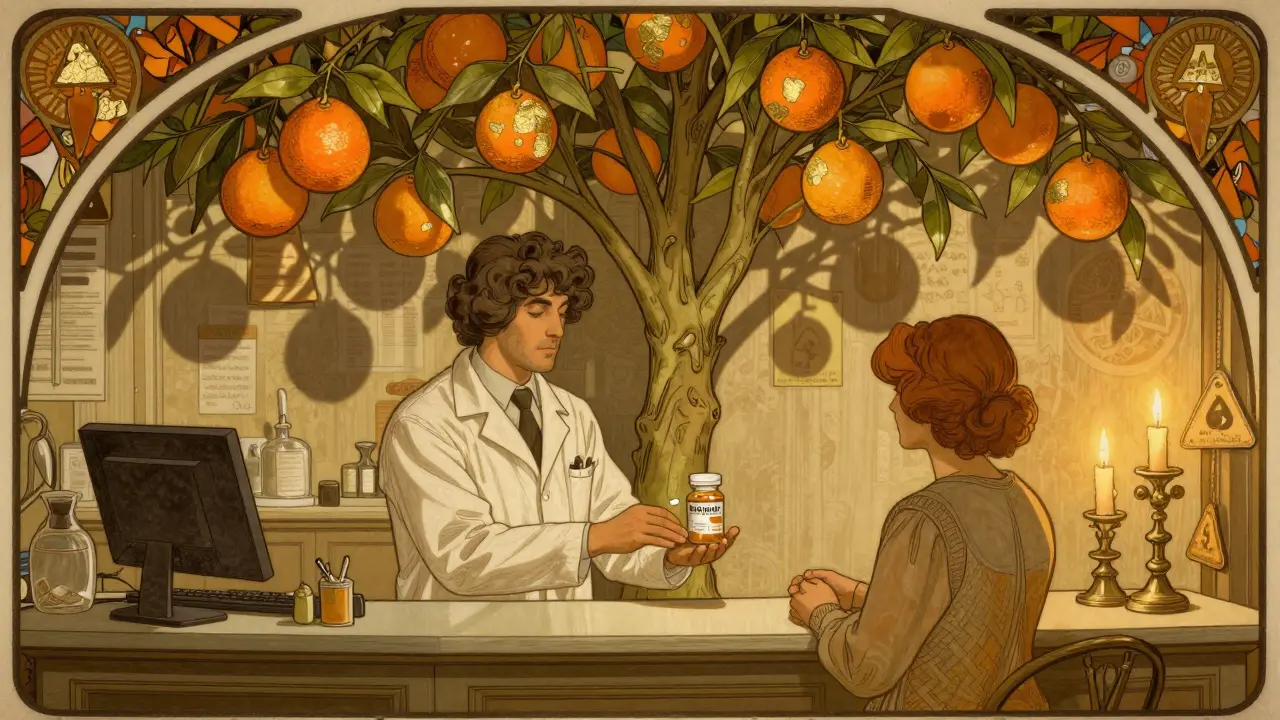
What You Should Do Right Now
If you’re on medication:
- Check your pills. Look up your drug on the University of Florida’s Drug Interaction Database. It lists 107 medications affected by pomelo and Seville orange.
- Ask your pharmacist. Don’t wait for them to ask you. Say: "Do any of my meds interact with pomelo or bitter orange?"
- Read labels. If you see "Seville orange," "bitter orange," or "Chinese grapefruit," avoid it. Even if it’s labeled "100% natural" or "organic."
- Switch to sweet oranges or tangerines. They’re safe. No furanocoumarins. No risk.
- Wait 72 hours. If you accidentally ate one, wait three full days before taking your next dose of a risky medication. Don’t just skip a day. Wait 72 hours.
What’s Changing in the Future
The FDA is pushing to expand warning labels to include all furanocoumarin-containing citrus fruits by Q2 2025. The European Union already requires it in 17 countries. And the NIH just funded a $2.1 million study to map exactly how pomelo affects drug metabolism.
But here’s the catch: climate change is altering the chemical makeup of citrus fruits. A 2022 study in Nature Food found furanocoumarin levels could swing up to 25% by 2040 depending on heat and rainfall. So even if you’ve been fine eating pomelo for years, it might not be safe next season.
The biggest threat isn’t ignorance. It’s complacency. People think, "I’ve eaten this for years. Nothing happened." But drug interactions aren’t always immediate. They build up. One bad day. One high dose. One forgotten warning. And suddenly, it’s too late.
Can I eat pomelo if I take a low dose of my medication?
No. The interaction isn’t about dose-it’s about enzyme inhibition. Even a small amount of pomelo or Seville orange can block CYP3A4 permanently for up to 72 hours. Low-dose statins or blood pressure meds are just as vulnerable. There’s no safe threshold.
Is fresh pomelo worse than juice?
Juice is more concentrated, but the peel and pith of fresh pomelo contain the highest levels of furanocoumarins. Eating the whole fruit can be just as risky as drinking juice-sometimes more. Avoid all forms: segments, juice, zest, and marmalade.
What about orange juice? Is it safe?
Sweet orange juice (Citrus sinensis) is safe. It has almost no furanocoumarins. But don’t assume all orange juice is the same. Some "premium" or "artisan" blends use Seville orange for flavor. Always check the ingredient list. If it says "bitter orange," "Citrus aurantium," or "Seville orange," avoid it.
I ate pomelo yesterday. Can I take my medication today?
No. The enzyme inhibition lasts up to 72 hours. Even if you only had a few segments, your CYP3A4 is still blocked. Wait three full days. If you’re unsure, call your pharmacist. Don’t risk it.
Do supplements with bitter orange pose the same risk?
Yes. Many weight-loss or energy supplements contain bitter orange extract (synephrine), which often includes furanocoumarins. These aren’t regulated like food, so the concentration can be unpredictable. Avoid all supplements with "Citrus aurantium," "bitter orange," or "Seville orange" if you’re on interacting medications.
Final Advice
If you’re on medication, treat pomelo and Seville orange like grapefruit. Worse, even. They’re less known, less labeled, and sometimes more potent. Your pharmacist isn’t going to ask. Your doctor might not know. You have to be your own advocate. Ask. Check. Confirm. And if you’re not sure-skip it. There are plenty of safe citrus fruits out there. You don’t need to risk your health for a taste.


