
Future of Digital Pharmacy: Predictions for Generic Medication Delivery
Mar, 18 2026
By 2026, if you need your blood pressure pills, cholesterol meds, or diabetes drugs, you might not step into a pharmacy at all. The future of generic medication delivery is already here - and it’s faster, cheaper, and more automated than most people realize. But it’s not perfect. Behind the sleek apps and same-day deliveries are hidden risks, regulatory patchworks, and tech gaps that still leave millions behind.
How Digital Pharmacy Changed Everything
Before 2020, filling a prescription meant driving to the pharmacy, waiting in line, and hoping your insurance didn’t suddenly deny coverage. Now, millions do it in under five minutes via an app. The shift didn’t happen overnight. It started with basic online refills in the early 2000s, but the real leap came during the pandemic. Telepharmacy usage jumped 212% between March 2020 and December 2021, according to the American Pharmacists Association. People didn’t just want convenience - they needed access.
Today, digital pharmacies handle over 31% of all generic medication prescriptions in the U.S., up from just 19% in 2022. That’s billions of pills moving through cloud-based systems, not brick-and-mortar shelves. Why? Because generics make up 90% of all prescriptions filled, and they’re the easiest to automate. No need for complex counseling on drug interactions when you’re refilling metformin or lisinopril for the 12th time.
How It Works: The Tech Behind the Delivery
Modern digital pharmacy platforms don’t just ship pills. They connect your doctor’s electronic health record (EHR) directly to a fulfillment center. When your clinician prescribes a generic, the system auto-checks your insurance, confirms stock, and routes the order to the nearest warehouse. Some platforms, like Truepill, process over 10,000 prescriptions daily. Their AI predicts demand with 89.7% accuracy - factoring in local flu outbreaks, seasonal allergies, and even weather patterns that affect chronic conditions.
Here’s what’s inside the system:
- AI-driven inventory: Algorithms track which generics are running low in each region and auto-order before stocks dip.
- Same-day delivery networks: Partnered logistics hubs in major metro areas cut fulfillment time from 48 hours to just 5.2 hours, per CVS Health’s 2024 report.
- Secure cloud infrastructure: All data is encrypted with AES-256 and HIPAA-compliant. No paper files. No lost scripts.
- Mobile apps: Compatible with iOS 15+ and Android 10+, letting users upload insurance cards, track shipments, and request refills with a photo of their old bottle.
Even smart pill dispensers are now part of the loop. These devices sync with apps to remind you to take your meds - and automatically report back if you skip doses. Studies show this boosts adherence by 28% for people on long-term therapies.
Why It’s Cheaper - And How Much You Save
Generic drugs cost 80-85% less than brand-name versions. Digital delivery cuts even more.
According to GoodRx’s 2024 Price Transparency Report, buying generics through digital platforms saves an average of 22.7% compared to local pharmacies. Why? No rent, no staff on-site, no cash registers. One user in rural Nebraska told Reddit they saved $83 a month switching to a digital pharmacy for their hypertension meds. That’s $1,000 a year.
For people in “pharmacy deserts” - areas where no pharmacy exists within 10 miles - the savings are life-changing. The National Rural Health Association estimates 36.7 million Americans live in these zones. Digital delivery isn’t just convenient here - it’s essential. A 2024 study found patients in these areas saved an average of $17.30 per prescription just by avoiding the drive.
The Dark Side: Where the System Fails
It’s not all smooth sailing. Digital pharmacy has serious blind spots.
First, insurance chaos. Over 41% of negative reviews on Trustpilot mention “insurance coordination issues.” You might think your plan covers a generic, but the system auto-substitutes a different version your insurer doesn’t recognize. One user on Reddit had their blood pressure med switched to a cheaper generic their plan didn’t cover - and got billed $300.
Second, complexity. Digital platforms handle single-drug regimens with 94.2% accuracy. But when you’re on five medications? Error rates jump to 8.7%. A JAMA Internal Medicine study found that 217 patients received incorrect levothyroxine doses because AI misread the strength during substitution. That’s not a glitch - it’s a safety risk.
Third, the elderly. Only 22.7% of people over 65 use digital pharmacy services, per AARP’s 2024 report. Many struggle with app navigation. One 72-year-old in Ohio told her pharmacist, “I can’t take a picture of my pill to order it. I don’t even know what ‘upload’ means.”
And then there’s oversight. Dr. Michael Cohen of the Institute for Safe Medication Practices warns: “Automation without human review is a recipe for therapeutic substitution errors.” Pharmacists used to double-check every generic swap. Now, AI makes the call - and 17.3% of surveyed pharmacists say they’re uneasy about it.
Who’s Winning the Market
The digital pharmacy space isn’t one player - it’s a battleground.
- CVS Health: Holds 28.4% market share. Their SmartDUR™ system, launching in late 2024, uses AI to assess therapeutic equivalence between generics - a first in the industry.
- Amazon Pharmacy: At 19.7%, they’re growing fast, thanks to Prime delivery and bulk pricing.
- Ro and Honeybee Health: Pure-play digital startups at 14.3% combined. They focus on chronic care and subscription models.
- Blink Health: Known for radical price transparency - they show you the exact cost before you click “buy.”
Health systems are catching up too. 83% of U.S. hospitals now offer integrated digital pharmacy services. But only 41% have fully connected their AI substitution tools to clinical workflows. That gap matters.
What’s Coming by 2026
The next two years will reshape how generics are chosen - not just delivered.
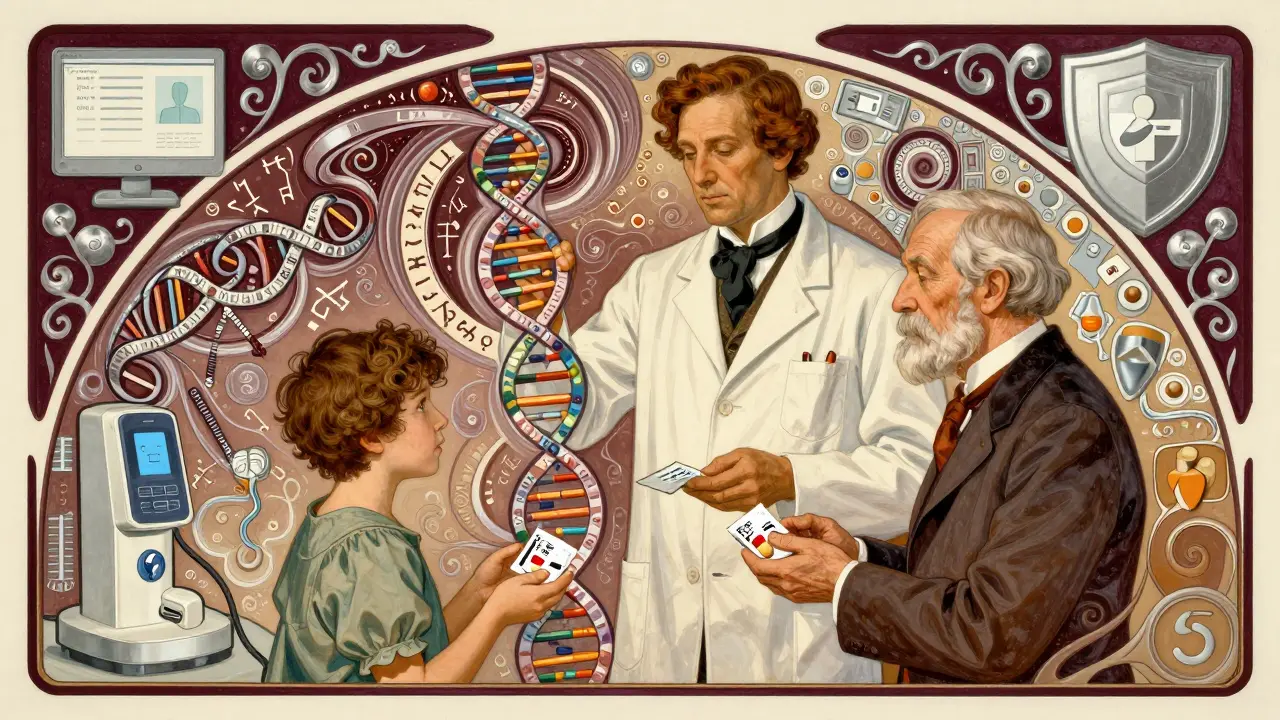
- Pharmacogenomics: By 2026, 74% of digital platforms will use your DNA data (with consent) to pick the best generic version for your body. Some people metabolize drugs faster - a generic that works for others might not work for you.
- AI Prior Authorization: Right now, getting approval for a generic can take 72 hours. By 2025, AI will handle over half of these requests, cutting it to under 4 hours.
- Regulatory clarity: 17 states have passed laws on digital generic substitution. More are coming. The FDA’s 2023 Digital Health Innovation Plan is setting national standards for accuracy and transparency.
- Pharmacist training: The University of Florida is making AI literacy mandatory for all pharmacy students starting fall 2024. Future pharmacists won’t just dispense pills - they’ll audit algorithms.
But the biggest change? You won’t just get your meds - you’ll get personalized care. Your app might say: “Your last refill was 12 days ago. Your A1C rose 0.3%. Should we adjust your metformin?” That’s not automation. That’s care.
What You Should Do Now
If you’re using digital pharmacy services:
- Check your substitution: Always review the name and dose of the generic before confirming. Don’t assume it’s the same.
- Call your pharmacist: Even if you order online, many platforms offer video consults. Use them.
- Track your savings: Compare prices on GoodRx or SingleCare before you commit. You might find a better deal elsewhere.
- Help older adults: If a parent or friend struggles with tech, help them set up their account. A 10-minute tutorial can prevent a costly mistake.
If you’re not using it yet - give it a try. For routine medications, the convenience and savings are real. Just stay alert. The system works best when you’re in control.
Are digital pharmacies safe for generic medications?
Yes - but with conditions. Digital pharmacies are regulated and use secure systems. However, automated substitution can sometimes pick a generic your insurance doesn’t cover, or one that interacts poorly with other meds. Always review your order before confirming. If you’re on multiple drugs or have chronic conditions, opt for a video consult with a pharmacist.
Can I use digital pharmacies if I’m over 65?
You can - but only if you’re comfortable with apps or have help. Over 77% of seniors aged 65+ still prefer in-person pharmacies, according to AARP. Many platforms offer phone ordering, but delivery times may be slower in rural areas. If you’re unsure, ask your local pharmacist to help you set up an account. Some services even mail printed instructions.
Do digital pharmacies accept Medicare Part D?
Most do. CVS Health, Amazon Pharmacy, and Ro all accept Medicare Part D. However, the FDA and CMS have reduced mail-order reimbursement rates by 8.2% since 2024, which may affect pricing. Always check if your specific plan covers the generic you want - and whether the digital pharmacy is in-network.
Why are digital pharmacies faster than local ones?
Because they eliminate bottlenecks. Traditional pharmacies handle walk-ins, insurance calls, and in-person counseling - all at once. Digital platforms centralize fulfillment, use AI to predict demand, and partner with logistics companies for same-day shipping. The average prescription goes from doctor to your door in 5.2 hours - compared to 48 hours at a local store.
What happens if my delivery is late or wrong?
Most platforms guarantee delivery within 24-48 hours. If it’s late, you’ll get a refund or credit. If you get the wrong medication, contact customer service immediately. Reputable companies like CVS and Amazon Pharmacy have 92% first-contact resolution rates. Never take a pill if the label doesn’t match your prescription - and always report errors to the FDA’s MedWatch system.
Is my data safe with digital pharmacies?
Yes - if you use a major platform. They use HIPAA-compliant, AES-256 encryption and never sell your data. But in 2023, 63% of pharmacy-related data breaches occurred at digital services, according to HHS. Stick to well-known providers with public security policies. Avoid obscure apps that ask for unnecessary personal info.
Final Thought: Convenience Isn’t Everything
The future of generic medication delivery isn’t about replacing pharmacists - it’s about empowering them. AI handles the routine. Humans handle the complexity. The best systems combine speed with soul. If you’re using digital pharmacy, don’t just click “order.” Stay involved. Ask questions. Know what you’re getting. Because when it comes to your health, automation should serve you - not the other way around.


