
Hatch-Waxman Act: How Federal Law Shapes Generic Drug Approval in the U.S.
Feb, 11 2026
The Hatch-Waxman Act didn’t just change how drugs are approved in the U.S. - it rewrote the rules for who gets to sell them, when, and at what price. Before 1984, bringing a generic drug to market was nearly impossible. Companies had to run full clinical trials to prove their version of a drug was safe and effective - even though the brand-name version had already been approved by the FDA. That meant years of delays and millions of dollars in costs. Most generic manufacturers simply gave up. The result? Few generics, high prices, and limited access for patients.
What the Hatch-Waxman Act Actually Did
The Drug Price Competition and Patent Term Restoration Act of 1984 - better known as the Hatch-Waxman Act - solved this problem by creating the Abbreviated New Drug Application, or ANDA. This new pathway let generic companies skip the expensive clinical trials. Instead, they only had to prove their drug was the same as the brand-name version in four key ways: same active ingredient, same strength, same dosage form (like pill or injection), and same route of administration (like oral or IV). That’s it.
But proving sameness wasn’t enough. The FDA also needed proof that the body absorbed the generic drug at the same rate and to the same extent as the brand. That’s where bioequivalence comes in. Generic manufacturers had to show that the amount of drug in the bloodstream (measured by AUC) and the peak concentration (Cmax) fell within 80% to 125% of the brand’s numbers. It’s not about being identical in color or shape - it’s about being identical in how your body uses it.
The Orange Book: The Secret Map to Generic Entry
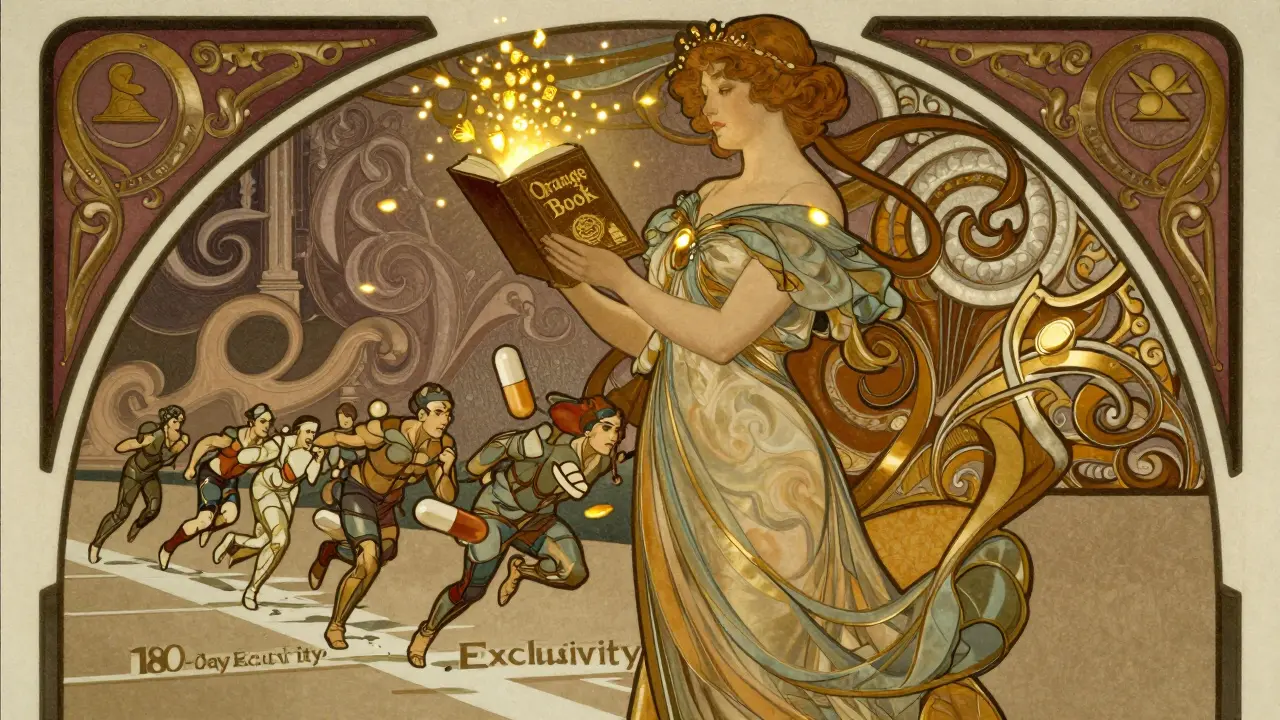
To make this system work, the Act created something called the Orange Book - officially titled Approved Drug Products with Therapeutic Equivalence Evaluations. This isn’t just a list. It’s the rulebook for generic competition. Every brand-name drug approved by the FDA must list its patents in the Orange Book. These include not just the original compound patent, but also secondary patents on formulations, uses, or delivery methods. As of 2024, the Orange Book listed over 18,000 approved drug products.
Generic companies use this book like a GPS. They check which patents are still active. If a patent has expired, they can move forward. If it’s still in force, they have to decide: wait, or challenge it.
Paragraph IV: The Nuclear Option
The real game-changer was the Paragraph IV certification. When a generic company files an ANDA, they must certify the patent status of the brand drug. Paragraph IV is the most aggressive option: it says, “Your patent is invalid, or I won’t infringe it.” That’s a legal challenge wrapped in a drug application.
Here’s why it matters: the first company to file a Paragraph IV certification gets 180 days of exclusive market rights. During that time, no other generic can enter - even if they’ve already submitted their own application. This incentive turned the race to file into a high-stakes sprint. Companies would camp outside FDA offices on filing day. In 2003, the FDA changed the rules so that if multiple companies filed on the same day, they’d share the exclusivity. But the prize was still huge. The first generic to market could capture 80% of sales before other generics even arrived.
The Patent Dance: Litigation and Delays
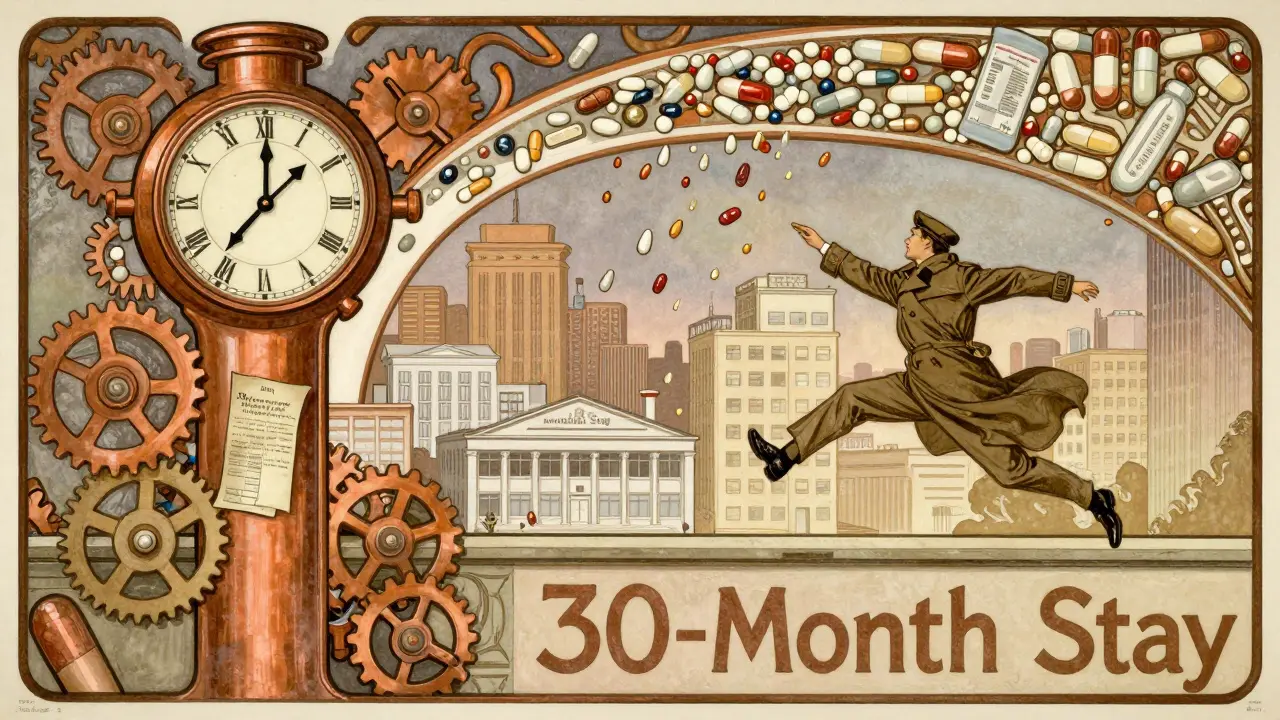
But here’s the twist: filing a Paragraph IV certification triggers a legal battle. The brand-name company has 45 days to sue for patent infringement. Once they do, the FDA is forced to pause approval for 30 months - unless the court rules in favor of the generic sooner. This is called the 30-month stay.
On paper, it’s meant to protect patent rights. In practice, it’s often used to delay competition. The average patent lawsuit takes 31 months to resolve - right at the edge of the 30-month stay. That means brand companies can stretch their monopoly by nearly a full year. And because the first generic applicant holds the 180-day exclusivity, they sometimes sit on it. Why rush to market if you can wait for others to challenge patents first and then swoop in later?
These delays have led to accusations of “pay-for-delay” deals. That’s when brand companies pay generic firms to hold off on launching - a practice the FTC has fought for years. In 2020, the Congressional Budget Office found that such settlements cost the healthcare system over $3.5 billion annually in lost savings.
Why It Works - And Why It’s Broken
Despite its flaws, the Hatch-Waxman Act has been wildly successful. In 1984, generics made up just 19% of prescriptions. Today, they account for over 90% of prescriptions filled in the U.S. - but only 23% of total drug spending. That’s how powerful competition is. The Congressional Budget Office estimates the Act has saved the U.S. healthcare system $1.7 trillion over the last decade. Medicare Part D beneficiaries save an average of $3,200 per year thanks to generics.
But the system was built for simple pills. It’s struggling with complex drugs. Biologics - drugs made from living cells - don’t fit into the ANDA model. That’s why Congress passed the Biologics Price Competition and Innovation Act (BPCIA) in 2010. Even then, the approval process for biosimilars is slower and more expensive than for small-molecule generics.
Another problem? Patent thickets. Brand companies now pile on dozens of secondary patents - covering everything from pill coatings to dosing schedules. The average drug had 1.5 patents listed in the Orange Book at launch. By the time generics enter, that number has jumped to 3.5. Some drugs have over 20. It’s not innovation - it’s legal obstruction.
What’s Changed Since 2020
The FDA has been working to fix bottlenecks. The Generic Drug User Fee Amendments (GDUFA) III, implemented in 2023, cut the average ANDA review time from 36 months in 2012 to just 18 months today. That’s a huge improvement. The FDA also cracked down on brand companies that refuse to provide generic manufacturers with samples needed for testing - a tactic used to delay competition. The CREATES Act of 2019 made that illegal.
Still, 283 generic drugs faced shortages in 2023. Many were low-cost, high-volume medications. The problem? Manufacturing quality. Some overseas facilities don’t meet U.S. standards. And when a single plant fails inspection, it can knock out supply for an entire class of drugs.
What’s Next?
The Hatch-Waxman Act is 40 years old. It’s time for updates. Experts are pushing for reforms to limit patent evergreening - where companies file dozens of minor patents just to extend exclusivity. There’s also growing pressure to make the 180-day exclusivity harder to abuse. Some lawmakers want to strip it away if the first filer doesn’t launch within 75 days of approval.
Meanwhile, more complex drugs are coming off patent: inhalers, injectables, even transdermal patches. The current system wasn’t designed for these. The FDA is working on new guidance documents - 15 were issued in 2023 alone - to help generic companies navigate them. But without legislative changes, the gap between innovation and access will keep widening.
The Hatch-Waxman Act didn’t just make generics possible. It made them inevitable. And that’s what keeps drug prices from spiraling out of control. But like any tool, it works best when it’s sharpened - not left to rust.
What is the ANDA process under the Hatch-Waxman Act?
The Abbreviated New Drug Application (ANDA) is the streamlined pathway created by the Hatch-Waxman Act for generic drug approval. Instead of repeating full clinical trials, generic manufacturers must prove their product is identical in active ingredient, strength, dosage form, and route of administration to the brand-name drug. They also must demonstrate bioequivalence through pharmacokinetic studies, showing that the generic delivers the same amount of drug into the bloodstream within 80-125% of the brand’s levels.
What is the Orange Book and why does it matter?
The Orange Book, officially called Approved Drug Products with Therapeutic Equivalence Evaluations, is a public list maintained by the FDA that includes all approved drug products and their associated patents. Brand-name companies must list patents covering the drug’s active ingredient, formulation, or method of use. Generic manufacturers use this list to identify which patents are still active and when they can legally enter the market. Without the Orange Book, the Paragraph IV certification system wouldn’t work.
What is Paragraph IV certification?
Paragraph IV certification is a legal declaration made by a generic drug applicant stating that a patent listed in the Orange Book is either invalid or will not be infringed by the generic product. This triggers a 45-day window for the brand-name company to sue for patent infringement. If litigation begins, the FDA must delay approval for up to 30 months. The first company to file a Paragraph IV certification is awarded 180 days of market exclusivity - a powerful incentive to challenge patents.
Why do some generic drugs take years to enter the market after patent expiry?
Even after a patent expires, generic entry can be delayed by several factors. Brand companies may file multiple secondary patents (patent thickets) to extend exclusivity. They may also sue generic applicants, triggering the 30-month stay. Some generic companies delay launching to avoid litigation or strike deals with brand companies to postpone entry (pay-for-delay). Additionally, manufacturing issues, regulatory delays, or failure to meet bioequivalence standards can push back approval.
How has the Hatch-Waxman Act impacted drug prices?
The Act has dramatically lowered drug prices. Once a generic enters the market, prices typically drop 80-90% within the first year. The Congressional Budget Office estimates that generic drugs saved the U.S. healthcare system $1.7 trillion between 2013 and 2023. In 2023, generics accounted for over 90% of prescriptions filled but only 23% of total drug spending. For Medicare Part D beneficiaries, generics save an average of $3,200 per person annually.
Key Takeaways
- The Hatch-Waxman Act created the ANDA pathway, allowing generics to skip costly clinical trials by proving bioequivalence.
- The Orange Book lists patents for brand drugs - it’s the roadmap for generic competition.
- Paragraph IV certification lets generics challenge patents, with the first filer getting 180 days of exclusivity.
- The 30-month stay can delay generic entry, and patent thickets are often used to extend monopolies.
- Generics now make up over 90% of prescriptions but only 23% of drug spending, saving the system $158 billion annually.
- Challenges remain with complex drugs, manufacturing shortages, and pay-for-delay deals.


