
How Buyers Use Generic Drug Competition to Lower Prescription Prices

Dec, 7 2025
When you fill a prescription for a common medication like metformin or lisinopril, you’re probably paying a few dollars-maybe even less than $5. But that low price isn’t luck. It’s the result of a quiet but powerful economic force: generic drug competition. Buyers-whether it’s Medicare, private insurers, or government health systems-don’t just accept whatever price a drugmaker sets. They use the presence of multiple generic versions to push prices down, often by more than 90%. This isn’t theory. It’s how the system actually works today.
How Generic Drugs Drive Prices Down
When a brand-name drug’s patent expires, other companies can legally make the same medicine. These are generic drugs. They’re chemically identical. They work the same way. But they cost a fraction of the original. Why? Because once five or six companies start making the same pill, they compete on price. And when nine companies enter the race, prices drop even further-by as much as 97.3%, according to a 2019 study by Conrad and colleagues.
It’s simple economics: more sellers = lower prices. The FDA tracked over 2,400 new generic drugs approved between 2018 and 2020. The more competitors, the steeper the price drop. That’s why metformin, once a brand-name drug selling for over $100 a month, now costs less than $4. Same active ingredient. Same FDA approval. Just 12 different manufacturers making it.
Generic drugs make up 90% of all prescriptions filled in the U.S., but they account for only 22% of total drug spending. That’s the power of competition. Without it, the system would be unaffordable.
How Buyers Actually Negotiate
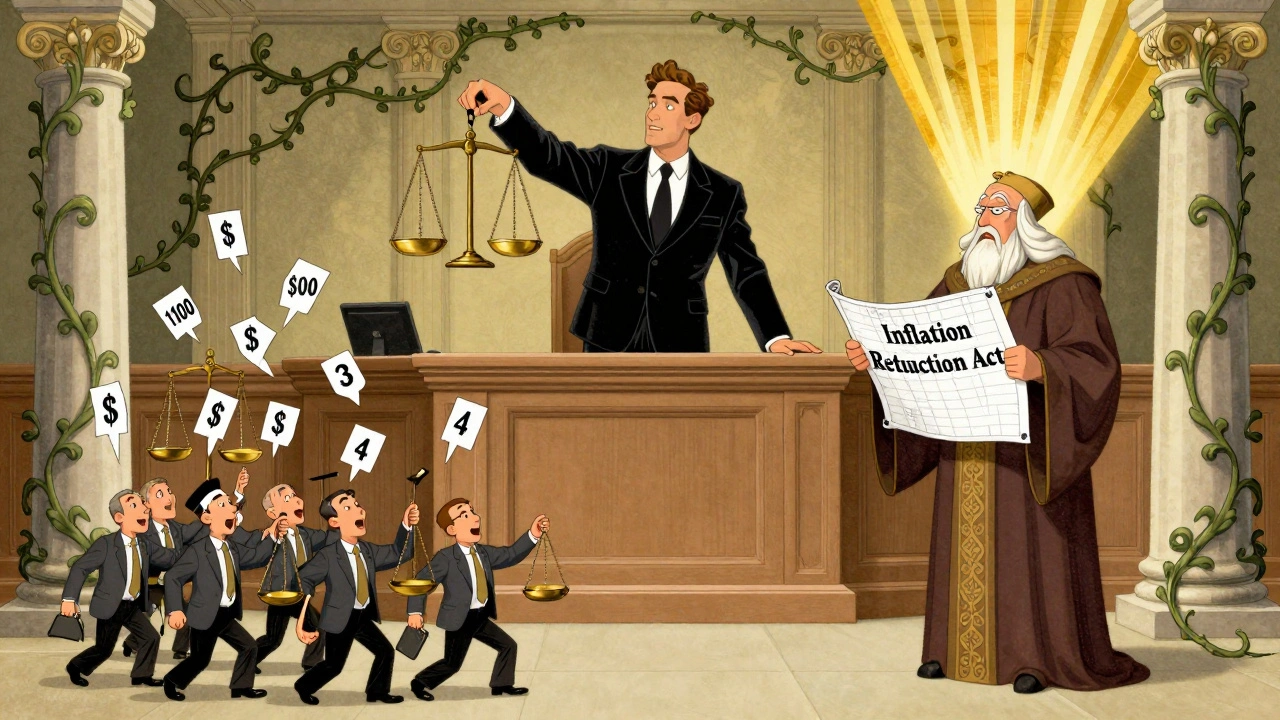
Buyers don’t just wait for competition to happen-they actively use it as leverage. The biggest buyer in the U.S. is Medicare. Under the Inflation Reduction Act of 2022, Medicare can now directly negotiate prices for certain high-cost drugs. But here’s the twist: they can’t negotiate with a drug that already has generic versions on the market. So instead, they use those generics as a benchmark.
CMS (Centers for Medicare & Medicaid Services) looks at the average price of all similar drugs-brand and generic-that treat the same condition. That becomes their starting point. For example, if five generic versions of a diabetes drug sell for an average of $12 a month, Medicare won’t offer more than that for the brand-name version, even if the manufacturer claims it’s “better.”
This isn’t just a U.S. tactic. Canada uses a tiered pricing system: the more generic competitors a drug has, the lower the maximum price the government will pay. If there’s only one generic, the price cap is higher. If there are six, it drops sharply. It’s a direct way to reward competition.
Private insurers and pharmacy benefit managers (PBMs) do something similar, but behind closed doors. Many use proprietary algorithms that track competitor pricing in real time. If a new generic hits the market, their system automatically adjusts the negotiated price for the brand-name version-or drops it from coverage entirely.
The Hidden Tactics That Slow Down Competition
It sounds simple: patent expires → generics enter → prices fall. But the system is full of delays. Brand-name companies have spent decades finding ways to keep generics out longer.
One common trick is “product hopping.” That’s when a company slightly changes a drug-say, switches from a pill to a capsule-and then pushes doctors to prescribe the new version. Even though the active ingredient hasn’t changed, the old version loses its patent protection, and the new one gets a fresh 20-year clock. Between 2015 and 2020, there were over 1,200 such maneuvers, according to the FTC.
Another tactic? Reverse payments. A brand-name company pays a generic manufacturer to delay entering the market. The FTC found this happened with 106 drugs between 2010 and 2020. In one case, a brand paid a generic maker $100 million to stay out for two years. That’s not competition-it’s bribery.
And then there’s the “authorized generic” trick. A brand company will launch its own generic version under a different label. It’s still their product, but now they’re selling it at a low price, blocking other generics from gaining traction. This isn’t illegal, but it’s designed to kill competition before it starts.
Why This Matters for Patients
Lower drug prices aren’t just about corporate profits. They’re about whether people can afford their medicine.
CMS estimates that the first 10 drugs negotiated under the Inflation Reduction Act will save Medicare beneficiaries $6.8 billion per year. That’s real money. For someone on fixed income, a $100-a-month drug dropping to $15 means choosing between medicine and groceries.
But there’s a catch. If the government sets a price too low before generics even enter the market, manufacturers might decide it’s not worth the risk to invest in making the drug. Avalere Health found that if Medicare sets a price before generics are ready, it could reduce the number of generic entrants by 30%-which means fewer competitors, slower price drops, and eventually higher prices in the long run.
That’s why the proposed EPIC Act wants to delay Medicare negotiation until after generic competition has had time to develop. It’s a recognition: competition works better than government price-setting when it’s allowed to play out naturally.
Who’s Winning and Who’s Losing
On one side, you have the Association for Affordable Medicines. They represent generic manufacturers and say their industry has saved U.S. patients over $3 trillion in the last 40 years. They want more competition, faster approvals, and fewer legal roadblocks.
On the other side, PhRMA-the lobby for big drug companies-has hired over 300 lobbyists to fight Medicare negotiation. Their argument? Lower prices mean less innovation. But data doesn’t back that up. The U.S. spends more per capita on drugs than any other country, yet leads the world in new drug approvals. Innovation isn’t tied to high prices-it’s tied to patents, research funding, and market size.
Generic manufacturers are caught in the middle. They want to enter markets, but if CMS sets a brand drug’s price too low, they can’t make a profit. A 2023 survey by the European Generic and Biosimilar Medicines Association found that 63% of generic makers delayed investments because of pricing uncertainty. That’s a problem. If no one’s making generics, prices won’t fall.
What’s Next for Generic Competition
The future of drug pricing depends on three things: transparency, speed, and enforcement.
First, we need better data. Right now, CMS uses average sales prices and Prescription Drug Event data to track generic availability. But many PBMs keep their pricing models secret. If buyers can’t see what’s really happening, they can’t negotiate well.
Second, we need faster generic approvals. The FDA has cut review times, but patent litigation still delays entry by years. Paragraph IV challenges-where generics legally challenge a patent-speed up entry by an average of 62 months, according to FDA data. We need more of these challenges, not fewer.
Third, we need to stop anti-competitive behavior. Reverse payments should be banned. Product hopping should be treated as fraud. Authorized generics need clearer rules.
And finally, we need to recognize that not all drugs are the same. Simple pills like aspirin are easy to copy. But complex generics and biosimilars? Those take years to develop and cost millions. Their competition dynamics are different. Pricing rules need to adapt.
What You Can Do
If you’re on Medicare or have private insurance, ask your pharmacist: “Is there a generic version?” If there is, and you’re still paying a lot, ask why. Sometimes, your plan’s formulary hasn’t been updated. Sometimes, your doctor just prescribes the brand out of habit.
Use tools like GoodRx or SingleCare to compare prices across pharmacies. You might be paying $50 for a drug that costs $12 at Walmart. That’s not a pricing issue-that’s a knowledge gap.
And if you’re part of a patient advocacy group or work in healthcare, push for policies that reward competition, not delay it. The system works best when it’s open, fast, and fair.
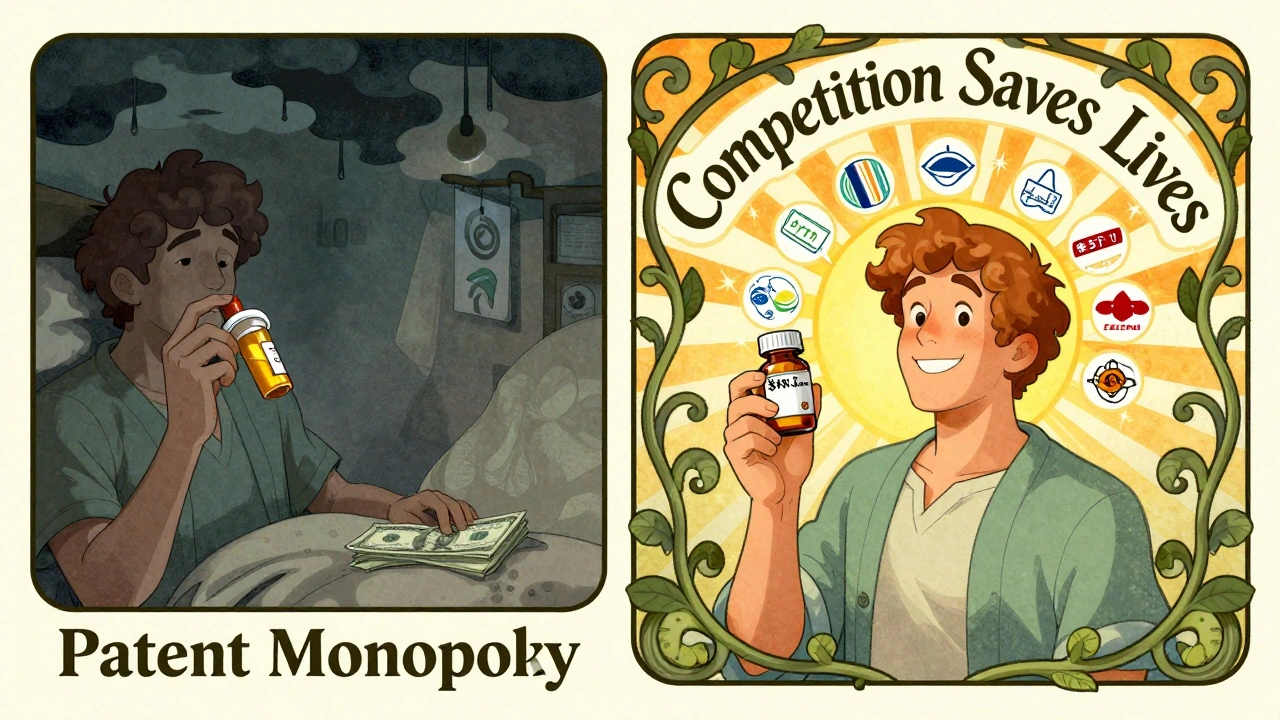
Generic drugs aren’t a backup plan. They’re the foundation of affordable care. And when buyers use competition as a tool-not just a footnote-they save billions, and lives, every year.
How do generic drugs lower prices so much?
Generic drugs are chemically identical to brand-name drugs but cost far less because multiple manufacturers compete to produce them. When six or more companies make the same drug, prices often drop by over 90%. This happens because manufacturers lower prices to win market share, and buyers use those low prices as leverage in negotiations.
Can Medicare negotiate prices for generic drugs?
No, Medicare cannot directly negotiate prices for drugs that already have generic versions on the market. But it uses the prices of those generics as a benchmark to set lower prices for brand-name drugs. This is called using therapeutic alternatives, and it’s a key part of how the Inflation Reduction Act drives down costs.
Why don’t more generic drugs enter the market?
Several barriers slow generic entry: patent litigation, reverse payments (where brand companies pay generics to delay entry), product hopping (changing the drug slightly to reset the patent clock), and authorized generics (where the brand company launches its own low-cost version). These tactics reduce competition and keep prices higher than they should be.
Do generic drugs work as well as brand-name drugs?
Yes. The FDA requires generic drugs to have the same active ingredient, strength, dosage form, and route of administration as the brand-name version. They must also be bioequivalent, meaning they work the same way in the body. Over 90% of prescriptions in the U.S. are filled with generics because they’re safe, effective, and cheaper.
What’s the difference between a generic and a biosimilar?
Generics are exact copies of small-molecule drugs made from chemicals. Biosimilars are highly similar versions of complex biological drugs made from living cells. Biosimilars are harder to replicate, cost more to develop, and achieve only about 45% market share, compared to 90% for traditional generics. Their pricing and competition dynamics are very different.
How can I find the cheapest price for my generic drug?
Use free price-comparison tools like GoodRx, SingleCare, or RxSaver. Prices can vary by over 500% between pharmacies-even for the same generic. Ask your pharmacist if your insurance plan has a preferred pharmacy or mail-order option. Sometimes, paying cash is cheaper than using insurance.


