
How to Coordinate Care Between OB/GYN and Psychiatrist for Medications During Pregnancy and Breastfeeding

Dec, 5 2025
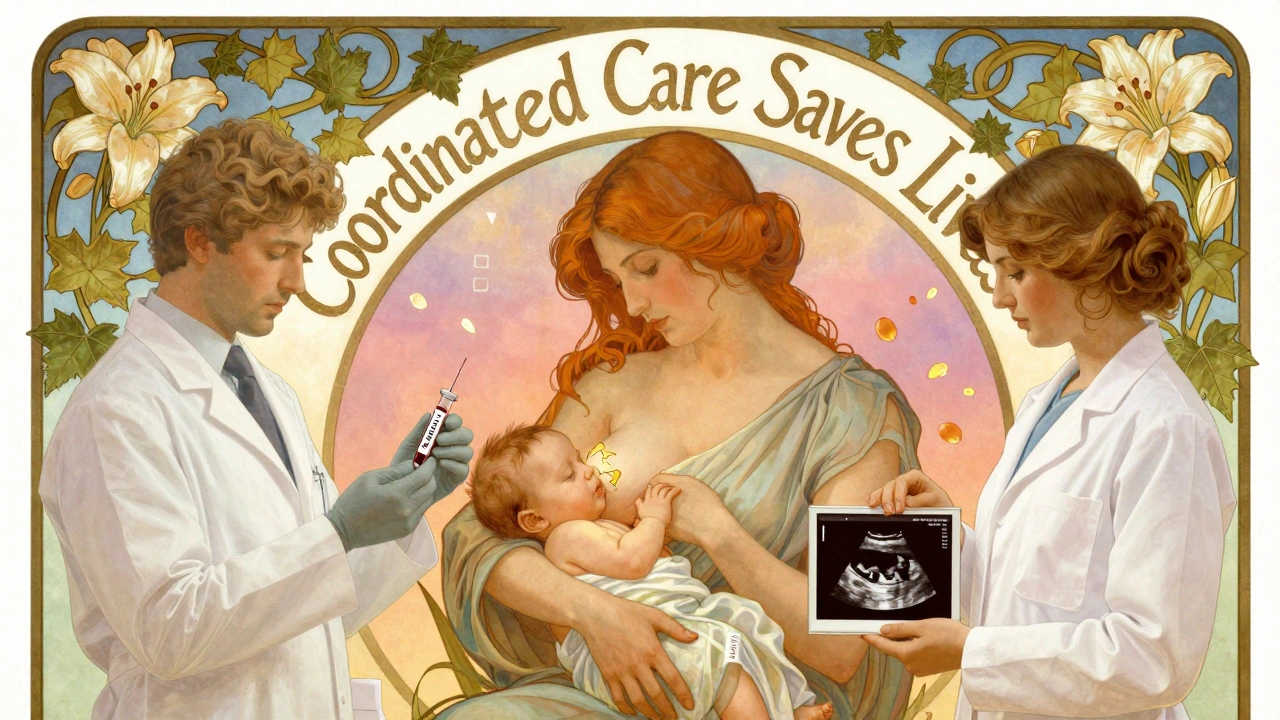
When a woman is pregnant or breastfeeding and needs psychiatric medication, the stakes are high - for her mental health, for her baby’s development, and for the delicate balance between treating illness and avoiding harm. Too often, women fall through the cracks between their OB/GYN and psychiatrist. One provider focuses on the pregnancy; the other on the mental health condition. Neither talks to the other. The result? Confusing advice, unnecessary medication changes, or worse - untreated depression or anxiety that puts both mother and child at risk.
Why Coordination Isn’t Optional - It’s Life-Saving
About 1 in 5 women experience depression, anxiety, or bipolar disorder during pregnancy or after giving birth. Left untreated, these conditions increase the risk of preterm birth by 40%, low birth weight by 30%, and even infant developmental delays. But medications aren’t harmless either. Some antidepressants, mood stabilizers, or anti-anxiety drugs can cross the placenta or enter breast milk. The key isn’t avoiding medication - it’s choosing the right one, at the right dose, at the right time - with input from both specialists.The American College of Obstetricians and Gynecologists (ACOG) made this clear in its 2023 guidelines: coordinated care between OB/GYNs and psychiatrists isn’t just helpful - it’s the standard of care for perinatal mental health. Studies show that when these providers work together, medication discontinuation drops from 42% to just 18%. Postpartum depression rates fall by nearly 40%. That’s not a small improvement - it’s the difference between managing a condition and surviving it.
Which Medications Are Safest During Pregnancy?
Not all psychiatric drugs are created equal when it comes to pregnancy. The goal is to use the lowest effective dose of the safest possible medication. Here’s what the data says:- Sertraline and escitalopram are first-line choices for depression and anxiety. Sertraline has been studied in over 10,000 pregnancies. It carries only a 0.5% absolute risk increase for heart defects - compared to a 1% baseline risk in the general population. That’s lower than the risk from smoking or advanced maternal age.
- Paroxetine should be avoided. It’s linked to a higher risk of heart defects and is no longer recommended as a first option, even though it was once widely used.
- Fluoxetine has a longer half-life and can build up in the baby’s system. It’s still used, but sertraline is preferred because it clears faster.
- Lithium is often continued for bipolar disorder, but requires close monitoring. Blood levels must be checked weekly in the third trimester as kidney function changes. The risk of a heart defect (Ebstein’s anomaly) is about 1 in 1,000 - higher than baseline, but far lower than the risk of untreated bipolar episodes.
- Valproate is a hard no. It increases the risk of major birth defects to over 10% - more than triple the normal rate. If a woman has bipolar disorder and is planning pregnancy, she needs to switch medications well before conception.
Protein binding matters too. Medications that bind tightly to proteins in the blood - like sertraline at 98% - don’t cross the placenta as easily. That’s one reason it’s preferred over drugs with lower binding. Half-life also counts. Drugs with a 24-48 hour half-life (like sertraline) maintain steady levels, reducing baby’s exposure to peaks and troughs.
How Coordination Actually Works - The 5-Step Protocol
Good coordination isn’t just a phone call. It’s a system. ACOG’s 2023 guidelines outline a clear, repeatable process:- Preconception planning - Ideally, the woman meets with both her OB/GYN and psychiatrist 3-6 months before trying to conceive. This is when medication adjustments happen. Switching from paroxetine to sertraline? Starting lithium? Doing it before pregnancy avoids crisis mode later.
- First joint visit by 8-10 weeks - By this point, the placenta is forming. Both providers review the current medication, dosage, and any side effects. They update the risk-benefit calculation: “If she stops sertraline, her chance of relapse is 65%. With it, the risk of a heart defect is 0.5%.” That’s not vague - it’s a measurable trade-off.
- Regular check-ins every 4 weeks - Pregnancy changes how the body handles drugs. Blood volume increases by 40-50%. Kidneys filter faster. Liver enzymes speed up metabolism. A dose that worked before may not be enough by week 28. OB/GYNs track weight gain, blood pressure, and fetal growth. Psychiatrists monitor mood, sleep, and anxiety. They share notes - not just summaries, but specific data points like protein binding, placental transfer rates, and lactation risk categories.
- Medication safety checklist - ACOG’s Reproductive Safety Checklist is used in integrated clinics like Kaiser Permanente. It scores risks from 1 to 10 for both maternal relapse and fetal exposure. If the maternal risk is 8 and fetal risk is 2, continuing the medication is clearly the right call.
- Postpartum and breastfeeding plan - Delivery isn’t the end. Hormones crash. Sleep vanishes. The risk of postpartum depression spikes. The same medication used during pregnancy is often continued for breastfeeding. Sertraline and escitalopram are among the safest for nursing - less than 1% of the maternal dose reaches the baby’s bloodstream. Both providers agree on the plan before delivery.
What Happens When Coordination Fails
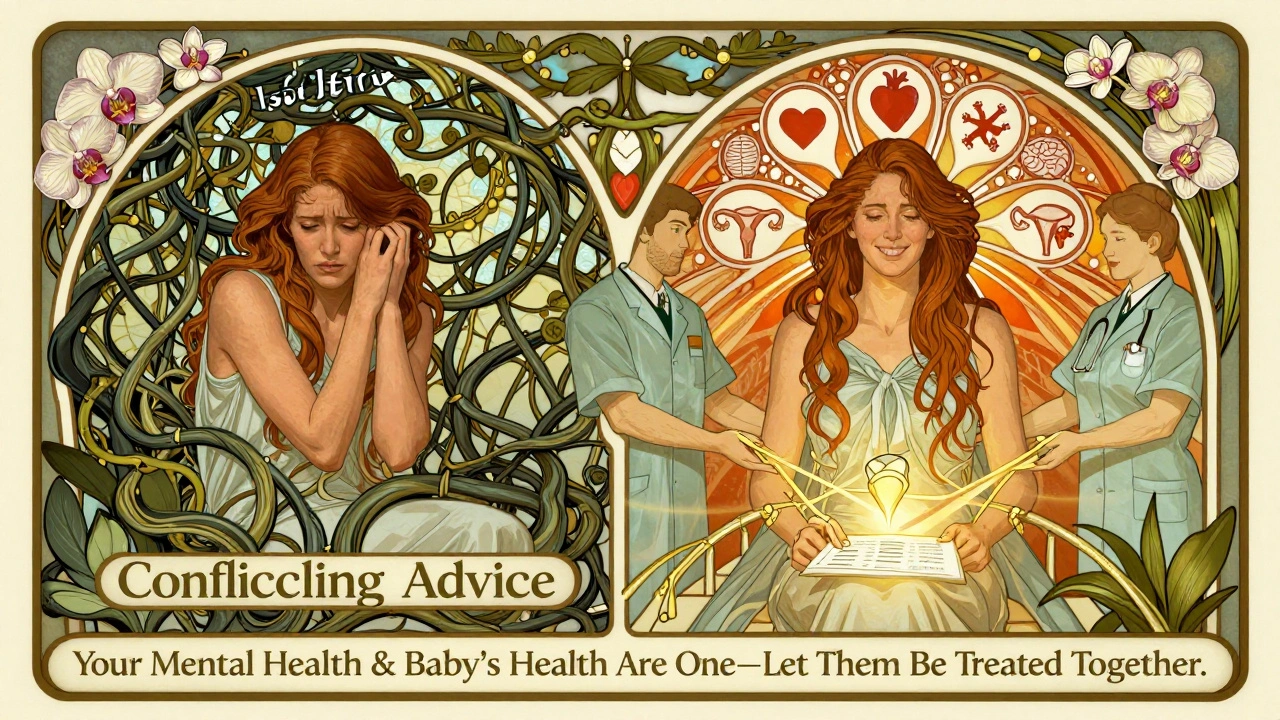
On Reddit’s r/PPD community, 68% of over 1,200 women reported getting conflicting advice from their OB/GYN and psychiatrist. One woman was told by her OB/GYN to stop sertraline because “it’s not safe.” Her psychiatrist said, “If you stop, you’ll be hospitalized.” She stopped. Within two weeks, she had a severe depressive episode and needed emergency care. Her baby was born healthy - but she spent the first three months of motherhood in a psychiatric unit.This isn’t rare. In 67% of practices, electronic health records don’t talk to each other. An OB/GYN can’t see what the psychiatrist prescribed. A psychiatrist doesn’t know if the patient’s blood pressure spiked at 32 weeks. Insurance delays make things worse - 57% of patients wait over two weeks just to get a psychiatric appointment approved.
Even worse: some OB/GYNs still believe they can manage all psychiatric meds alone. But data shows they only initiate treatment in 12% of bipolar cases. That’s not because they’re untrained - it’s because they’re not connected to the right specialists.
How to Get Better Coordination - Even If Your Providers Don’t Talk
Not every clinic has integrated systems. Not every provider uses ACOG’s checklist. But you can still drive better care:- Bring both providers’ contact info - Ask your OB/GYN to send a summary to your psychiatrist. Ask your psychiatrist to send a medication history to your OB/GYN. Use secure patient portals if available.
- Use the ACOG Reproductive Safety Checklist - Print it out. Fill it out with your psychiatrist. Bring it to your OB/GYN appointment. It’s free, evidence-based, and easy to use.
- Ask for a joint visit - Many clinics now offer video visits with both providers in the same room. Kaiser, Cleveland Clinic, and Mayo Clinic offer this. If yours doesn’t, ask if they can arrange a phone call during your appointment.
- Track your own data - Keep a simple log: medication name, dose, mood rating (1-10), sleep hours, side effects. Share it with both providers. It’s not about being “overly involved” - it’s about giving them the tools to make better decisions.
What About Breastfeeding?
Breastfeeding and psychiatric meds? Yes, it’s usually safe - and often better than going off medication. The benefits of breastfeeding (stronger immune system, better bonding, lower risk of future obesity) outweigh the tiny amount of medication that passes into milk.Sertraline and escitalopram are top choices. They’re in the lowest risk category for breastfeeding (L1). Fluoxetine? Avoid if possible - it sticks around longer in the baby’s system. Benzodiazepines like lorazepam? Use sparingly and only for short periods. Always monitor the baby for drowsiness or feeding issues.
The National Pregnancy Registry for Psychiatric Medications has tracked over 15,000 pregnancies and breastfeeding cases. Their 2023 update found no increase in developmental delays for babies exposed to sertraline through breast milk. That’s not an assumption - it’s data.
What’s Changing in 2025?
The field is moving fast. In early 2024, the FDA updated drug labels to include specific coordination instructions. Sertraline’s label now says: “Coordination with obstetric provider recommended for dose adjustment beginning at 20 weeks gestation due to increased clearance.” That’s huge - it means prescribing info now reflects real-world collaboration.AI tools are coming. A 2023 study in JAMA Network Open showed AI models can predict which women are most likely to relapse after pregnancy - with 89% accuracy - using genetics, past episodes, and social stressors. ACOG plans to roll out these tools in 2025.
Medicare and Medicaid now require documented coordination for reimbursement. Insurance companies are starting to pay more for practices that prove their OB/GYN and psychiatrist talk regularly. That’s pushing hospitals to build better systems - like Epic’s Perinatal Mental Health Module, now used by over 1,200 U.S. health systems.
Final Thought: You’re Not Alone - But You Must Speak Up
You don’t have to choose between being a healthy mom and being a mentally well mom. The science is clear: the safest medication during pregnancy is the one that keeps you stable - when chosen with expert coordination.Don’t wait for your providers to talk to each other. Be the bridge. Ask for a joint visit. Bring the checklist. Share your log. Push for clarity. Your mental health matters - and so does your baby’s. They’re not separate. They’re connected. And the best care reflects that.
Can I take antidepressants while pregnant without harming my baby?
Yes - but not all antidepressants are equal. Sertraline and escitalopram are the safest choices based on over 10,000 pregnancy studies. They carry a very low risk of birth defects - around 0.5% increase for heart issues, compared to a 1% baseline risk. Paroxetine should be avoided. The bigger risk is stopping medication: untreated depression increases preterm birth by 40% and low birth weight by 30%. The goal is to use the lowest effective dose of the safest drug, with input from both your OB/GYN and psychiatrist.
What if my OB/GYN and psychiatrist give me different advice?
This happens often - 68% of women report conflicting advice. Don’t ignore it. Ask both providers to communicate directly. Request a joint visit or phone call. Bring a printed copy of ACOG’s Reproductive Safety Checklist - it gives both providers a common framework to compare risks. If one provider says to stop your medication and the other says not to, ask for the evidence behind each recommendation. You have the right to clarity.
Is it safe to breastfeed while taking psychiatric medication?
Yes, for most medications. Sertraline and escitalopram are classified as L1 (safest) for breastfeeding. Less than 1% of your dose enters breast milk. Babies exposed to these drugs show no increased risk of developmental delays, sleep problems, or feeding issues. Avoid fluoxetine if possible - it builds up in the baby’s system. Always monitor your baby for unusual drowsiness or poor feeding. The benefits of breastfeeding - stronger immunity, better bonding - outweigh the minimal medication exposure.
Why can’t my OB/GYN just manage my psychiatric meds?
OB/GYNs are experts in pregnancy and delivery, but not in complex psychiatric pharmacology. While they can start treatment for mild depression, they only initiate care in 12% of bipolar cases. Psychiatrists have deeper training in medication selection, dosing adjustments, and managing side effects. Pregnancy changes how drugs are processed - kidney function, blood volume, liver enzymes all shift. That requires specialized knowledge. Coordinated care isn’t about double work - it’s about combining two areas of expertise to protect both you and your baby.
How do I know if my care team is coordinating properly?
Ask these questions: Do both providers know what the other is prescribing? Have you had a joint visit or call? Is there a documented plan for dose changes during pregnancy? Are they using a risk-benefit checklist? If your records don’t show communication between providers, request it. You can also ask your OB/GYN to send a summary to your psychiatrist using the ACOG template. If your clinic uses Epic or another modern EHR, ask if the Perinatal Mental Health Module is active - it automatically alerts psychiatrists when an OB/GYN prescribes psychiatric meds.
What should I do if I’m planning pregnancy and on psychiatric medication?
Don’t wait until you’re pregnant. Start planning 3-6 months before trying to conceive. Schedule a meeting with both your OB/GYN and psychiatrist. Discuss switching to safer medications if needed - like changing from paroxetine to sertraline, or from valproate to lithium (with monitoring). Get your dose stabilized. Review your mental health history. Use the ACOG checklist to weigh risks. This is the best time to make changes - not during a crisis.


