
How to Spot Look-Alike Drug Names on Prescription Labels
Apr, 14 2026
Imagine picking up a medication for your heart, only to realize later that the bottle contains a completely different drug used for something else entirely. It sounds like a nightmare, but this happens more often than you'd think because of look-alike drug names is a safety hazard where medications have very similar spellings or pronunciations, leading to dangerous mix-ups. Often referred to as LASA (Look-Alike, Sound-Alike) errors, these mistakes account for about 25% of all reported medication errors. Whether you're a patient or a caregiver, knowing how to spot these similarities on a label can literally save a life.
The Secret Code of Tall Man Lettering
If you've ever looked at a prescription and wondered why some letters are randomly capitalized in the middle of a word, you've seen Tall Man Lettering (TML). This isn't a typo. It's a standardized visual tool designed to highlight the specific parts of a drug name that make it different from its "twin."
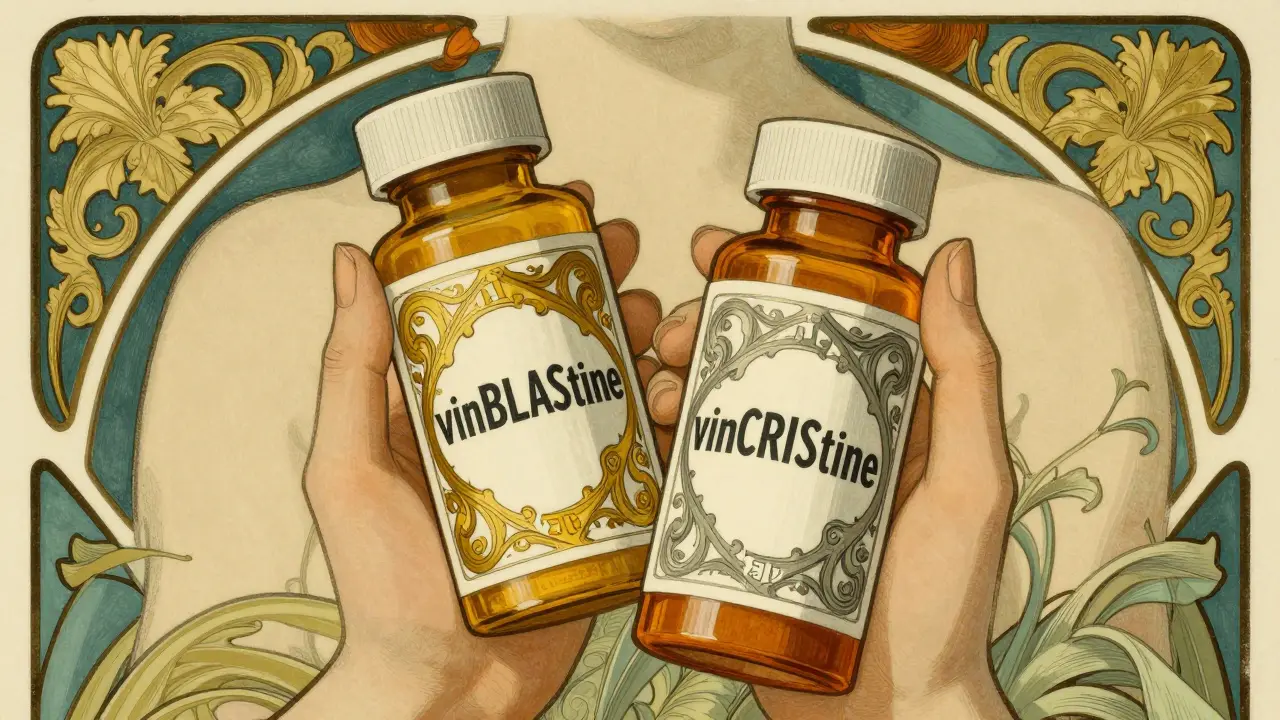
For example, vinBLAStine and vinCRIStine look almost identical at a glance. By capitalizing the differing letters, your brain is forced to stop and notice the distinction. The FDA usually recommends capitalizing 2 to 4 letters that create the most visual contrast. If you see names like hydrOXYzine versus hydrALAzine, that's the system in action. When you're checking your labels, look for these uppercase "bumps"-they are your primary warning sign that the medication belongs to a high-risk group of similar-sounding drugs.
Common Traps: Where Confusion Happens
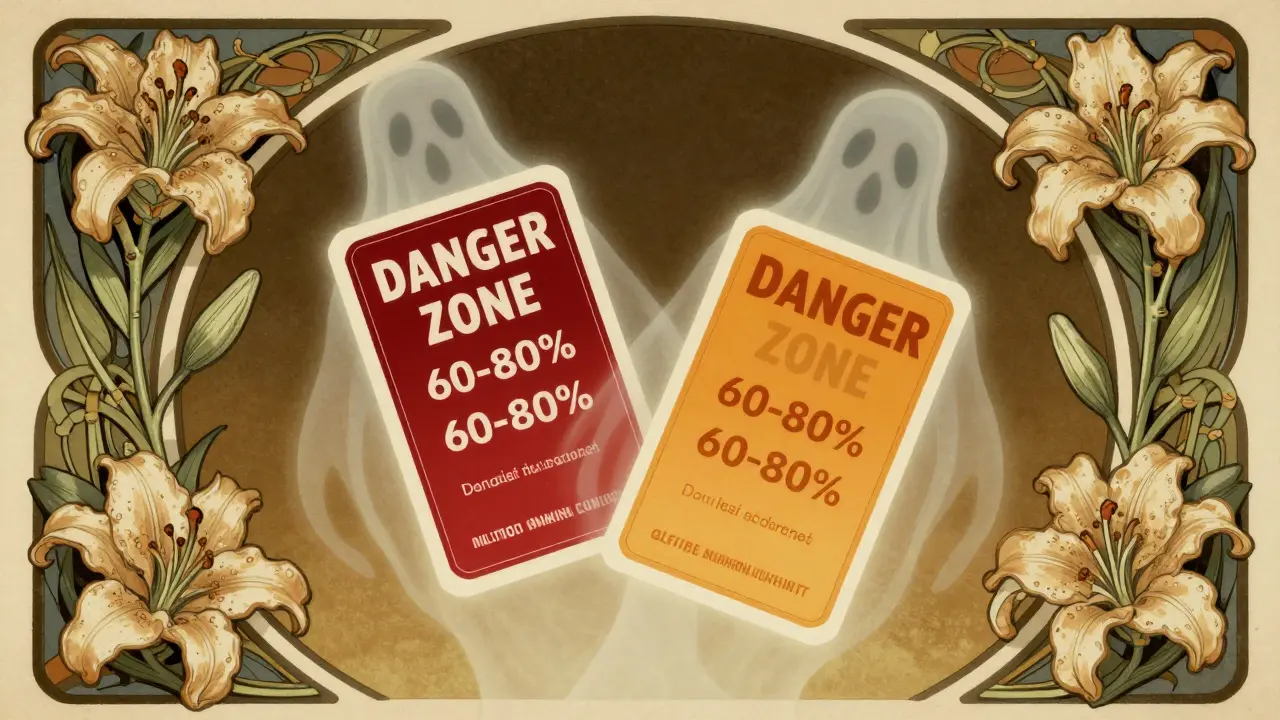
Confusion usually peaks when two drug names share about 60% to 80% of the same characters. This is the "danger zone" where our eyes tend to skip over a few letters and assume we've read the word correctly. You'll find this most often with generic names, but brand names can be just as tricky. A classic example is the pairing of Valtrex (valACYclovir) and Valcyte (valGANciclovir).
| Confusing Pair 1 | Confusing Pair 2 | Key Difference (TML) |
|---|---|---|
| vinBLAStine | vinCRIStine | BLAS vs CRIS |
| CISplatin | CARBOplatin | CIS vs CARBO |
| hydrOXYzine | hydrALAzine | OXY vs ALA |
| doXEPamine | doBUTamine | XEP vs BUT |
Beyond the Letters: Other Safety Signals
While Tall Man Lettering is the most common fix, it's not foolproof. Some pharmacies and hospitals add extra layers of protection. One effective method is adding the "purpose of treatment" directly on the label. Instead of just saying "Drug X," the label might say "Drug X (for Blood Pressure)." Research shows that combining TML with treatment info increases the effectiveness of error prevention to 59%.
You might also notice color-coded labels or specific font requirements. According to the Joint Commission, labels should ideally have a minimum 12-point font for TML sections and a high color contrast ratio (at least 4.5:1) so the text pops against the background. If the label looks faded or the font is too small to read comfortably, don't hesitate to ask the pharmacist for a clearer print. Poor printing quality is a major reason why mistakes still slip through, even when the correct lettering is used.
How to Verify Your Medication Every Time
You don't need a medical degree to prevent a LASA error; you just need a consistent routine. Experts recommend a three-step verification process every time you handle a medication. First, read the full container label while you're picking it up. Second, confirm the product name and dose before you even think about taking it. Third, read the label one last time right before the medication goes into your system.
If you are a caregiver or a patient managing multiple prescriptions, try these practical tips:
- Compare the Old and New: When you get a refill, put the new bottle next to the old one. Do the names look identical? Is the capitalization the same?
- Ask About the Generic: Many errors happen when a pharmacy switches you from a brand name to a generic. Ask, "Is this the same medication as my previous brand-name version?"
- Use a Checklist: Keep a written list of your medications with their intended use (e.g., "Lisinopril - Heart") and match it against the label.
The Role of Technology in Preventing Mix-ups
While we focus on what you see on the label, there's a lot happening behind the scenes. Pharmacies use Electronic Health Record (EHR) systems that are now designed to prevent confusing names from appearing next to each other in dropdown menus. This simple change has cut selection errors by 41%.
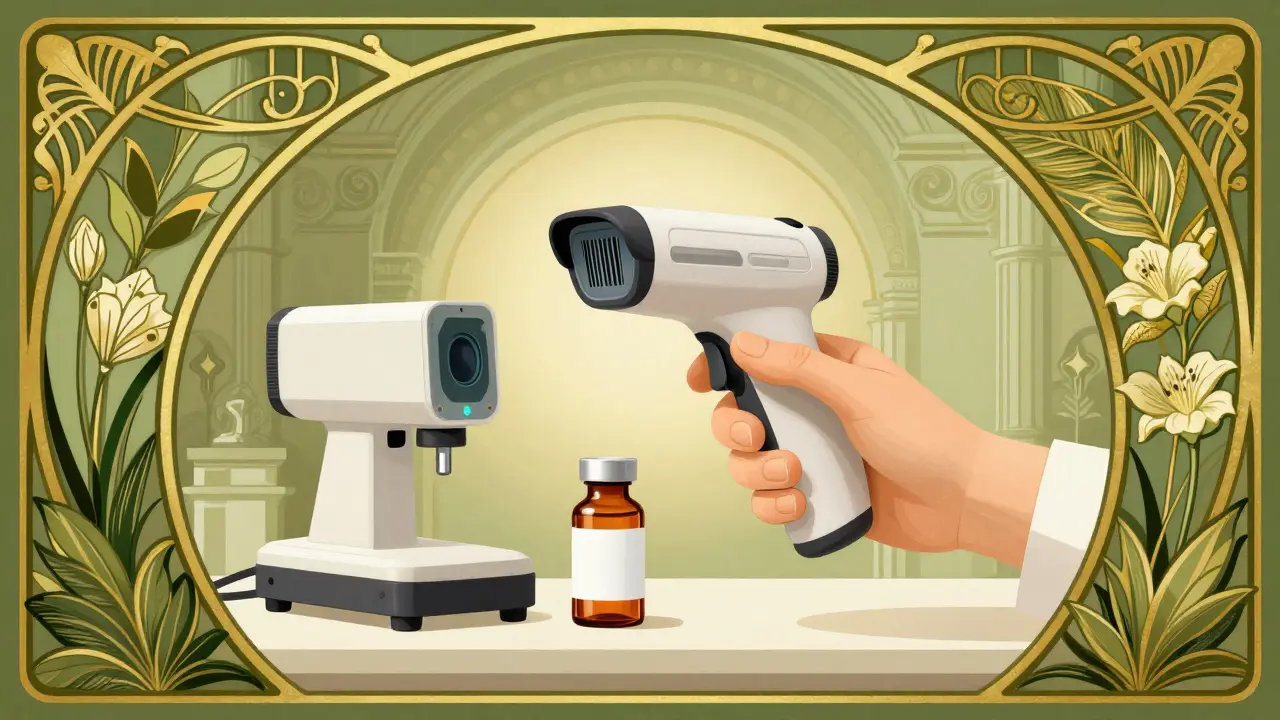
The gold standard, however, is barcode scanning. This technology is about 89% effective at stopping errors because the computer doesn't get "confused" by a few similar letters-it only cares about the unique product code. Some cutting-edge systems are even testing computer vision where a smartphone camera can detect if a vial looks too similar to another one, alerting the user before they make a mistake.
Why Mistakes Still Happen
You might wonder why, with all these systems, errors still occur. The truth is that "cognitive overload" is a real thing. When pharmacists or nurses are under extreme time pressure, the brain takes shortcuts. They might see the first three letters of a drug and assume the rest are correct. This is why the Institute for Safe Medication Practices (ISMP) insists that visual cues like TML are "necessary but not sufficient." They must be paired with slow, intentional workflows.
Handwritten prescriptions are another huge culprit. About 41% of LASA errors in some studies were traced back to bad handwriting that made two different drugs look identical. This is why the push for fully electronic prescribing is so critical-it removes the guesswork from the equation.
What exactly is Tall Man Lettering?
Tall Man Lettering is a technique where the dissimilar parts of two look-alike drug names are written in uppercase to make them visually distinct. For example, instead of writing vinblastine and vincristine, a pharmacy might write vinBLAStine and vinCRIStine to prevent a mix-up.
Why do some drugs have such similar names?
Many drugs in the same class (drugs that do the same thing) share a common "stem" in their name. This is intended to help doctors identify the drug's function, but it often results in names that look and sound almost identical, increasing the risk of errors.
How can I tell if my medication is a high-risk look-alike?
Look for the Tall Man Lettering (random uppercase letters) on your label. If you don't see any but the name looks very similar to another drug you take, you can check the official FDA list of recommended name differentiations or ask your pharmacist if the drug is considered a LASA medication.
Is barcode scanning better than visual checks?
Yes, barcode scanning is significantly more effective, with roughly 89% effectiveness in preventing errors, compared to the 32% reduction provided by Tall Man Lettering alone. However, visual checks are still vital as a final safety layer.
What should I do if I find a mistake on my label?
Do not take the medication. Immediately contact your pharmacist or prescribing doctor to verify the correct drug. Report the error to the pharmacy so they can investigate if it was a labeling error or a dispensing error to prevent it from happening to others.
Next Steps for Patients and Caregivers
If you are managing a complex medication schedule, your best move is to create a "Master Medication List." Include the drug name, the dosage, the reason you are taking it, and a photo of the label. When you go to the pharmacy, show this list to the pharmacist. If a drug name changes or a new generic is introduced, the contrast between your list and the new label will be much easier to spot, giving you a final chance to catch a look-alike error before it reaches the patient.