
Large Print and Accessible Prescription Labels for Low Vision: What You Need to Know
Dec, 28 2025
Reading your prescription label shouldn’t be a guessing game. For millions of people with low vision, standard pharmacy labels are too small, too faint, or too cluttered to read-leading to dangerous mistakes. Taking the wrong pill, at the wrong time, in the wrong dose isn’t just a risk-it’s a common reality. But it doesn’t have to be. Accessible prescription labels, including large print and audible options, are here, legal, and often free. And if your pharmacy doesn’t offer them, you have the right to ask.
Why Standard Prescription Labels Fail People with Low Vision
Most prescription labels are printed in 8- to 10-point font. That’s smaller than the text on a smartphone notification. For someone with macular degeneration, glaucoma, or diabetic retinopathy, that text might as well be invisible. A 2021 CDC survey found that 20% of adults over 45 struggle to read their own medication labels. That’s one in five people who might be taking insulin at the wrong time, missing a blood pressure pill, or accidentally doubling up on painkillers. The problem isn’t just size. Contrast matters. White text on a light yellow background? Glare from glossy paper? Tiny, all-caps instructions crammed into a 1-inch space? These aren’t design choices-they’re safety hazards. Research from the National Center for Biotechnology Information shows that people with moderate vision loss can’t read fonts smaller than 14-point. Yet most pharmacies still print labels in sizes far below that.What Counts as a Large Print Prescription Label?
Not all "large print" is created equal. The American Foundation for the Blind (AFB) and the Access Board recommend a minimum of 18-point font for prescription labels. That’s roughly three times larger than what you’ll find on a typical pharmacy label. But size alone isn’t enough. Good large print labels use:- Sans-serif fonts like Arial, Verdana, or APHont™ (a font designed specifically for low vision readers)
- High contrast-solid black text on a pure white background
- No glare-matte paper, not shiny plastic
- Left-aligned text with consistent spacing
- Lowercase letters for readability, with uppercase numbers in dosage instructions (like "TAKE 2 TABLETS")
- Yellow highlighting for critical info like "Take with food" or "May cause drowsiness"
More Than Just Big Text: Audible and Digital Options
Large print helps-but it’s not the only solution. For people who can’t read even 18-point text, or who prefer not to rely on vision, there are better options. ScripTalk is an RFID-based system used by CVS, Walgreens, and other major chains. Each label has a tiny chip embedded in the sticker. When you tap it with a handheld reader (or a smartphone app), it plays back the full prescription details: drug name, dose, instructions, refill info, and warnings. No screen needed. No magnifier required. Just press a button and listen. Then there’s QR code labels, like the ones used by UK HealthCare’s ScriptView system. Scan the code with your phone, and it opens an audio recording of your prescription info. Some even let you adjust playback speed or choose a language. This works even if you’re not tech-savvy-most smartphones have built-in QR scanners. Braille labels exist too, but they’re only useful for the 10% of people with vision loss who read Braille. They’re also expensive to produce and require special printers most pharmacies don’t have.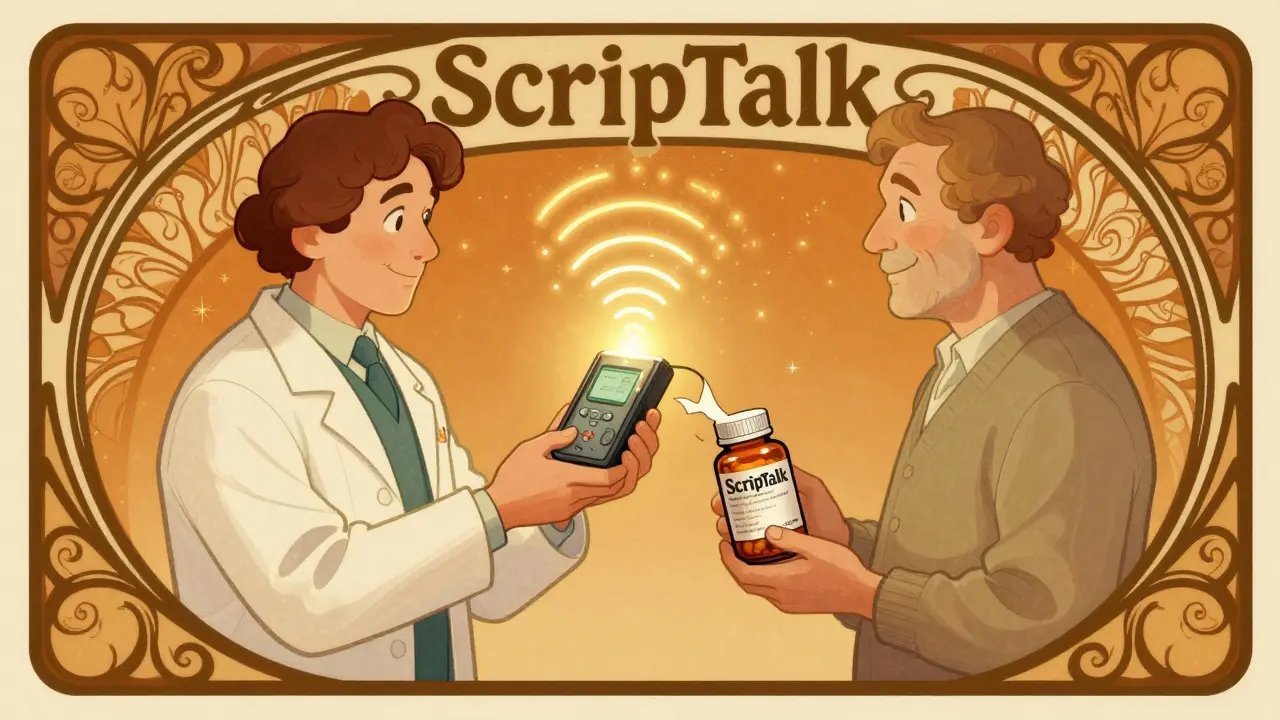
What Pharmacies Offer-And What They Don’t
The good news? Most big pharmacy chains offer accessible labels. As of 2023:- 98% of CVS locations offer large print and ScripTalk
- 95% of Walgreens do too
- 92% of Walmart pharmacies provide at least one option
How to Get Accessible Labels-Step by Step
You don’t need a doctor’s note. You don’t need to pay extra. Here’s how to get the labels you’re entitled to:- Call ahead-Ask if your pharmacy offers large print, audible, or QR code labels. Say: "Do you provide accessible prescription labels for low vision?"
- Request it at pickup-When you pick up your prescription, say: "I need this label in large print, please. 18-point font, black on white."
- Ask for ScripTalk-If they have it, ask for the reader. It’s usually free. Some pharmacies keep them at the counter.
- Use QR code labels-If they offer them, make sure your phone can scan them. Most can.
- Get a duplicate label-If the bottle’s too small for a big label, ask for a separate, larger one to stick on the side.
- Ask for a printed copy-Some pharmacies will print a full copy of your prescription info in large print for you to keep in your wallet.
Real People, Real Results
One 78-year-old woman in Kentucky, living with diabetic retinopathy, used to miss her insulin doses because she couldn’t read the label. After switching to ScriptView’s large print + QR audio labels, her hypoglycemic episodes dropped by 75% in three months. A Reddit user named "VisionLiberation" posted in March 2023: "Since my pharmacy started offering 18-point Arial labels, I stopped taking the wrong pills twice a week. It’s literally life-changing." These aren’t isolated stories. A 2023 study of over 2,300 people with low vision found that 82% improved their medication adherence after using accessible labels. And 67% said they’d had at least one medication error before getting them.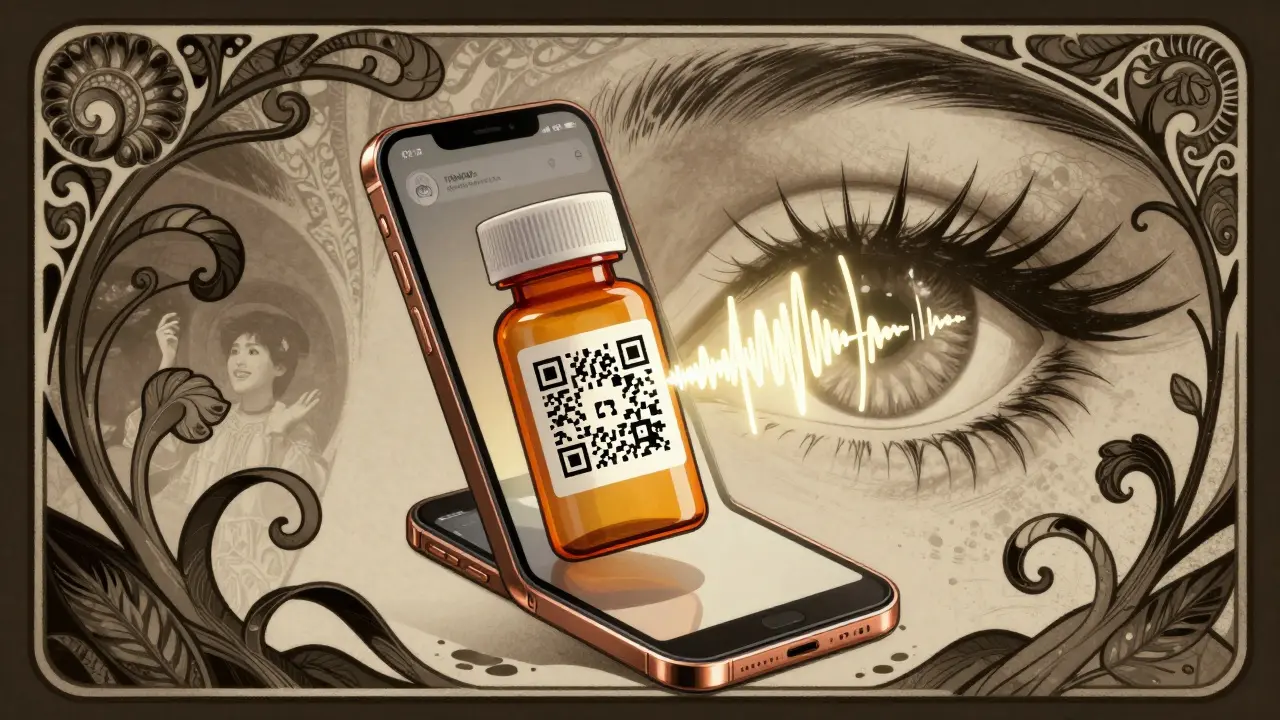
What’s Next? The Future of Accessible Labels
The FDA is pushing for even more. By 2026, electronic prescriptions and patient portals must include accessible text and audio options. CVS is spending $15 million to roll out ScripTalk to all 9,900 of its U.S. locations by late 2024. New tools like Be My Eyes’ AI-powered label reader-where a volunteer on video helps you read your label in real time-are already helping over 400,000 users monthly. The goal isn’t just convenience. It’s safety. It’s independence. It’s dignity.Frequently Asked Questions
Are large print prescription labels free?
Yes. Under the FDA Safety and Innovation Act, pharmacies cannot charge extra for accessible labels. Whether it’s large print, ScripTalk, or QR code audio, the service must be provided at no cost to the patient.
Can I get accessible labels for over-the-counter medications?
Pharmacies are not legally required to make OTC labels accessible, but many will if you ask. Some chains, like CVS and Walgreens, offer large print versions of common OTC meds upon request. Always ask at the counter.
What if my pharmacy doesn’t have ScripTalk or large print?
Ask to speak to the pharmacist or manager. Cite the FDA’s 2012 mandate. If they still refuse, file a complaint with the pharmacy’s corporate office. You can also report them to the Department of Justice under the Americans with Disabilities Act. Many pharmacies change their policy after just one complaint.
Do I need a doctor’s note to get large print labels?
No. You don’t need any documentation. You only need to ask. Pharmacies are required to provide accessible labels to anyone who requests them, regardless of diagnosis or proof of vision loss.
Can I use my smartphone to read my prescription labels?
Yes. Many pharmacies now offer QR code labels that link to audio recordings. You can also use apps like Be My Eyes or Seeing AI to scan and read standard labels using your phone’s camera. These apps are free and work with most prescription labels.
Are accessible labels available outside the U.S.?
Yes. The UK, Canada, Australia, and parts of Europe have similar programs. In Australia, some pharmacies offer large print and audio labels through national health services. Always ask your pharmacist-accessibility is becoming a global standard.
Next Steps: What to Do Today
If you or someone you care about has low vision:- Call your pharmacy right now and ask: "Do you offer large print or audible prescription labels?"
- If they say yes, request them for your next refill.
- If they say no, ask to speak to the pharmacist in charge and mention the FDA’s 2012 mandate.
- Download a free label-reading app like Be My Eyes or Seeing AI on your phone.
- Print and keep a copy of your medication list in large print at home.


