
Medication Reviews: When Seniors Should Stop or Deprescribe Medicines
Jan, 15 2026
Why So Many Seniors Are Taking Too Many Pills
It’s not unusual for a 75-year-old in Australia to be taking eight, ten, or even twelve different medications. Some are for high blood pressure. Others for cholesterol, arthritis, acid reflux, sleep, or diabetes. Maybe a few were prescribed years ago and never checked again. This isn’t care-it’s clutter. And it’s dangerous.
More than 36% of older Australians are on five or more medications at once. That’s polypharmacy. And while some of those pills are essential, many aren’t. In fact, studies show that up to 30% of medications taken by seniors are either unnecessary, outdated, or doing more harm than good. The result? Dizziness, falls, confusion, kidney damage, stomach bleeds, and hospital visits that could’ve been avoided.
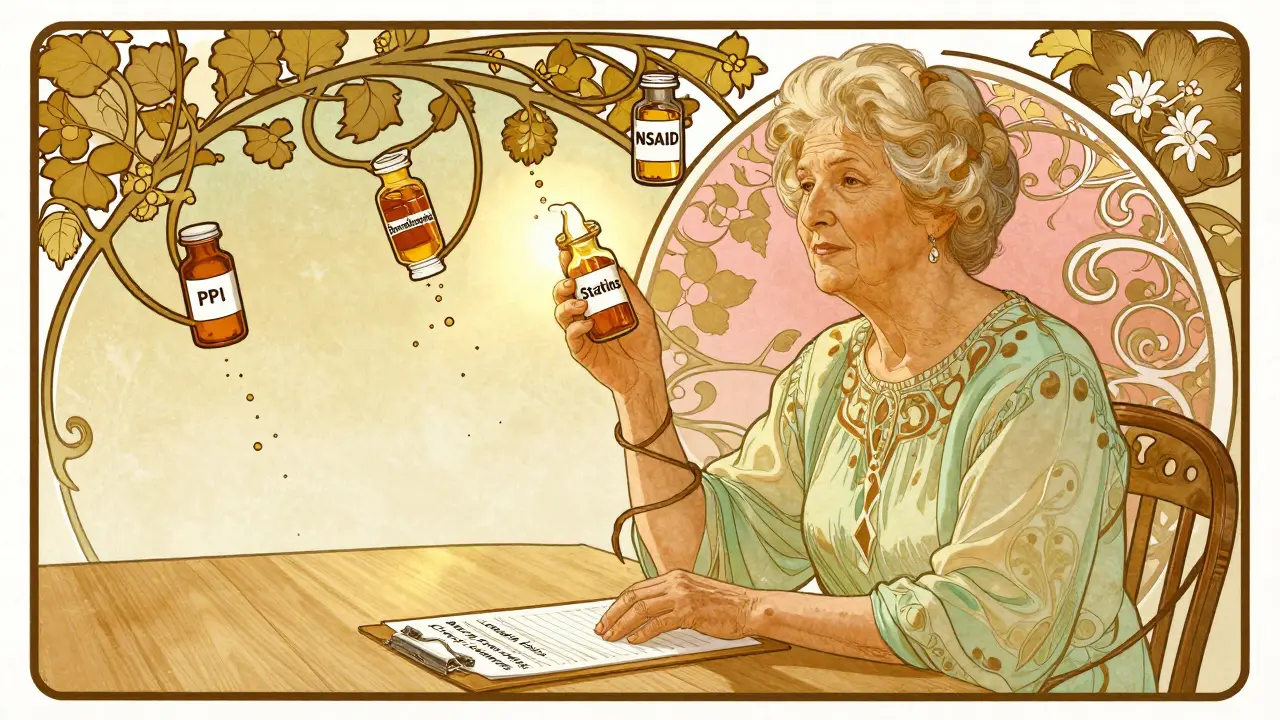
Deprescribing isn’t about cutting pills just because there are too many. It’s about asking: Is this still helping? Is it worth the risk? It’s a deliberate, thoughtful process-and it’s one that every senior, caregiver, and doctor should be having.
When It’s Time to Ask: Should This Medicine Stay?
Not every pill needs to be taken forever. Some medications lose their value as people age or their health changes. Here are the clear signs it’s time to talk about stopping:
- New symptoms show up-like confusion, dizziness, nausea, or weakness-after starting a new drug. These aren’t just "old age." They could be side effects. A 2022 study found that nearly 40% of new symptoms in seniors over 70 were linked to medications, not disease.
- Life goals have shifted-if someone’s focus is now comfort, not longevity, then preventing a heart attack 10 years from now doesn’t matter as much as feeling alert and pain-free today. Preventive drugs like statins or aspirin for primary prevention often stop making sense when life expectancy is short.
- They’re in advanced dementia or frailty-if someone can’t remember to take pills, can’t swallow them, or is bedbound, continuing complex regimens like blood thinners or diabetes meds adds risk without benefit. The body changes. So should the treatment.
- They’re on high-risk drugs-medications like benzodiazepines (for sleep or anxiety), anticholinergics (for overactive bladder), or long-term proton pump inhibitors (PPIs for heartburn) have strong evidence linking them to falls, dementia, and bone fractures in older adults.
- They’ve been on the same meds for over 5 years with no check-up-if a doctor hasn’t reviewed the list in years, it’s not because it’s perfect. It’s because no one asked.
What’s the Evidence? Deprescribing Works
People worry: "If I stop this, will I get worse?" The answer, backed by dozens of studies, is usually no-and often better.
A 2023 review of 26 clinical trials showed that when seniors had their medications reviewed by a pharmacist or geriatrician, inappropriate drug use dropped by 20-50%. In one study, patients who stopped long-term PPIs (acid reducers) had no increase in heartburn symptoms-but did have fewer infections and less bone loss. Another found that stopping sleep aids like zolpidem led to improved balance and fewer falls within weeks.
And it’s not just about safety. Quality of life improves. Seniors report feeling clearer-headed, more energetic, and less burdened by pill routines. Hospital readmissions dropped by 12-25% in trials where deprescribing was done properly.
The key? It’s not about cutting all pills. It’s about cutting the wrong ones. One study found that reducing the total number of pills didn’t help-but stopping just the high-risk ones did. That’s why a targeted approach matters.

How Deprescribing Actually Works
Deprescribing isn’t just saying "stop taking this." It’s a step-by-step process:
- Review the full list-every prescription, over-the-counter, supplement, and herbal product. Many seniors take melatonin, ibuprofen, or antacids daily without telling their doctor.
- Identify the risks-use tools like the Beers Criteria or STOPP guidelines, which list medications that are risky for older adults. These aren’t guesses. They’re based on decades of research.
- Match meds to goals-if someone’s goal is to stay at home and enjoy meals with family, then a medication that causes drowsiness or confusion isn’t helping.
- Start with one-never stop multiple drugs at once. You need to know which one caused a change. If symptoms improve after stopping a pill, you’ve found your culprit.
- Monitor closely-some symptoms return after stopping, like high blood pressure or acid reflux. Others, like confusion or fatigue, disappear. Keep track for at least 4-6 weeks.
- Involve the patient-if the person doesn’t agree, it won’t work. Talk about fears, values, and what they want their life to look like.
Many GP clinics in Australia now offer free medication reviews through Medicare. These are led by pharmacists who work with your doctor. Ask for one.
Common Medicines That Often Need Stopping
Some drugs are more likely to cause trouble than others. Here are the top five that often get flagged in reviews:
- Proton Pump Inhibitors (PPIs)-like omeprazole or pantoprazole. Many take them for years for mild heartburn. But long-term use increases risk of pneumonia, kidney damage, and bone fractures. Most can be safely stopped with a gradual taper.
- Benzodiazepines and sleep aids-medications like diazepam, lorazepam, or zolpidem. These increase fall risk by up to 50% in seniors. Non-drug options like sleep hygiene or CBT-I are safer and just as effective.
- Anticholinergics-used for overactive bladder (oxybutynin), allergies, or depression. They block acetylcholine, a brain chemical. This leads to memory problems, dry mouth, constipation, and confusion. Safer alternatives exist.
- NSAIDs-ibuprofen, naproxen. Great for pain, but risky for kidneys, stomach bleeds, and heart health in older adults. Acetaminophen is often safer, or non-drug options like heat or physical therapy.
- Statins for primary prevention-if someone has never had a heart attack or stroke, and is over 75, the benefit of lowering cholesterol is small. The risk of muscle pain, diabetes, or cognitive side effects may outweigh it.

Who Should Be Involved?
Deprescribing isn’t just the doctor’s job. It’s a team effort.
- Pharmacists-they’re the experts in drug interactions and side effects. Many offer free medication reviews under Medicare. Geriatricians-specialists in aging. They know which meds are risky and which can be safely stopped.
- Caregivers-family members who help manage pills often notice changes before the doctor does. Keep a log of symptoms.
- The senior themselves-their voice matters most. If they feel worse on a pill, that’s data. If they want to feel more alert, that’s a goal.
Many hospitals now have discharge programs that include a medication review before sending seniors home. If you’re leaving the hospital, ask: "Will someone check my meds before I go?"
What If I’m Scared to Stop?
It’s normal to worry. What if the pain comes back? What if I have a stroke? What if the doctor thinks I’m not following instructions?
Here’s the truth: stopping a pill doesn’t mean giving up on health. It means choosing a better path. Many seniors fear that stopping a medication means their condition will worsen. But in reality, the medication itself might be the cause of the problem.
Start small. Ask your doctor: "Can we try stopping this for 4 weeks and see how I feel?" Keep a journal: sleep, energy, balance, digestion. Bring it back. If nothing bad happens-and you feel better-that’s a win.
And remember: every new medication should be treated like a trial. Not a lifetime commitment.
Where to Start Today
You don’t need to wait for an appointment. Here’s what you can do right now:
- Write down every pill, supplement, and cream you take-name, dose, why you take it.
- Ask your pharmacist: "Are any of these on the Beers Criteria list?" They’ll know.
- Ask your doctor: "Which of these meds are still needed? Which could I stop?"
- Request a Medicare-funded medication review. It’s free and covered.
- Download the Deprescribing.org app. It has simple guides for common drugs like PPIs and sleep aids.
Medications are tools-not trophies. The goal isn’t to take the most. It’s to take only what keeps you safe, strong, and living the life you want.
Is deprescribing the same as stopping all my meds?
No. Deprescribing means carefully stopping only the medications that are no longer helpful or are causing harm. It’s not about reducing the total number of pills-it’s about removing the ones that don’t fit your current health goals. Many people end up taking fewer pills, but only because the unnecessary ones are gone. Essential meds for heart disease, diabetes, or asthma are usually kept.
Can I stop a medication on my own?
Never stop a medication without talking to your doctor or pharmacist first. Some drugs, like blood pressure pills, antidepressants, or steroids, need to be tapered slowly. Stopping suddenly can cause serious side effects like rebound high blood pressure, seizures, or withdrawal symptoms. Always get professional guidance.
How often should seniors have a medication review?
At least once a year, or after any major health change-like a hospital stay, new diagnosis, fall, or change in memory or mobility. If you’re on five or more medications, quarterly reviews with your pharmacist are ideal. Many GPs in Australia offer free annual medication reviews under Medicare.
What if my doctor says I need all these meds?
It’s okay to ask for a second opinion. You can say: "I’ve read about deprescribing and I’m concerned about side effects. Could we review each medication to see if any can be safely stopped?" If your doctor resists, ask for a referral to a geriatrician or clinical pharmacist. They specialize in this. Your health matters more than sticking to old habits.
Are over-the-counter pills and supplements included in deprescribing?
Absolutely. Many seniors take daily ibuprofen, antacids, melatonin, or herbal supplements like St. John’s Wort-all of which can interact with prescriptions or cause side effects. These are part of the full medication picture. A pharmacist can help you decide which OTCs are safe to keep and which to stop.
Does deprescribing cost money?
No. In Australia, Medicare covers free medication reviews with a pharmacist, and most GP consultations for medication reviews are bulk-billed. There’s no extra charge. The only cost is time-time spent talking, reviewing, and monitoring. But that’s an investment that can save you from hospital visits, falls, and confusion later.


