
Patient Vigilance: How You Can Spot Fake Medicines and Protect Your Health
Feb, 10 2026
Every year, millions of people around the world take medicine they think is real-only to find out later it was fake. These aren’t just poor-quality copies. They’re dangerous. Some contain no active ingredient at all. Others have too much, too little, or the wrong chemical entirely. And they’re getting harder to tell apart from the real thing. The good news? Patients themselves are still the most powerful line of defense against counterfeit drugs.
Why Your Eyes Matter More Than You Think
You might think the system should catch fake pills before they reach you. That’s true-regulators, pharmacists, and manufacturers all have systems in place. But here’s the hard truth: even with advanced tech like barcode scanning and blockchain tracking, about 10-30% of medicines sold in low-income countries are counterfeit. In places like Sub-Saharan Africa and Southeast Asia, that number climbs even higher. In wealthy nations, it’s under 1%, but that still means thousands of people are at risk every year. The reason? Counterfeiters are smarter than ever. They copy packaging perfectly. They use the same fonts, colors, and even tamper-proof seals. Some even include fake expiration dates that look legitimate. A 2023 WHO study found that 73% of fake medicines now pass basic visual checks. That means if you don’t know what to look for, you’re likely to miss them. But here’s the flip side: patients who know what to check can catch 70-80% of counterfeits just by looking. A 2022 study in the Journal of Clinical Pharmacy and Therapeutics showed that when people took just five minutes to inspect their medicine before taking it, they stopped nearly eight out of ten fake pills from being swallowed. That’s not luck. That’s vigilance.What to Look For: The BE AWARE Checklist
You don’t need a pharmacy degree. You just need to know what to check. The World Health Professions Alliance created a simple tool called BE AWARE to help patients spot fakes. Here’s what it means:- B - Box: Is the packaging damaged? Are the edges loose? Are there smudges, blurry printing, or misspellings? Fake boxes often have typos like "Aseptic" instead of "Antibiotic."
- E - Expiration date: Is it faded? Is it stamped on with a different font than the rest of the label? Real medicine has a clear, consistent print.
- A - Appearance of the medicine: Look at the pill or capsule. Is the color off? Does it smell strange? Is the shape different from what you’ve taken before? Even a tiny change-like a different logo on a tablet-can mean it’s fake.
- A - Authenticity seals: Does the box have a tamper-evident seal? Has it been broken or resealed? Real medicine comes with a seal that can’t be opened without damage.
- R - Registration number: Look for the manufacturer’s code or batch number. In the EU and Australia, every prescription medicine has a unique serial number. If you’re unsure, ask your pharmacist to scan it.
- E - Electronic verification: New QR codes on medicine packs (now in France, Brazil, and India) let you scan and verify the product’s journey from factory to pharmacy. Use the official app-don’t trust random websites.
- A - Ask your pharmacist: If something feels off, ask. Pharmacists are trained to spot fakes. They’ll check the serial number for you. No judgment. Just safety.
Where Fake Medicine Comes From
Most counterfeit drugs don’t come from shady street vendors anymore. They come from websites that look real. In fact, 89% of fake medicines are sold online, according to Pfizer’s 2023 safety report. You might think you’re buying from a trusted pharmacy because the site looks professional. But here’s the catch: only pharmacies with the .pharmacy seal are verified in the U.S. and Europe. That seal is a guarantee. If you don’t see it, walk away. Even worse? Social media. Instagram, Facebook, and TikTok ads now sell pills with promises like “50% off your diabetes meds!” or “No prescription needed!” The FDA found that 78% of people who bought fake medicine online ignored the red flag of “too-good-to-be-true” pricing. A bottle of insulin that costs $150 in a real pharmacy might be sold for $30 online. That’s not a deal. That’s a trap. And it’s not just prescription drugs. Over-the-counter painkillers, vitamins, and even antibiotics are being faked. In 2023, Brazil’s health agency, ANVISA, confirmed a case where a woman saved her husband’s life after noticing the pills in his diabetes pack didn’t match the ones he’d taken for years. The fake ones had no active ingredient. He was lucky she checked.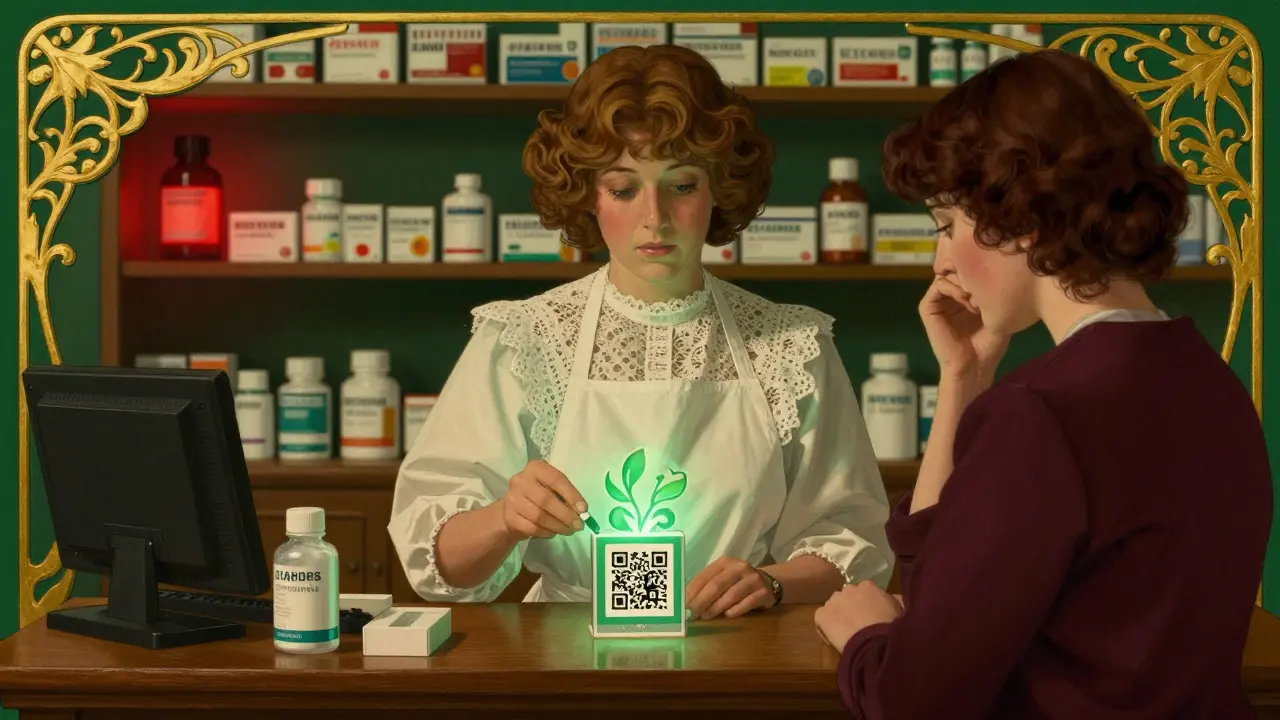
What Works-and What Doesn’t
Technology helps, but it’s not a magic fix. Serialization (unique barcodes on each box) works great in places like Europe, where scanning is required at every step. But in rural areas of Africa or Southeast Asia, pharmacies don’t have scanners. Patients do. So if you’re in a region with weak oversight, your eyes are your best tool. Some companies are trying to help. Servier and Pfizer now include QR codes on packaging that link to official verification pages. Brazil’s digital leaflet system, launched in June 2024, lets you scan a code to see the medicine’s full history. But here’s the problem: only 63% of users in Brazil actually used it in the first three months. Why? Because they didn’t know it was there. That’s why education matters more than tech. WHO’s 2021 report found that in places where patients received simple, clear training on how to check their medicine, counterfeit use dropped by up to 37%. Thailand did it. Brazil is doing it. But in low-income countries, only 29% of patients even know what to look for.What You Can Do Today
You don’t need to be a detective. Just follow these steps:- Only buy from verified pharmacies. In the U.S., look for .pharmacy. In Australia, use only registered pharmacies listed on the Therapeutic Goods Administration (TGA) website.
- Never buy medicine from social media or unknown websites. If it’s not a trusted pharmacy, it’s not safe.
- Check every package, every time. Even if you’ve bought the same drug before. Counterfeiters switch batches.
- Use the MedCheck app (or your country’s official tool). It’s free, works offline, and scans QR codes or serial numbers.
- Report anything suspicious. In Australia, call the TGA hotline. In the U.S., use the FDA’s MedWatch system. Your report could stop a whole shipment.
What to Do If You Think You’ve Taken a Fake
If you suspect you’ve taken a counterfeit drug:- Stop taking it immediately.
- Keep the packaging-even if it’s empty.
- Call your doctor or go to the nearest emergency room.
- Report it to your national health authority. Your report helps others.
It’s Not Just About You
When you check your medicine, you’re not just protecting yourself. You’re protecting your family, your neighbors, and your community. Fake drugs don’t just cause illness-they weaken trust in healthcare systems. In places where counterfeit medicine is common, people stop believing in doctors, pharmacies, and even vaccines. The fight against fake drugs isn’t just for regulators or police. It’s for you. Because no matter how advanced the tech gets, the last person to see a pill before it’s swallowed? That’s you.How can I tell if an online pharmacy is real?
Look for the .pharmacy seal on the website. In the U.S., only pharmacies verified by the National Association of Boards of Pharmacy (NABP) can use this seal. In Australia, check the Therapeutic Goods Administration (TGA) website to confirm the pharmacy is licensed. If the site doesn’t clearly list a physical address or phone number, avoid it. Also, real pharmacies require a prescription for controlled medicines-any site that sells them without one is fake.
Can fake medicine look exactly like the real thing?
Yes. Modern counterfeiters use high-quality printers, real packaging materials, and even replicate the exact size, weight, and color of genuine pills. Some fakes have the same serial numbers as real ones. That’s why visual checks alone aren’t 100% foolproof. But combining inspection with verification tools-like scanning QR codes or checking serial numbers at the pharmacy-can catch most fakes. If something feels off, even if it looks right, trust your gut and ask your pharmacist.
Are counterfeit drugs only a problem in developing countries?
No. While 10-30% of medicines in low-income countries are fake, even wealthy nations aren’t immune. The WHO estimates 1% of medicines in the U.S. and Europe are counterfeit. That still means tens of thousands of dangerous pills enter circulation each year. Most come from fake online pharmacies that ship globally. You don’t need to be in a remote village to be at risk-you just need to click the wrong link.
What should I do if I bought medicine from a website that turned out to be fake?
Stop using the medicine immediately. Contact your doctor to discuss any symptoms you’ve had. Report the website to your country’s health authority-Australia’s TGA, the U.S. FDA, or the EU’s EMA. Keep the packaging and any receipts. These help authorities track down the source. And warn others. Share your story (without sharing personal details) on trusted health forums or social media to prevent others from making the same mistake.
Is it safe to buy medicine from a pharmacy in another country?
Only if it’s a licensed pharmacy in a country with strong drug safety regulations. Buying from countries with weak oversight-like some in Latin America, Southeast Asia, or Eastern Europe-carries serious risk. Even if the price is lower, you can’t be sure what’s in the pills. The FDA warns that 97% of online pharmacies outside the U.S. are not legitimate. Stick to pharmacies in your own country, or those with verified international accreditation.


