
Prescription Assistance Programs: How Drug Manufacturers Help You Afford Medications
Dec, 1 2025
Getting prescribed a life-changing medication shouldn’t mean choosing between paying rent or filling your prescription. For millions of people in the U.S., prescription assistance programs run directly by drug manufacturers are the only reason they can take their medicine. These aren’t charity handouts-they’re structured programs designed to cut out-of-pocket costs for brand-name drugs, especially when insurance doesn’t cover enough.
Two Types of Help: Copay Cards and Free Medications
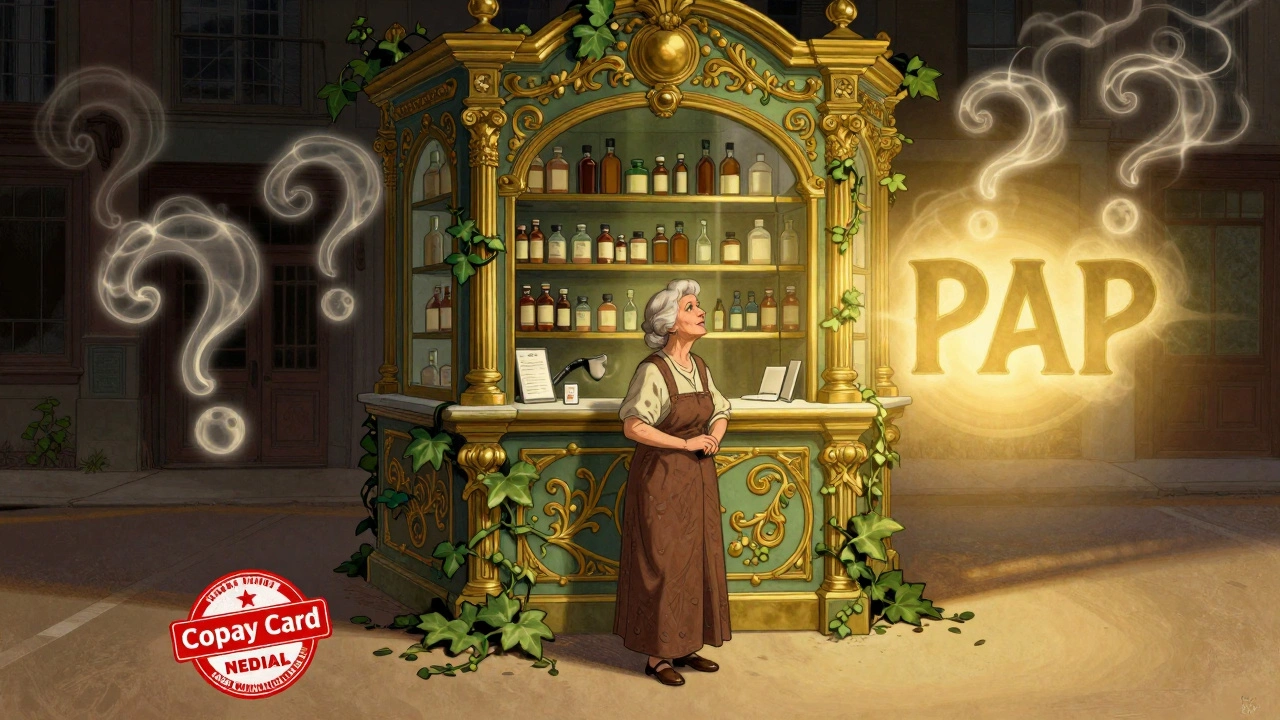
There are two main ways drug companies help patients afford prescriptions: copay assistance programs and Patient Assistance Programs (PAPs). They sound similar, but they’re built for completely different people.Copay assistance programs are for people who have insurance but still pay too much at the pharmacy. Think of them like coupons you use at checkout. You hand over your insurance card and a manufacturer’s copay card, and the drug company pays the difference between what your plan says you owe and what the drug actually costs. For example, if your copay is $150 for a specialty asthma inhaler, the manufacturer might cover $135, leaving you to pay just $15. These cards are often available instantly at the pharmacy counter.
Patient Assistance Programs (PAPs) are for people with no insurance-or insurance that doesn’t cover their meds. These programs give you the drug for free or at a tiny cost, sometimes as low as $10 per month. But they’re not easy to get. You need to prove your income is below 200% to 400% of the Federal Poverty Level. For a family of four in 2023, that’s between $30,000 and $60,000 a year. You’ll need tax returns, pay stubs, and a doctor’s note confirming the medication is medically necessary.
Who Gets Help-and Who Doesn’t
Not everyone qualifies. And that’s where things get messy.Copay cards are great if you have private insurance. But if you’re on Medicare Part D or Medicaid, you might be out of luck. Most manufacturer programs don’t allow you to use their cards if you’re on government insurance. Why? Because Medicare rules say these payments don’t count toward your True Out-of-Pocket (TrOOP) costs. That means you stay stuck in the coverage gap longer, paying more over time. Medicaid programs in 78% of states ban copay assistance entirely, worried it pushes patients toward pricier brand-name drugs instead of cheaper generics.
PAPs are more flexible for the uninsured, but they often exclude people with any kind of insurance-even if that insurance doesn’t cover the drug. A 2024 review found that 62% of PAPs won’t help you if you have Medicaid, Medicare, or even a high-deductible plan. That leaves millions of underinsured people caught in the middle: they have insurance, but it doesn’t actually help them afford their meds.
How Much Do These Programs Actually Save?
The numbers are huge. In 2022 alone, pharmaceutical companies gave away $24.5 billion in patient assistance. That helped 12.7 million people get the drugs they needed. For specialty drugs-like those for rheumatoid arthritis, cancer, or multiple sclerosis-copay assistance can cut costs by 50% to 100%. Some programs cap savings at $25,000 per year. Others limit you to $200 per month. Teva’s Cares program, for example, gives certain generic drugs free to U.S. residents who qualify.For someone taking Dulera for asthma, a manufacturer’s program might reduce their cost from $120 to $15 per prescription-up to 12 times a year. That’s $1,260 saved annually. For a cancer drug costing $8,000 a month, a copay card could bring it down to $100. Without it, many patients simply stop taking the drug.
The Hidden Costs: Why Critics Say These Programs Are Flawed
Supporters say these programs save lives. And they do. But critics point to a darker side.A 2022 study in JAMA Internal Medicine found that copay assistance programs may actually be driving up total drug spending. By making expensive brand-name drugs feel affordable, they discourage patients from switching to cheaper generics-even when those generics are just as effective. Researchers estimated this behavior added $1.4 billion to national drug costs in one year.
Another problem? Insurance companies are fighting back. More than 78% of major insurers now use “copay accumulator” programs. That means your manufacturer’s $100 payment doesn’t count toward your deductible. You still have to pay $5,000 out of pocket before your insurance kicks in, even though you’ve already paid $1,000 in copays thanks to the card. It’s a loophole that benefits insurers and drugmakers-but hurts patients.
And then there’s the lack of oversight. The NIH says no single agency tracks how many people use PAPs, how long they stay enrolled, or whether they’re getting better health outcomes. There’s no accountability. Just a system that works-until it doesn’t.
How to Find and Apply for Help
You don’t have to figure this out alone. The Medicine Assistance Tool (MAT), run by the pharmaceutical industry’s main trade group, is a free, confidential search engine that pulls up over 900 assistance programs. Just enter your drug name, insurance status, and income, and it shows you what’s available.For copay cards:
- Ask your doctor or pharmacist if the drug has a manufacturer copay program.
- Go to the drugmaker’s website or use MAT to download or print a card.
- Bring it to the pharmacy with your insurance card.
- Pay your reduced copay-usually under $20.
For PAPs:
- Check eligibility requirements-most require income under 400% of the Federal Poverty Level.
- Gather documents: tax returns, pay stubs, proof of residency, and a prescription from your doctor.
- Fill out the application. It can take 45 to 60 minutes per program.
- Wait for approval. Some programs take weeks.
- Once approved, the drug is shipped directly to you-or you get a voucher for the pharmacy.
Some programs require yearly reapplications. Others renew automatically if your income hasn’t changed. Keep track of deadlines.
What’s Changing in 2025?
The rules are shifting fast. As of January 2024, 22 states have passed laws to limit or require transparency around copay assistance. California now forces drugmakers to publicly report how much they spend on these programs. The federal government is also looking at new rules to make these programs more transparent and fair.Meanwhile, pharmacy systems are getting smarter. MAT now connects directly with some pharmacy software, so your copay discount is applied automatically-no card needed. That’s a big win for patients who forget to bring their card or don’t know how to use it.
But the big question remains: are these programs fixing the problem-or just patching it? With 28 million Americans still uninsured and drug prices rising faster than wages, these programs are a lifeline. But they’re not a solution. Until the system changes, they’ll keep saving lives one prescription at a time.
What If You’re Denied?
If you’re turned down for a PAP or can’t use a copay card, don’t give up. Try these steps:- Ask your doctor for samples-they often have free starter packs.
- Check nonprofit organizations like the Patient Advocate Foundation or NeedyMeds-they offer grants or referrals.
- Call the drugmaker’s patient support line directly. Sometimes reps can override system denials.
- Ask if there’s a generic version or alternative drug covered by your plan.
One woman in Ohio, diagnosed with multiple sclerosis, was denied PAP help because she had Medicaid. She called the drug company’s support line every week for three months. Finally, someone made an exception. She’s been on the drug for two years now. Her story isn’t rare-it’s just not often talked about.
Do I qualify for a manufacturer prescription assistance program if I have Medicare?
You can qualify for a Patient Assistance Program (PAP) if you have Medicare, but you usually can’t use manufacturer copay cards. PAPs provide free or low-cost drugs directly to you, outside of Medicare’s Part D benefit. However, these payments don’t count toward your Medicare out-of-pocket spending, which means you may stay in the coverage gap longer. Always check the specific program’s rules-some PAPs exclude Medicare patients entirely.
Can I use a copay card with Medicaid?
In most cases, no. As of 2024, 78% of state Medicaid programs prohibit the use of manufacturer copay assistance. They view it as encouraging higher-cost brand-name drugs over cheaper generics. Even if your copay card reduces your out-of-pocket cost, Medicaid won’t allow it to be applied. You’ll need to look into Patient Assistance Programs (PAPs) instead-if you qualify.
How do I know if my drug has a manufacturer assistance program?
Start by asking your pharmacist or doctor. Most brand-name drugs-especially specialty medications for conditions like diabetes, rheumatoid arthritis, or cancer-have a program. You can also use the free Medicine Assistance Tool (MAT) from PhRMA. Just enter your drug name, and it will show you if there’s a copay card, PAP, or other support available. About 85% of specialty drugs now offer some kind of manufacturer assistance.
Do I need to reapply every year for a Patient Assistance Program?
It depends on the program. Some PAPs require annual re-enrollment-you’ll need to submit updated income documents each year. Others offer continuous coverage as long as your situation doesn’t change. Always check the program’s renewal policy. Missing a deadline can mean losing your medication. Set a calendar reminder a month before your renewal date.
Why are some copay assistance programs being banned by states?
States are concerned that copay assistance encourages patients to choose more expensive brand-name drugs over lower-cost generics-even when the generics are just as effective. This drives up overall drug spending, which affects insurance premiums and public programs like Medicaid. As of 2024, 22 states have passed laws restricting these programs, and more are considering similar rules. The goal is to reduce long-term costs, but critics say it puts patients at risk of going without needed meds.
Can I use more than one manufacturer assistance program at the same time?
Yes, if you’re taking multiple medications from different manufacturers. Each program is tied to a specific drug, so you can use a copay card for one prescription and enroll in a PAP for another. Just make sure each program allows it-some have rules against stacking assistance. Always disclose all your assistance sources to your pharmacist to avoid billing errors.


