
When to Call Poison Control vs. Emergency Services for Overdose

Mar, 10 2026
When someone overdoses, every second counts. But calling the wrong number can cost time, resources, and maybe even a life. You might think, "I’ll just call 911 just to be safe." But sometimes, that’s not the best move. And sometimes, waiting to call Poison Control could be deadly. Knowing exactly when to call each service isn’t about guessing-it’s about recognizing clear signs and acting fast.
What Poison Control Actually Does
Poison Control isn’t a backup for 911. It’s a specialized medical hotline staffed by toxicology experts-pharmacists, nurses, and doctors trained in poison management. In the U.S., the national number is 1-800-222-1222, and it’s free, confidential, and available 24/7. These centers handle about 2.1 million cases a year. Most of those aren’t emergencies. They’re accidental ingestions: a toddler swallowing a multivitamin, an adult taking two pain pills by mistake, or someone mixing medications they didn’t realize were dangerous. The goal? To prevent unnecessary trips to the ER. Studies show Poison Control helps avoid around 300,000 emergency room visits each year, saving the healthcare system over $1.8 billion. If you call them for a low-risk situation, they’ll guide you through monitoring at home. They’ll tell you what to watch for, how long to wait, and when to switch to emergency care if things change.When to Call 911 Immediately
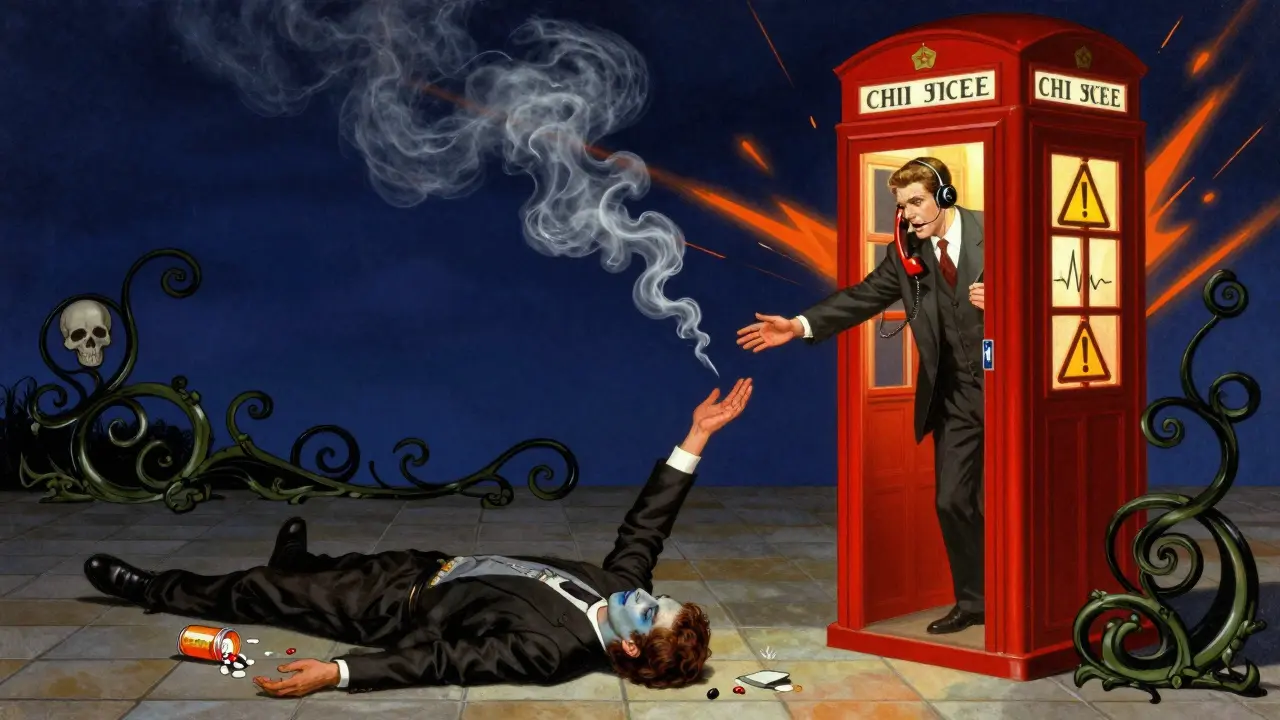
Don’t wait. Don’t call Poison Control first. If the person is in immediate danger, dial 911 right away. Here’s when:- They can’t breathe or are gasping. Respiratory arrest is the leading cause of death in overdoses. If breathing is shallow, slow, or stopped, it’s a code red.
- They’re unresponsive. If you shake them, shout their name, or pinch their skin and they don’t react, they’re not just asleep. They’re in a coma.
- They’re having a seizure. A seizure lasting more than five minutes means the brain is in crisis. This isn’t normal.
- Their heart is failing. If their skin is cold and clammy, their lips are blue, or their pulse is weak or gone, they’re going into cardiac arrest.
- They’re under 1 year old or over 79 years old. These groups are far more vulnerable. Even a small overdose can be fatal. Emergency services are required.
- You suspect an intentional overdose. If someone took pills to hurt themselves, especially multiple drugs, they need emergency care now. Over 68% of suicide attempts involve more than one substance, and nearly half develop breathing problems within 15 minutes.
When to Call Poison Control Instead
If the person is awake, breathing normally, and acting like themselves, Poison Control is your best first step. This applies to situations like:- A child accidentally swallowed one extra aspirin or a single dose of children’s medicine.
- An adult took two doses of their blood pressure pill by mistake but feels fine.
- Someone ingested a household cleaner but didn’t vomit or show any symptoms.
What Information to Have Ready
Whether you call 911 or Poison Control, being prepared saves time. Don’t waste precious minutes searching for a pill bottle. Keep this info handy:- Product name and strength. Don’t say "pain medicine." Say "ibuprofen 800 mg extended-release." The formulation changes everything.
- Exact amount ingested. Was it half a tablet? One teaspoon? A whole bottle? Estimate as accurately as you can.
- Time of exposure. Did it happen 10 minutes ago? Two hours ago? Timing determines how the body is reacting.
- Patient’s weight. Toxicity is calculated per kilogram. A 60 kg adult and a 100 kg adult can react very differently to the same dose.
- Current symptoms. Even if they seem fine, say "no symptoms yet" or "nausea started 20 minutes ago."
- First aid given. Did you give them water? Did you try to make them vomit? Don’t guess-just tell them what you did.
Keep pill bottles and product labels in a visible spot. If you’re helping someone, grab the container before you call. The label has the concentration, expiration date, and warnings-details Poison Control needs to give accurate advice.
Special Cases That Change the Rules
Some situations don’t fit neatly into "call 911" or "call Poison Control." Here’s what you need to know:- Opioid overdoses. If you have naloxone (Narcan), use it immediately. But even if they wake up, call 911. Synthetic opioids like fentanyl can wear off before the drug does. People have died after seeming fine for 30 minutes.
- Carbon monoxide poisoning. No matter how mild the symptoms-headache, dizziness, nausea-call 911. The damage can show up hours later.
- Children under 6. If they’re asymptomatic and took less than one tablet of most medications, Poison Control can guide home monitoring. But for clonidine, sulfonylureas, or iron supplements, go straight to the ER. These are deadly in tiny amounts.
- Adults over 75. Even a small overdose can be fatal. Older adults often take five or more medications. Interactions are unpredictable. Any significant exposure? Get them to the hospital.
- Multiple substances. Mixing alcohol, prescription drugs, and illegal drugs? Call 911. The combination can suppress breathing in ways no one can predict.
What Not to Do
There are common myths that can make things worse:- Don’t make someone vomit. It can cause choking or burn the throat. Poison Control rarely recommends it anymore.
- Don’t wait to see if they "get better." Some poisons act slowly. A person can seem fine for hours, then crash.
- Don’t rely on apps or websites alone. The Poison Help app gives general advice, but it can’t replace real-time expert advice. If there’s any doubt, call.
- Don’t assume it’s "just a pill." A single pill can be lethal if it’s extended-release, if the person is small, or if they’re on other meds.
Technology Isn’t Always the Answer
You can use webPOISONCONTROL online or the Poison Help app, but they have limits. The online tool works well for low-risk cases with clear details. But it can’t handle:- Symptoms
- Intentional overdoses
- Multiple substance exposures
- Infants or elderly patients
Over 30% of overdose cases fall into these high-risk categories. If any of these apply, skip the app and call. The app is a guide, not a substitute for human expertise.
Why This System Works
The reason Poison Control and 911 exist side by side is simple: efficiency saves lives. Emergency services are for life-threatening crises. Poison Control is for expert guidance before things get that bad. When used right, Poison Control reduces unnecessary ER visits by nearly 40%. That means ambulances and ER beds are free for people who truly need them.But it only works if you make the right call. A 2023 survey found that 68% of emergency doctors had seen patients who were sent to the ER after calling Poison Control for high-risk cases-like calcium channel blocker overdoses, which can cause sudden heart failure hours later. Those patients didn’t need to be there. But they almost died because no one called 911 in time.
On the flip side, when Poison Control is called early for low-risk cases, 82% of pediatric exposures are safely managed at home. That’s 197,000 kids who didn’t have to go to the hospital, and 197,000 families who avoided the stress, cost, and disruption of an ER visit.
Final Rule: When in Doubt, Call 911
There’s no shame in calling 911 if you’re unsure. Emergency responders are trained to handle false alarms. They’d rather come for nothing than miss a real emergency. But if you’re certain the person is stable, alert, and breathing normally, call Poison Control first. It’s faster, free, and designed for exactly this.The system works when you know the rules. Memorize the red flags. Keep pill bottles handy. Don’t guess. Act fast. And remember: in overdose situations, timing isn’t just important-it’s everything.
Can I just use the Poison Control app instead of calling?
The Poison Help app gives general first aid info, but it doesn’t connect you to a real expert. It can’t handle symptoms, multiple substances, infants, elderly patients, or intentional overdoses. If there’s any doubt, call 1-800-222-1222. The app is a backup, not a replacement.
What if I’m not sure if it’s an overdose?
Call Poison Control. They’re trained to assess risk even when symptoms aren’t obvious. If they think it’s dangerous, they’ll tell you to call 911. If it’s harmless, they’ll tell you how to monitor at home. Better to ask than wait.
Is it safe to wait and see if someone gets better after an overdose?
No. Some poisons, like certain painkillers or heart medications, cause delayed toxicity. A person can seem fine for hours, then suddenly stop breathing. Don’t wait. Call Poison Control or 911 right away.
Do I need to know the exact amount taken?
Yes, as accurately as possible. A child swallowing half a pill is very different from swallowing a whole bottle. If you don’t know the exact amount, say "I think it was one tablet" or "about a teaspoon." Better than nothing. The experts can still help.
Can Poison Control help with illegal drugs?
Yes. Poison Control handles all substances, including illegal drugs. They don’t report you to police. Their only goal is to keep you alive. If someone used cocaine, fentanyl, or meth, call them. They’ll tell you what to watch for and whether to call 911.
What if I’m not in the U.S.?
The U.S. Poison Help line (1-800-222-1222) only works within the U.S. and its territories. If you’re elsewhere, look up your country’s national poison control number. Australia’s is 13 11 26. Canada’s is 1-844-POISON-1. Don’t guess-find your local number before you need it.
If you’re caring for someone at risk-whether it’s a child, an elderly parent, or someone with a history of substance use-keep this information handy. Print it. Save it on your phone. You never know when you’ll need it.


