
Glossary of FDA Label Terms: From Contraindication to Precaution
Jan, 3 2026
What You Need to Know About FDA Drug Label Terms
When you see a prescription bottle or read the patient information sheet that comes with your medication, you’re looking at a legal document. It’s not just advice-it’s the FDA’s official, binding instructions on how that drug should be used, who should avoid it, and what risks to watch for. The language on these labels isn’t random. Every word is carefully chosen to protect patients and guide doctors. But if you’ve ever stared at a label wondering what "contraindication" or "precaution" really means, you’re not alone. These terms are standardized across all FDA-approved drugs in the U.S., and understanding them can help you make smarter decisions about your health.
Indications and Usage: What the Drug Is Approved For
This is the first real section you’ll see on any FDA-approved drug label. It tells you exactly what the drug is approved to treat. Not "might help," not "used for sometimes." It’s the specific disease, condition, or symptom the FDA has reviewed and confirmed the drug works for. For example, the label for Keytruda doesn’t say "cancer treatment." It says: "treatment of patients with unresectable or metastatic melanoma as a single agent or in combination with ipilimumab." That level of detail matters. It means the drug was tested in people with that exact type of cancer, in that exact stage, and only those patients. If your condition doesn’t match, the drug hasn’t been proven safe or effective for you. The FDA requires this section to be backed by solid clinical trials-no guesses, no assumptions. This is the foundation of everything else on the label.
Contraindication: When the Drug Is Absolutely Not Safe
Contraindication means: don’t use this drug here. It’s not a suggestion. It’s a red flag. The FDA defines it as a specific situation where using the drug could cause serious harm-or even death. There are two types: absolute and relative. Absolute contraindications mean never use it. For example, Xarelto (rivaroxaban) lists "active pathological bleeding" as a contraindication. If you’re currently bleeding internally, taking this blood thinner could be fatal. Relative contraindications mean use with extreme caution. For instance, a patient with severe kidney disease might still get a drug like metformin, but only at a much lower dose and with close monitoring. The FDA requires these to be stated clearly, concisely, and without vague language. They can’t say "may cause problems"-they have to say exactly what the problem is. This section is placed right after Indications and before Warnings, so doctors see it early. In fact, every single new drug approved from 2020 to 2023 included this section in the Highlights box at the top of the label. No exceptions.
Warnings and Precautions: What Could Go Wrong
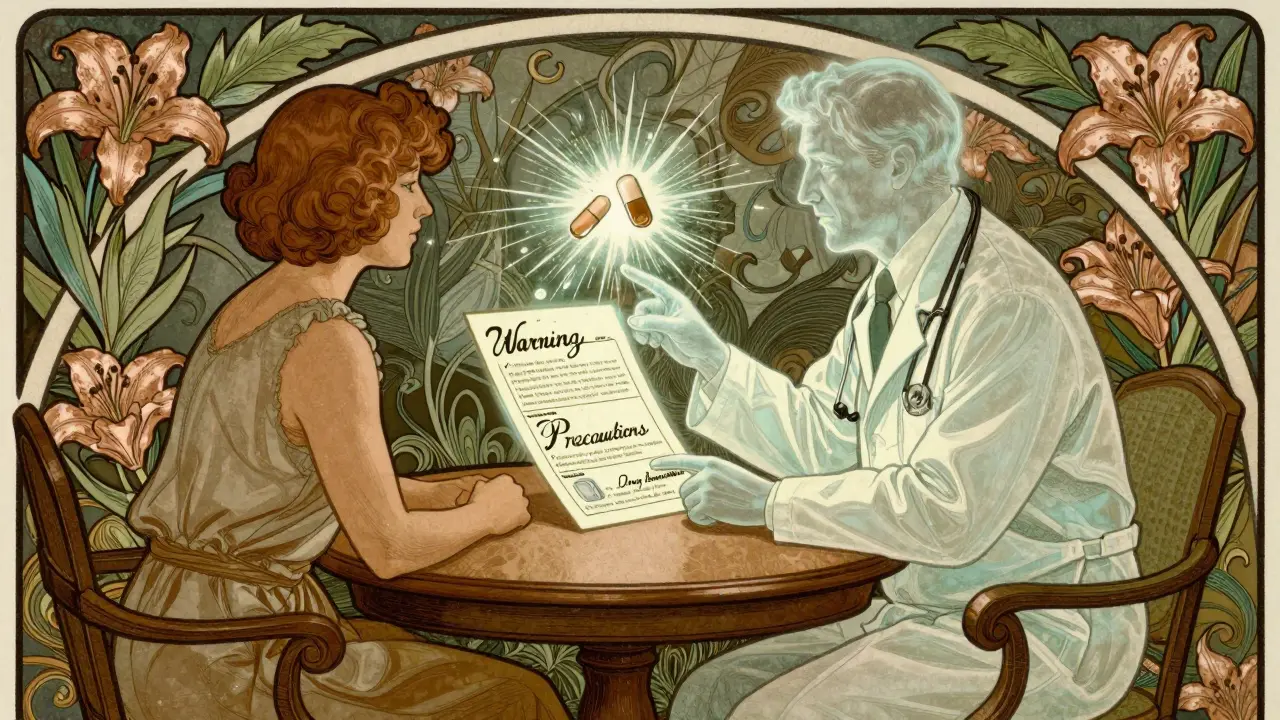
This is the most important section for safety. It’s not just about side effects-it’s about serious risks you need to watch for. The FDA combines Warnings and Precautions into one section now, but they’re different. Warnings are the big, life-threatening risks. These get their own Boxed Warning-the most prominent warning on the label, printed in a black border at the top of the page. For example, Trulicity has a Boxed Warning about thyroid tumors in rodents. While no human cases have been confirmed, the FDA requires the warning because the risk can’t be ruled out. Precautions are other important safety issues that aren’t as immediately dangerous but still need attention. This includes things like increased risk of pancreatitis, changes in blood sugar, or interactions with other medications. The FDA requires each warning or precaution to include three things: the risk, the evidence behind it, and what to do about it. So it’s not just "may cause liver damage." It’s "cases of severe liver injury have been reported; monitor liver enzymes every 3 months and discontinue if ALT exceeds 3 times the upper limit of normal." That’s the level of detail the FDA demands.
Drug Interactions: What Else You’re Taking Matters
Drugs don’t work in isolation. They react with other drugs, supplements, even food. The FDA requires manufacturers to test for interactions with major metabolic pathways-especially enzymes like CYP3A4 and transporters like P-gp. If a drug like Eliquis (apixaban) is broken down by CYP3A4, and another drug blocks that enzyme (like ketoconazole), then Eliquis builds up in your blood. That can lead to dangerous bleeding. The label doesn’t just say "avoid certain drugs." It names them: "concomitant use with strong dual inhibitors of CYP3A4 and P-gp (e.g., ketoconazole, itraconazole, lopinavir/ritonavir) increases apixaban exposure and should be avoided." This isn’t theoretical. Between 2019 and 2023, drug interactions contributed to 12.3% of medication error reports involving new drugs. The FDA has tightened these requirements because real people are getting hurt. If you’re on multiple medications, this section is your first stop. Don’t assume your pharmacist knows everything. Read it yourself.
Dosage and Administration: How Much, When, and How
This section tells you exactly how to take the drug. Not "take one daily." It says: "200 mg orally every 3 weeks" or "take with food to reduce nausea." It includes dose adjustments for special populations-older adults, people with kidney or liver problems, children. For example, the label for Humira specifies different doses for adults versus pediatric patients with juvenile idiopathic arthritis. It also tells you how to handle missed doses, how to prepare injectable forms, and what to do if side effects occur. The FDA requires this to be clear, step-by-step, and easy to follow. In 2023, this was the second most common section needing updates after approval-mostly because new data showed better dosing strategies for certain groups. If the label says "take on an empty stomach," don’t assume it’s okay to take with a snack. The difference could affect how well the drug works.
Description: The Science Behind the Drug
This is the technical section. It’s not meant for patients, but it’s there for doctors and scientists. It gives the chemical name, structure, and physical properties of the active ingredient. For example, Humira’s label describes it as "a recombinant human IgG1 monoclonal antibody" with a molecular weight of approximately 148 kDa. This isn’t fluff. It tells professionals how the drug works at a molecular level. Is it a small molecule? A biologic? Does it have chiral centers that affect its activity? This information helps doctors understand why interactions happen or why certain patients respond differently. The FDA requires this section to appear in both the Highlights and the full labeling. Compliance is high-92% of new drugs in 2023 got it right. If you’re a patient, you can skip this. But if you’re a clinician or researcher, this is where the science lives.
Patient Counseling Information: What You Should Know as a Patient
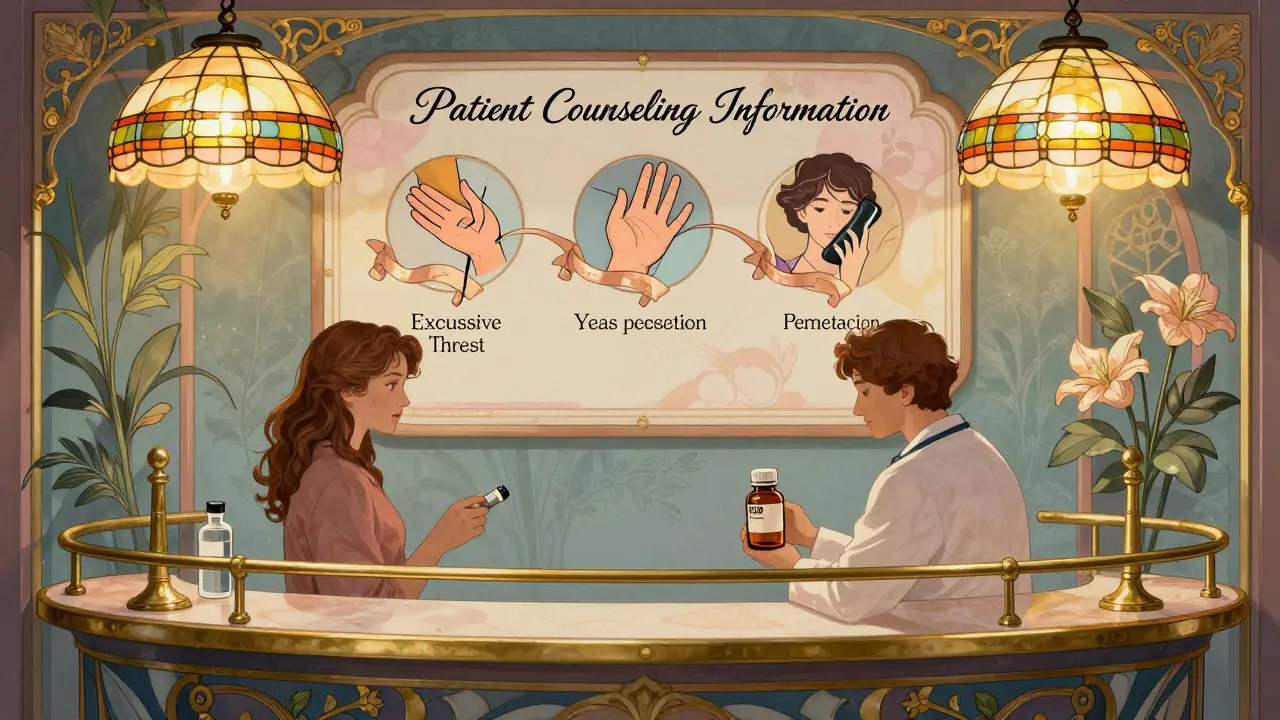
This section is designed for you. It’s the bridge between the medical jargon on the label and what you actually need to do. The FDA requires it to be written in plain language-no Latin terms, no vague warnings. Jardiance’s label doesn’t say "risk of diabetic ketoacidosis." It says: "Report symptoms of genital yeast infections, increased thirst or urination, and signs of ketoacidosis to your healthcare provider immediately." That’s actionable. It tells you exactly what to look for and what to do. The FDA’s own survey found that 73% of healthcare providers consider this section critical for patient adherence. But here’s the problem: only 41% of patients report receiving counseling based on this section. That’s a gap. Don’t wait for your doctor to bring it up. Ask: "Is there anything in the patient counseling section I should pay attention to?" Read it. Keep it. It’s your safety net.
How Labels Change After Approval
A drug’s label isn’t set in stone. When new safety data comes in-like a rare side effect reported in 1 out of 10,000 patients-the FDA requires the manufacturer to update the label. Between 2015 and 2020, 97% of these updates happened through the Category 2 change process, which allows for faster revisions without full reapproval. The most common reasons? New drug interactions, updated dosing for special populations, or new warnings about serious side effects. The FDA’s Drugs@FDA database is updated in real time, so you can always check the latest version. If you’ve been on a medication for years, it’s worth checking if the label changed. That new warning might explain why your doctor recently adjusted your dose.
Why This Matters for You
Drug labels are designed to protect you. They’re not marketing materials. They’re legal documents built on science, reviewed by experts, and enforced by the FDA. When you understand terms like contraindication, precaution, and drug interaction, you’re not just reading a label-you’re reading your own safety manual. You don’t need to be a doctor to use this information. You just need to be curious. Ask questions. Read the patient counseling section. Compare your medications to the interaction list. If something doesn’t make sense, ask your pharmacist or doctor to explain it. The more you know, the less likely you are to be caught off guard by a side effect or a dangerous interaction. In a world where medications are more complex than ever, your best defense is understanding what’s written on the label.
What’s the difference between a contraindication and a precaution?
A contraindication means the drug should not be used at all because it could cause serious harm-like active bleeding with a blood thinner. A precaution means the drug can be used, but with extra care-like using a lower dose in someone with kidney disease. Contraindications are absolute; precautions are conditional.
Are FDA labels the same for all drugs?
Yes, in structure. All prescription drug labels follow the same format called the Physician Labeling Rule (PLR). They always include Indications, Contraindications, Warnings and Precautions, Drug Interactions, Dosage and Administration, Description, and Patient Counseling Information. The content changes, but the organization doesn’t. This makes it easier for doctors to find critical information quickly.
Can I trust the information on the drug label?
Yes. FDA-approved labels are legally binding and based on clinical trial data reviewed by experts. Manufacturers must prove safety and effectiveness before approval, and they’re required to update the label if new risks emerge. While no system is perfect, the FDA’s process is the most rigorous in the world. Always rely on the official label-not ads, blogs, or social media.
Why does the label say "not for use in children" if my child was prescribed it?
That label means the drug hasn’t been tested or approved for use in children. If your child was prescribed it, your doctor is using it "off-label"-meaning they believe the benefits outweigh the unknown risks based on clinical experience or limited data. This is legal and sometimes necessary, but it’s not the same as FDA approval. Always ask your doctor why they chose this drug and what evidence they’re relying on.
Where can I find the latest version of a drug label?
Go to the FDA’s Drugs@FDA database. Search by the drug name or active ingredient. Each listing includes the most current approved label, with dates showing when it was last updated. This is the only official source. Avoid third-party websites that may not be current.
Next Steps: What to Do Today
Take 10 minutes right now. Find a prescription you’re taking. Open the patient information sheet. Go to the section labeled "Patient Counseling Information." Read it out loud. Does it tell you what symptoms to watch for? Does it say what to do if you miss a dose? If not, call your pharmacist. Ask them to explain the contraindications and drug interactions listed. Write down the answers. Keep them with your medication. You don’t need to memorize everything. But you do need to know the red flags. That’s how you take control of your health-by understanding the rules written to protect you.


