
Pharmacy Sourcing Requirements: Legitimate Drug Procurement Standards

Dec, 3 2025
Every pill, injection, or capsule that ends up on a pharmacy shelf didn’t just appear there. It traveled through a complex network of manufacturers, distributors, and wholesalers-each step regulated to keep fake, stolen, or contaminated drugs out of patients’ hands. If you’re running a pharmacy, whether it’s a small independent shop or a large hospital system, understanding legitimate drug procurement isn’t optional. It’s the line between saving lives and accidentally harming them.
Why Legitimate Sourcing Matters More Than Ever
The global pharmaceutical supply chain is worth over $1.3 trillion. But an estimated 1% of that-roughly $200 billion-is made up of counterfeit or illegally diverted drugs, according to the World Health Organization. These aren’t just fake brand-name pills. They can be expired medications repackaged, diluted generics, or even substances with no active ingredient at all. In 2022, the FDA logged over 2,100 reports of suspicious drug activity-up 28% from the year before. That’s not a glitch. It’s a growing threat. The stakes are personal. A hospital in Ohio once received a batch of insulin labeled as 100 units/mL, but testing revealed it was actually 1,000 units/mL. Patients got ten times the dose. Others have received counterfeit cancer drugs with no active ingredient. People died. This isn’t theoretical. It’s happening right now.The Legal Backbone: DSCSA and What It Demands
In 2013, Congress passed the Drug Supply Chain Security Act (DSCSA) to build a digital track-and-trace system for prescription drugs. By November 27, 2023, every pharmacy, wholesaler, and manufacturer had to be fully compliant. That means every transaction-from the factory to your shelf-must be documented electronically with three key pieces of data: transaction information, transaction history, and transaction statement. You can’t just accept a box of pills from a guy with a van. You need a digital trail. That includes the product’s National Drug Code (NDC), lot number, expiration date, and who transferred it to you. If a supplier can’t provide that in a standardized electronic format, you can’t accept the product. Period. The FDA doesn’t send warning letters anymore. They shut down operations. In 2023, a regional distributor lost its license after failing to provide complete traceability records for 17 shipments. Their entire inventory was seized. Don’t assume your supplier knows the rules. Verify it yourself.Who Can You Buy From? The Supplier Vetting Checklist
Not all suppliers are created equal. The American Society of Health-System Pharmacists (ASHP) laid out seven non-negotiable criteria for choosing legitimate partners:- Current FDA registration and state pharmacy licenses
- Proof of compliance with current Good Manufacturing Practices (cGMP)
- Documented quality management systems
- History of product recalls or adverse events
- Security measures to prevent theft or diversion
- Financial stability (no shell companies)
- Full DSCSA compliance
Verification Isn’t Optional-It’s Daily Work
Even with a trusted supplier, you still have to verify every single item that comes in. That means scanning barcodes on every package and matching them against your purchase order. ASHP recommends 100% scanning for all incoming pharmaceuticals. Why? Because human error happens. A label can be misprinted. A shipment can be swapped. A pharmacy manager in Texas posted on Reddit about a $87,000 shipment that got quarantined because the distributor’s system glitched and failed to send the full DSCSA transaction history. That’s not a one-off. It’s common. Systems fail. People make mistakes. You can’t assume the data is clean. You have to check it. You also need to validate expiration dates and lot numbers. If a drug is expired or recalled, you need to pull it immediately. The FDA’s recall database is public. Check it weekly.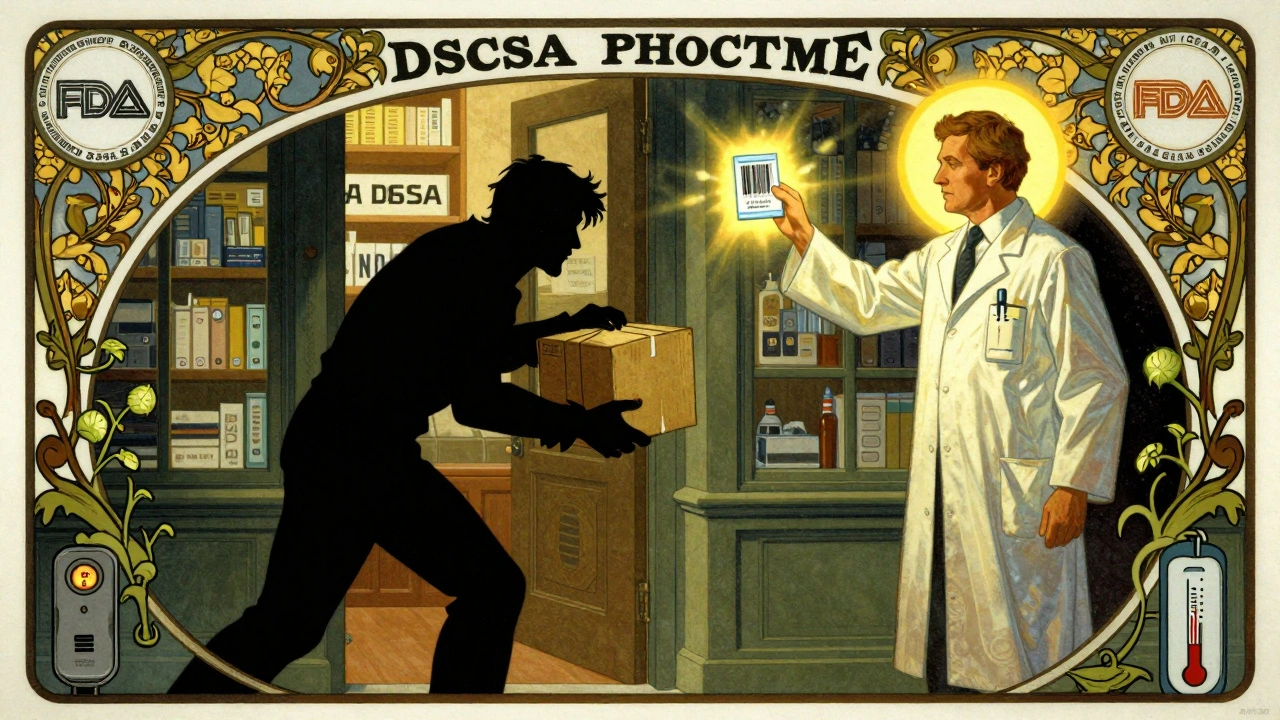
Temperature Control and Storage Rules
Not all drugs are the same. Some need refrigeration. Others need to stay dry. If you’re handling insulin, vaccines, or biologics, you’re required to monitor and log temperatures continuously. Most require storage between 2°C and 8°C. If the temperature spikes even once, the drug could degrade-making it ineffective or dangerous. You need real-time monitoring systems, not just a thermometer on the wall. Many pharmacies now use IoT sensors that send alerts if the fridge goes out of range. Logs must be kept for at least six years. Auditors will ask for them. If you don’t have them, you’re non-compliant.What About Specialty Drugs and Compounding?
Specialty drugs-like those for cancer, MS, or rare diseases-are high-value targets for counterfeiters. They’re expensive, hard to trace, and often shipped directly to patients. That’s where “brown bagging” and “white bagging” come in. These methods bypass traditional supply chains. Patients pick up drugs at retail pharmacies and bring them to clinics. Or clinics order directly from specialty pharmacies. ASHP found that 42% of health systems using these methods had at least one medication error tied to improper handling or verification. You lose control of the chain. You can’t verify temperature, packaging, or authenticity. If you’re using these models, you need extra safeguards: double-checking labels, verifying shipping documentation, and documenting every handoff. Compounded drugs (custom-mixed by pharmacies) fall under 503A and 503B rules. 503B outsourcing facilities must be FDA-registered and follow stricter standards. If you’re buying compounded drugs, make sure your supplier is a registered 503B facility-not just a local compounding pharmacy claiming to be “FDA-approved.” Only 503B facilities have federal oversight.The Hidden Costs of Compliance
Compliance isn’t free. Since DSCSA rolled out, pharmacy compliance costs have jumped 220%. Small independent pharmacies spend over 10% of their budget on paperwork, training, and systems. Chain pharmacies spend about 6%. Why the gap? Scale. Chains have IT teams. Independent pharmacies? One pharmacist does everything. The solution? Group purchasing organizations (GPOs). They handle supplier vetting, traceability, and compliance documentation for dozens or hundreds of pharmacies at once. If you’re independent, joining a GPO isn’t a luxury-it’s survival.
What’s Coming Next?
The FDA is pushing harder. In 2024, the Biden administration allocated $150 million more to fight counterfeit drugs-up 35% from last year. By 2025, 73% of health systems plan to use blockchain-based traceability systems. By 2026, AI will scan supply chain data for anomalies, cutting counterfeit incidents by up to 75%. But technology alone won’t fix this. The real fix is culture. Every pharmacist, every technician, every manager must treat procurement like a safety protocol-like sterilizing a syringe or checking a patient’s allergies. It’s not paperwork. It’s protection.Final Checklist: Are You Compliant?
Ask yourself these questions:- Do I require full DSCSA transaction data for every shipment?
- Do I scan and verify every drug package upon receipt?
- Do I have documented proof that my suppliers are FDA-registered and licensed?
- Do I monitor and log temperatures for refrigerated drugs?
- Do I check the FDA recall list weekly?
- Do I know if I’m buying from a 503A or 503B facility?
- Do I keep records for at least six years?
What happens if a pharmacy buys from an unverified supplier?
If a pharmacy purchases drugs from an unverified or non-compliant supplier, the FDA can seize the inventory, issue fines, suspend or revoke the pharmacy’s license, and initiate criminal investigations. In severe cases, patients who receive counterfeit or contaminated drugs may suffer serious harm or death, leading to civil lawsuits and permanent reputational damage to the pharmacy.
Can I buy pharmaceuticals from international suppliers?
Generally, no. U.S. law prohibits the reimportation of prescription drugs from other countries unless they’re FDA-approved and meet the same standards as U.S.-manufactured drugs. Most international suppliers don’t comply with DSCSA, cGMP, or state licensing requirements. Even if a drug looks legitimate, buying from overseas bypasses the U.S. safety net and puts patients at risk.
How often should I audit my suppliers?
You should conduct a full supplier audit at least once a year, and perform spot checks quarterly. Verify licenses, check for new FDA warnings, review recall history, and confirm DSCSA compliance. If a supplier changes ownership, location, or product line, audit them immediately.
Do I need special software for DSCSA compliance?
Yes. You need a traceability system that can receive, store, and exchange electronic transaction data in the standard format required by DSCSA. Many pharmacies use platforms like TraceLink, rfxcel, or integrated ERP systems with pharmaceutical modules. Spreadsheets and paper logs won’t cut it anymore.
What’s the difference between 503A and 503B compounding pharmacies?
503A pharmacies are traditional compounding pharmacies that make drugs for individual patients based on prescriptions. They’re regulated by state boards. 503B outsourcing facilities are registered with the FDA and can produce larger batches of sterile drugs without individual prescriptions. They must follow stricter federal standards, including cGMP. Always verify which type you’re buying from.
Is it legal to use a 340B program to buy discounted drugs?
Yes, but only if you’re an eligible covered entity (like a safety-net hospital or clinic) and you use the drugs exclusively for eligible patients. Misusing the 340B program-such as selling discounted drugs to non-eligible patients-is illegal. The Health Resources and Services Administration (HRSA) audits these programs closely and has recovered over $1.3 billion in non-compliant purchases since 2022.
Next Steps: What to Do Today
If you’re a pharmacy owner or manager, start here:- Review your current suppliers. Do they provide full DSCSA documentation?
- Install barcode scanning for all incoming drugs if you haven’t already.
- Set up temperature monitoring for refrigerated products.
- Check the FDA’s recall database once a week.
- Train your staff on supplier verification protocols.
- Join a GPO if you’re independent and handling procurement alone.


