
How to Involve Grandparents and Caregivers in Pediatric Medication Safety
Apr, 15 2026
The goal here isn't to criticize the people we love most, but to bridge a dangerous gap. Many grandparents are managing polypharmacy-taking multiple prescriptions daily-while parents may only be managing a few. When you combine a high volume of medication with the curiosity of a child, the risk of accidental ingestion spikes. By implementing simple, non-blaming strategies, you can ensure that intergenerational bonding doesn't come with an emergency room visit.
Why the "Grandparent Gap" Happens
It is easy to assume that child-resistant caps are enough. However, research shows that about 30% of four-year-olds can beat these mechanisms in under five minutes. The danger is compounded by a few common habits among seniors. Many grandparents transfer their meds into weekly pill sorters or non-childproof containers to make their own dosing easier. While this helps the adult, it removes the primary barrier for a child.
There is also a psychological hurdle. Many caregivers feel that being told to lock up their meds is an insult to their caregiving abilities. This resistance often leads to a "it won't happen here" mentality. However, the numbers tell a different story: roughly 22% of grandparents have reported a "near-miss" where a child almost ingested their medication. The reality is that the environment in a senior's home is often structured for accessibility, which is the exact opposite of what a toddler needs.
The Gold Standard: Up & Away and Out of Sight
To fix this, we can look to the PROTECT Initiative is a collaborative safety framework developed by the CDC and the Consumer Healthcare Products Association to reduce pediatric poisonings . The core philosophy is simple: move medications Up & Away and Out of Sight. This means storage should be at eye level or higher-specifically above four feet-and ideally behind a locked door.
If you are helping a caregiver set up their home, focus on these four high-risk zones:
- The Bedroom: Stop the habit of keeping pills on nightstands or dressers. These are the first places children reach when they wake up.
- The Kitchen: Avoid counters and open drawers. Use high cabinets with latches.
- The Bathroom: Move meds from the lower cabinets to a high shelf or a locked medicine box.
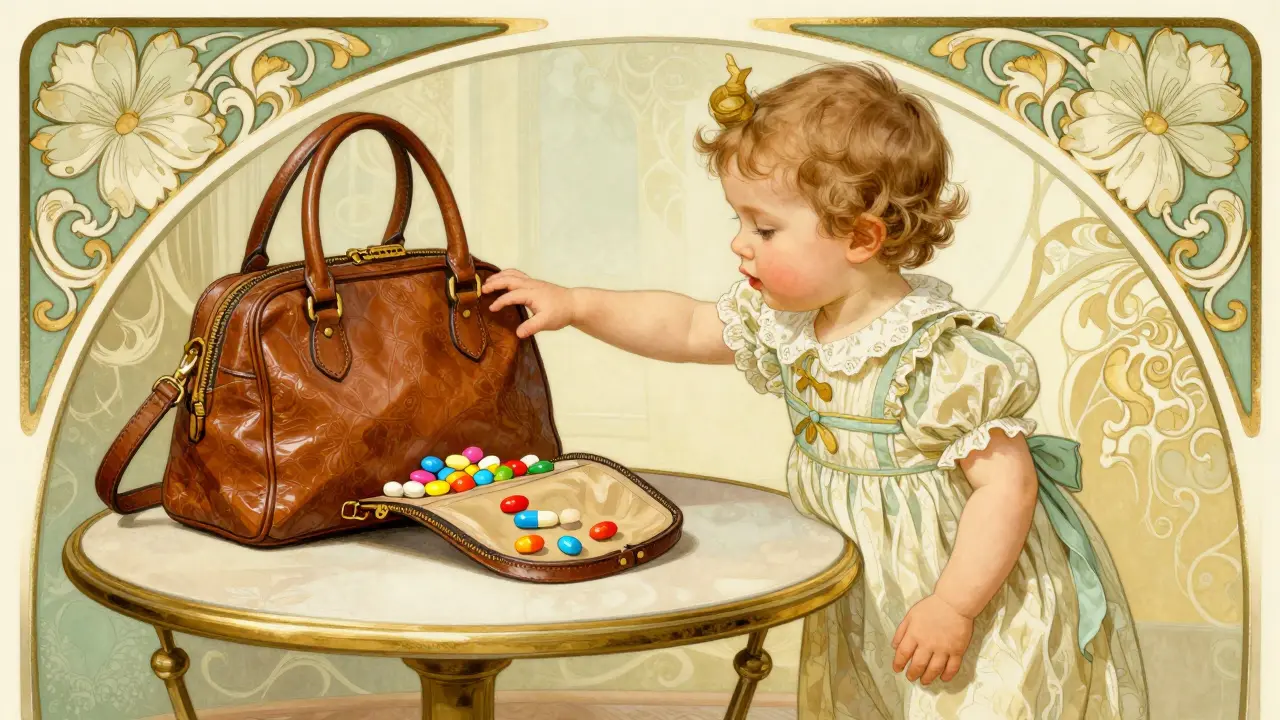
- Purses and Handbags: This is the most overlooked risk. Bags should be hung on high hooks or placed in high closets, never left on chairs or tables.
| Feature | Parents (Avg) | Grandparents (Avg) |
|---|---|---|
| Proper Storage Rate | 68% | 52% |
| Use of Locked Storage | 58% | 22% |
| Use of Non-Childproof Sorters | 8% | 29% |
| Avg. Daily Medications | 2.1 | 4.7 |

How to Have the "Safety Talk" Without the Tension
Approaching a parent or grandparent about their medication habits can be awkward. The key is to shift the focus from "your mistake" to "our grandchild's safety." Avoid language like "you're endangering the kids" and instead use phrases like "let's make sure the house is ready for the little ones."
Once the adults are on the same page, it is time to educate the child. The CDC recommends a simple three-step communication strategy for children:
- "Medicine is not candy." Explain that while some pills look like sweets, they are only for people who are sick.
- "Only adults give medicine." Establish a hard rule that a child should never take anything-even a vitamin-unless a trusted adult hands it to them.
- "If you find medicine, tell an adult immediately." Reward them for reporting a found pill rather than scolding them for finding it. This encourages transparency.
Practical Tools for Every Household
For grandparents with arthritis or mobility issues, child-resistant caps can be a nightmare. This is why many turn to pill sorters. To balance accessibility for the senior and safety for the child, invest in a Lockbox . A small, portable locking container allows a grandparent to keep their meds together for easy access while keeping the actual container out of a child's reach.
Additionally, make a habit of the "Spring Clean." Every few months, go through the medicine cabinet together and discard expired drugs. This reduces the volume of chemicals in the house and minimizes the chance of a child finding an old bottle of forgotten medication.

Integrating Safety into the Healthcare Routine
The most effective way to ensure long-term safety is to bring the pharmacist into the conversation. Many community pharmacies now offer safety assessments. When a grandparent picks up their prescription, they can ask the pharmacist for a "grandchild-safe" review of their storage. This adds a layer of professional authority that can either motivate a resistant caregiver or provide a a simple, low-cost solution like a free lockbox.
If the child has special healthcare needs and requires complex medication schedules, the risk of administration errors increases. In these cases, a shared digital log or a physical checklist on the refrigerator can prevent dosing mistakes between the parent and the caregiver. Consistency is the best defense against medication errors.
Are child-proof caps actually effective for toddlers?
They are a helpful first line of defense, but they are not foolproof. Research indicates that about 30% of children aged four can open child-resistant packaging within five minutes. Therefore, caps should be viewed as a secondary backup, not the primary method of safety. Locked, high storage is the only reliable method.
How do I convince a grandparent to lock up their meds without offending them?
Focus on the child's curiosity rather than the grandparent's negligence. Use a "teamwork" approach by saying, "The kids are getting so curious and fast these days, let's work together to make the house a safe zone." Offering to help them set up a lockbox or a high shelf can make the process feel like a collaborative project rather than a critique.
What is the safest way to dispose of old medications?
The best way is to use a designated drug take-back program at a local pharmacy or community center. If that's not an option, mix the medications with something unappealing like coffee grounds or kitty litter in a sealed bag before throwing them in the trash. Never flush medications down the toilet unless the packaging specifically says to do so.
Where are the most common "hidden" medication risks in a senior's home?
The most common hidden risks are purses, handbags, and bedside tables. Many seniors keep their daily doses within arm's reach. Other risky spots include kitchen counters and bathroom sinks, where medications are often laid out during the morning routine.
Should I tell my child that medicine is "poison" to scare them away from it?
It's better to avoid the word "poison," as this can cause unnecessary panic or confusion when the child actually needs to take medicine. Instead, use the phrase "Medicine is not candy." This frames the issue as a category difference rather than a threat, which is more effective for a child's cognitive understanding.
Next Steps for Families
If you are a parent, start by auditing the grandparent's home during your next visit. Look at it from a toddler's eye level-literally crouch down and see what is reachable. If you find a risk, suggest a high-shelf solution on the spot.
For caregivers, consider the "Grandparent Pledge." Commit to moving all medications at least four feet off the ground and keeping them in original containers. If you struggle with opening caps, ask your pharmacist about a combination of a locking box and easy-open caps inside that box. This gives you the accessibility you need without compromising the child's safety.

