
Lithium Carbonate Generics: Serum Level Considerations for Safe and Effective Treatment

Dec, 22 2025
When you're managing bipolar disorder with lithium carbonate, the difference between stability and crisis can come down to a few tenths of a millimole per liter. It’s not just about taking the pill - it’s about knowing lithium carbonate generics aren’t all the same, even when the label says they are. And if you switch brands without checking your blood levels, you could be walking into danger without even realizing it.
Why Lithium Isn’t Like Other Medications
Lithium carbonate is one of the oldest mood stabilizers still in wide use - and one of the most dangerous if not monitored closely. It works by smoothing out the extreme highs and lows of bipolar disorder, cutting relapse rates by more than half and reducing suicide risk significantly. But it doesn’t have a wide safety margin. The difference between a therapeutic dose and a toxic one is razor-thin. That’s why it’s classified as an NTI drug - a Narrow Therapeutic Index medication.For most drugs, a 10% variation in blood levels won’t matter much. For lithium, it can mean the difference between feeling stable and ending up in the hospital. The target range? Between 0.6 and 1.2 mmol/L. Above 1.5 mmol/L, you risk toxicity. Above 2.0 mmol/L, you could face seizures, heart rhythm problems, or even coma. And here’s the kicker: many people don’t know their current level. A 2024 study found that nearly 30% of patients on long-term lithium hadn’t had a blood test in over six months.
Generics Aren’t Interchangeable - Even When They Should Be
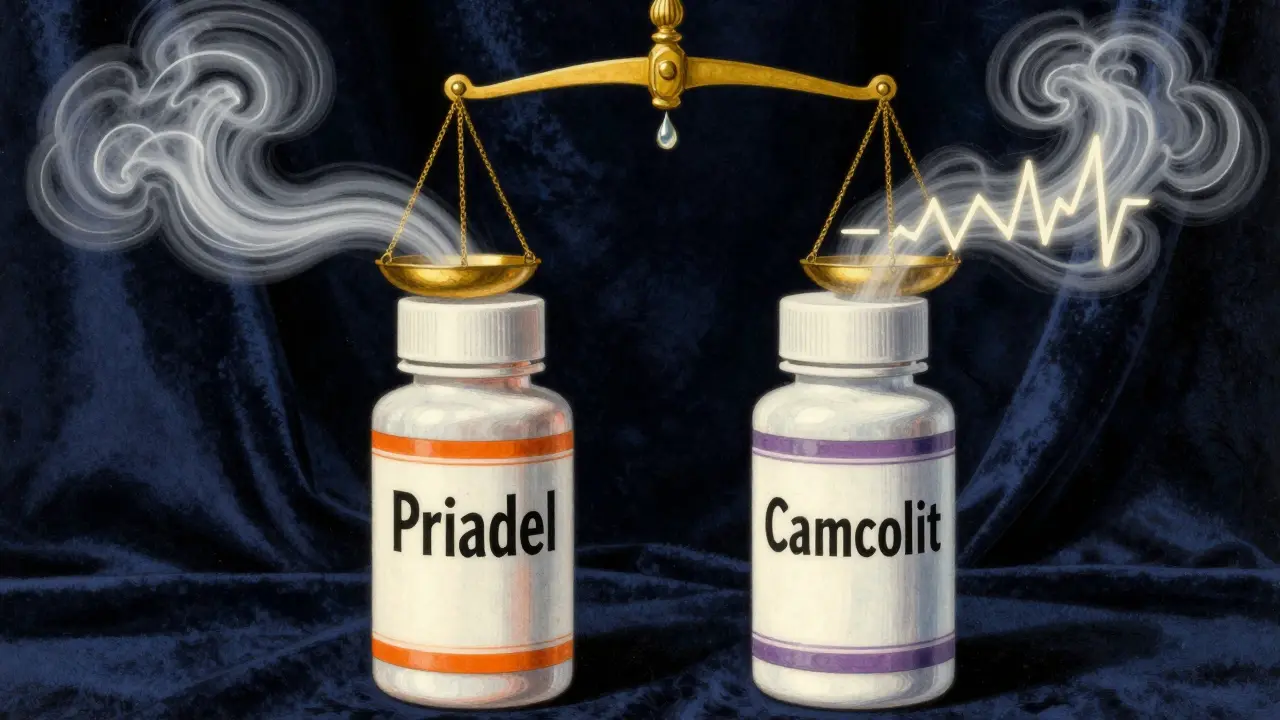
All generic lithium carbonate must meet FDA and EMA standards for bioequivalence. That means, on paper, they should deliver the same amount of drug into your bloodstream as the brand name. But bioequivalence doesn’t mean identical. It means the total amount absorbed (AUC) is within 80-125% of the original. That’s a wide gap - and it’s where problems start.Take Camcolit and Priadel, two common sustained-release generics. A 2024 study showed patients on Camcolit ended up with 11% higher blood levels than those on Priadel - even when given the same daily dose. That’s not a fluke. It’s because of how the drug is released. Priadel dissolves slowly over 4-5 hours. Camcolit? It’s designed to release a bit differently. The peak concentration (Cmax) isn’t the same. And when you switch from one to the other without checking levels, you’re essentially changing your dose by accident.
Even immediate-release generics vary. One manufacturer’s 300 mg tablet might hit peak levels in 2 hours. Another’s takes 3. That might not sound like much - but if you’re taking it three times a day, those timing differences add up. Your body doesn’t know it’s the same drug. It only knows what’s in your blood right now.
When Your Brand Changes, Your Level Can Crash - or Spike
Pharmacists often substitute generics based on cost or availability. That’s legal. It’s routine. But with lithium, it’s not harmless. In the same 2024 study, four patients were found with dangerously high lithium levels - 1.32, 1.32, 1.88, and 1.35 mmol/L - after being switched between brands. One of them had no symptoms until they collapsed at home. Another developed tremors and confusion within days. Both were admitted to hospital.That’s why experts now say: never switch lithium brands without checking your serum level within 5-7 days. Even if you feel fine. Even if your doctor says it’s “the same thing.” It’s not. The formulation matters. The release profile matters. The fillers and coatings matter. And your body reacts to those differences.
Some prescribers avoid generic substitution entirely for lithium. Others use the same brand for years. If you’ve been on Priadel for five years and your prescription suddenly says “lithium carbonate 600 mg ER,” ask: Which one? Don’t assume. Don’t wait. Get tested.
Target Levels Aren’t One-Size-Fits-All
There’s no single “correct” lithium level. It depends on what you’re treating, how old you are, and what formulation you’re on.For acute mania, levels between 0.8 and 1.0 mmol/L are often needed. For long-term maintenance, 0.6-0.8 mmol/L is usually enough - and safer. But if you’re on a sustained-release product like Camcolit or Priadel, you’ll likely need to aim for the higher end of that range. Why? Because these formulations release lithium slowly. Your peak level is lower, but your average level stays steady. So you need to hold the average a bit higher to get the same effect.
Age changes everything. People over 60 clear lithium more slowly. Their kidneys don’t work as well. That means lower doses are needed. Some experts recommend reducing the target level by 20-25% for older adults. A 70-year-old might do fine at 0.5-0.7 mmol/L, while a 30-year-old needs 0.7-0.9. And women? On average, they require 96 mg less lithium per day than men - even when adjusted for weight. That’s not just about size. It’s about metabolism.
And don’t forget: lithium affects your thyroid and kidneys. About 1 in 7 people on long-term lithium develop hypothyroidism. Kidney function slowly declines over time. That’s why every six months, you need a blood test for creatinine, eGFR, and TSH - not just lithium. The 2022 CANMAT guidelines now recommend using cystatin C alongside creatinine to get a clearer picture of kidney health. Older methods miss early damage.
What You Should Be Doing Right Now
If you’re on lithium carbonate - generic or brand - here’s what you need to do:- Know your last serum level. Write it down. Don’t rely on your memory or your doctor’s recall.
- Know your formulation. Is it immediate-release? Sustained-release? What’s the brand? Take a photo of your pill bottle.
- Check your levels after any switch. Whether it’s a new pharmacy, a new prescription, or a refill with a different-looking pill - get a blood test 5-7 days later.
- Don’t skip monitoring. Every 3-6 months during stable treatment. Monthly during dose changes.
- Track side effects. Tremors? Frequent urination? Weight gain? Nausea? These aren’t just “normal.” They’re early signs your level might be too high.
And if you’re a caregiver or family member? Ask the questions your loved one might not. “Did they change your pill?” “Did you get your blood drawn after that refill?”

The Bigger Picture: Why This Still Matters in 2025
Newer drugs like quetiapine, lamotrigine, and cariprazine are gaining ground. But lithium still has something they don’t: proven, long-term protection against suicide. In a 1981 trial that’s still cited today, patients on lithium had a suicide rate less than half that of those on placebo. That’s why, despite all the newer options, about 60% of people with bipolar I disorder still take lithium after 10 years.But its future depends on how well we manage it. Generic substitution is inevitable. Cost pressures are real. But if we treat lithium like any other pill - if we assume all generics are interchangeable - we’re setting people up for harm.
Research is moving toward personalized dosing. The International Consortium on Lithium Genetics has found 30 genetic markers that predict how someone metabolizes lithium. AI tools are being tested to predict the right dose based on age, weight, kidney function, and genetics. But until those tools are standard, the simplest, most effective tool is still the blood test.
Don’t let a pharmacy substitution become your emergency. Don’t assume your doctor knows what’s in your bottle. Don’t wait until you feel unwell to check your level. Lithium saved your life once. Don’t let ignorance put it at risk now.
Can I switch between lithium carbonate generics without checking my blood level?
No. Even though generics are required to be bioequivalent, differences in release rates, fillers, and coatings can cause your serum lithium level to rise or drop significantly. Always check your blood level 5-7 days after switching brands - even if you feel fine.
What’s the safest lithium level for long-term use?
For most adults on maintenance therapy, 0.6-0.8 mmol/L is considered the safest range. If you’re on a sustained-release formulation like Priadel or Camcolit, your doctor may aim for the upper end of that range (0.8 mmol/L) because these versions release lithium more slowly. Older adults (over 60) often need lower targets - around 0.5-0.7 mmol/L - due to reduced kidney function.
Why do some people need higher doses than others on the same generic?
Lithium clearance varies based on age, kidney function, weight, sex, and even sodium intake. Younger people and those with higher kidney function clear lithium faster, so they need higher doses. Women generally require lower doses than men. Low-sodium diets can cause lithium levels to rise. That’s why dosing is individualized - not based on weight alone.
How often should I get my lithium level checked?
When starting or adjusting your dose, check every 1-2 weeks. Once stable, check every 3-6 months. After any change in brand, dose, or kidney function, retest within 5-7 days. Also test if you develop new symptoms like tremors, frequent urination, nausea, or confusion.
What other tests should I have while on lithium?
Every 6-12 months, get your thyroid function (TSH, free T4), kidney function (creatinine, eGFR), and electrolytes (sodium, potassium) checked. The 2022 CANMAT guidelines recommend adding cystatin C to better detect early kidney changes. Lithium can cause hypothyroidism in up to 15% of users and mild kidney decline over time - both are reversible if caught early.
Is lithium still worth using with all the newer drugs available?
Yes - for many people. Lithium is the only mood stabilizer with strong evidence for reducing suicide risk in bipolar disorder. While newer drugs help with symptoms, lithium has decades of data showing it prevents relapses more effectively than most alternatives. It’s not perfect, but for long-term stability, especially in bipolar I disorder, it remains a first-line choice - if monitored properly.
What to Do If You’re Concerned
If you’ve switched brands recently and feel off - even slightly - don’t wait. Call your doctor. Ask for a lithium level test. Bring your pill bottle. Write down your symptoms. If your doctor dismisses your concerns, seek a second opinion. Lithium is not a drug you can afford to guess with.Stability isn’t luck. It’s science. And that science demands you be informed, involved, and vigilant. Your brain is worth it.


