
How to Use Pharmacy Delivery and Mail-Order for Convenience
Mar, 16 2026
Running out of medication shouldn’t mean a trip to the pharmacy in the rain, on a busy workday, or when you’re too tired to drive. For millions of people managing chronic conditions like diabetes, high blood pressure, or cholesterol, pharmacy delivery and mail-order services aren’t just convenient-they’re life-changing. These services let you get your prescriptions shipped straight to your door, often at lower costs and with far fewer missed doses than picking them up in person.
Why Mail-Order Works Better for Chronic Medications
Most people fill their prescriptions every 30 days. That means 12 trips a year. For someone on three different medications? That’s 36 trips. Now imagine getting all those meds delivered in one box every 90 days. No waiting in line. No forgetting. No rushing out because you’re down to your last pill. Data from Blue Cross NC shows patients using mail-order for 90-day supplies have an 82% adherence rate. Compare that to just 52% for those filling 30-day prescriptions at retail pharmacies. That gap isn’t accidental. It’s built into the system. When you get three months of meds at once, you’re less likely to skip a dose. You’re not thinking about refills every month. You’re thinking about feeling better. This matters because poor adherence leads to hospital visits. A 2022 study found that patients who missed doses of their blood pressure meds were 40% more likely to be hospitalized for heart-related issues. Mail-order cuts that risk.How It Works: Simple Steps to Get Started
Getting started with pharmacy delivery is easier than signing up for a streaming service. Here’s how:- Check your insurance - Most health plans, including Medicare Part D and employer-sponsored coverage, include mail-order as a no-cost option. Call your insurer or log into your plan’s website. Look for terms like “mail-order pharmacy” or “90-day supply.”
- Transfer your prescriptions - You don’t need a new doctor’s note. Just give your current pharmacy permission to send your active prescriptions to the mail-order provider. This usually takes 3-5 business days. Some services let you do this online in under 10 minutes.
- Set up your account - Most mail-order pharmacies have a website or app. You’ll enter your info, choose delivery preferences, and link your insurance. Many offer 24/7 pharmacist support if you have questions.
- Order your first supply - Once set up, you can order your 90-day supply. Most services allow you to schedule automatic refills so you never run out.
Pro tip: Order your refill at least 10 days before you think you’ll run out. Even fast services need time to process, pack, and ship.
Cost Savings You Can’t Ignore
Let’s say you take a brand-name statin for cholesterol. At your local pharmacy, a 30-day supply costs $50 with your insurance copay. That’s $150 a month, or $1,800 a year. With mail-order, you pay the cost of two copays for a 90-day supply. So instead of $150/month, you pay $100 every three months. That’s $400 a year - a $1,400 saving. That’s not a guess. It’s standard for most plans. PCMA research confirms mail-order pharmacies offer 25-35% lower costs than retail for maintenance meds. For people on multiple long-term prescriptions, annual savings often hit $200-$500. Some plans even waive the copay entirely for mail-order refills.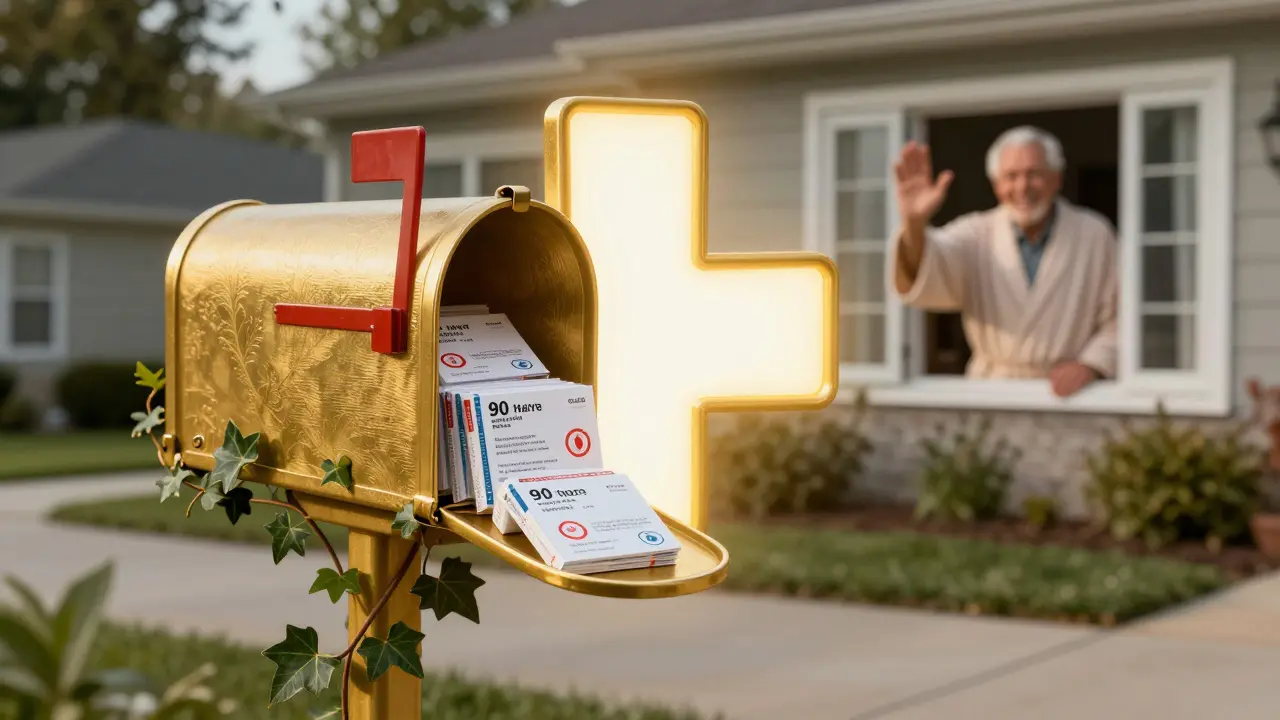
What You Can and Can’t Get Through Mail-Order
Not all meds can be mailed. Here’s what works:- Chronic condition meds: blood pressure, diabetes, cholesterol, thyroid, asthma inhalers, antidepressants
- Most generics and brand-name maintenance drugs
- Temperature-sensitive drugs (like insulin) - shipped in special cooling packs
What doesn’t work:
- Controlled substances: opioids, benzodiazepines, stimulants (like Adderall)
- Antibiotics - you need these fast, and they’re usually not stocked in mail-order warehouses
- New prescriptions - always start with your local pharmacy for the first fill
- Specialty injectables - some require in-person training or handling
If you’re unsure, ask your pharmacist. Most mail-order services list eligible medications on their website.
Real People, Real Results
A Reddit user named u/ChronicWarrior2020 wrote: “I have MS. Getting to the pharmacy is hard. Mail-order gave me back my independence. I get my disease-modifying drugs delivered every three months. No more stress.” Trustpilot reviews for Patient Direct Pharmacy show a 4.7/5 rating. Users praise next-day delivery and seamless coordination with workers’ compensation plans. University of Michigan members say Birdi Pharmacy’s customer service and copay savings made switching easy. One common complaint? Delivery delays. About 8.3% of users report packages arriving later than promised. But most services offer tracking, delivery alerts, and customer support to fix issues fast.
When to Stick With Your Local Pharmacy
Mail-order isn’t a replacement for your neighborhood pharmacy. It’s a tool. Use both. Keep your local pharmacy for:- Acute needs: antibiotics, pain meds after surgery, new prescriptions
- Medication counseling - your local pharmacist can explain side effects or interactions in person
- Emergency refills - if your mail-order package is late or damaged
- Medications not eligible for mail-order
Many people use mail-order for maintenance drugs and their local pharmacy for everything else. That’s smart. It gives you the best of both worlds.
What’s New in 2026
The mail-order industry is evolving fast. In 2023, UnitedHealthcare started using AI to predict when patients might miss a dose. If the system flags a gap, you get a text or call from a pharmacist - not a robot. That’s helped cut missed doses by 17%. Some companies are testing drone delivery in rural areas. UPS and CVS are running pilots in North Carolina. In 2026, expect same-day drone delivery to expand to more regions. Smart packaging is also rolling out. Imagine a pill bottle that sends a signal if it’s opened - and if not, alerts your pharmacy. This is already being used for high-value biologics and will soon be common for chronic disease meds.Final Tips to Make It Work for You
- Always keep a 7-day backup of meds at home - just in case your package is delayed.
- Use automatic refills - don’t wait until you’re out.
- Set calendar reminders to check your delivery status 3 days before your meds run out.
- If you’re on multiple meds, ask if your pharmacy can synchronize delivery so everything arrives on the same day.
- Keep your local pharmacist in the loop - they can help if something changes with your meds.
Pharmacy delivery isn’t magic. But it’s one of the most effective, underused tools we have for staying healthy. If you’re on long-term meds, it’s worth trying. You’ll save time, money, and maybe even your health.


