
Melatonin: How the Natural Sleep Hormone Really Works (And When Supplements Help)

Apr, 1 2026
Imagine tossing in bed while your brain screams it's still noon-that's circadian confusion. Millions take melatonin hoping for instant sleep, yet most dose it wrong. Here's the truth from sleep labs and real user logs.
What Is Melatonin?
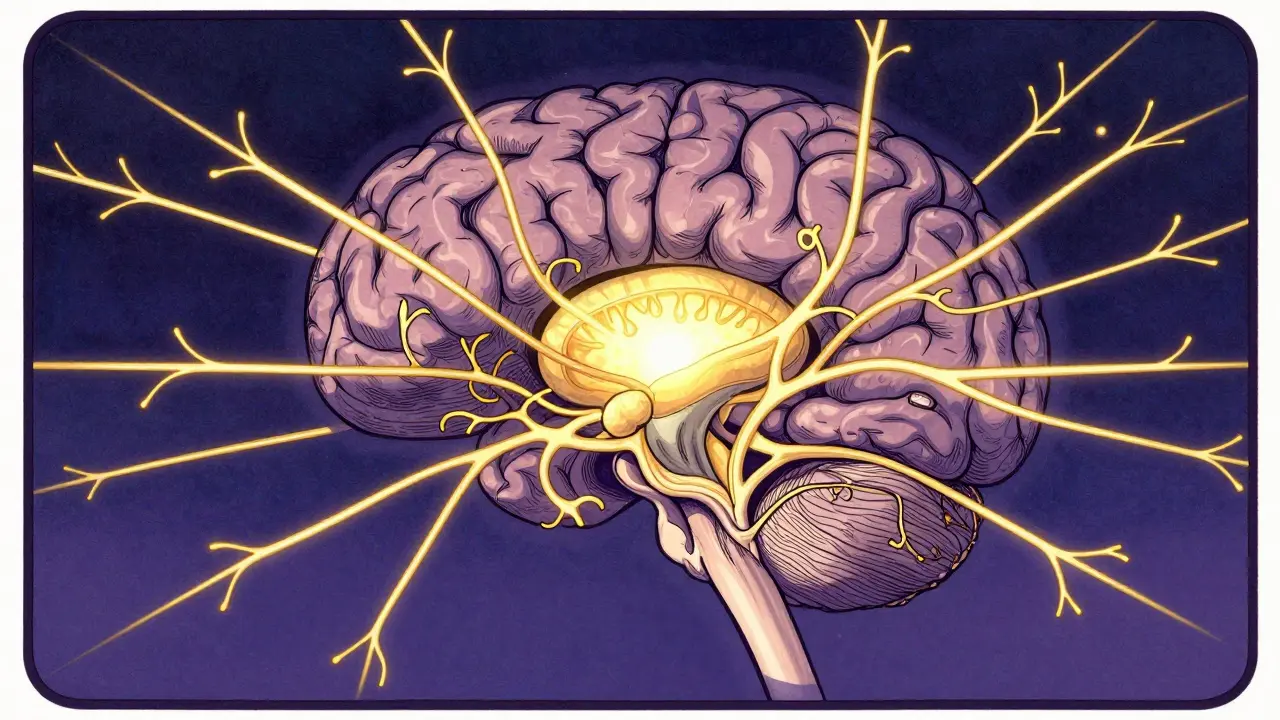
Melatonin is a neurohormone synthesized from tryptophan that synchronizes your internal clock with darkness. First isolated in 1958, this chemical messenger flows from your pineal gland (pea-sized organ deep in your brain) into blood vessels, peaking between 2-4 AM. Unlike sleeping pills, it doesn't sedate-it signals "nighttime" to your body. Curiously, exposure to blue light after sunset can suppress secretion by up to 80%, sabotaging natural rhythms.
In Australia, it's available as a pharmacy-only medication, contrasting with the U.S. where it's sold freely as a supplement. This regulatory split explains why European trials use lower doses (1-2 mg) compared to American bottles often containing 5-10 mg. Your body produces roughly 0.1-0.3 mg nightly-physiologically sufficient to regulate cycles.
How It Resets Your Biological Clock
Melatonin binds to MT1/MT2 receptors in the suprachiasmatic nucleus (your brain's master clock). Think of these receptors as dials controlling sleep-wake phases: evening activation advances your cycle (helps you fall asleep earlier), while morning activation delays it (keeps you awake later). This phase-shifting capability is why it outperforms benzodiazepines for jet lag or shift work disorder.
| Feature | Melatonin | Zolpidem (Ambien) |
|---|---|---|
| Mechanism | Circadian regulation | GABA enhancement |
| Sleep Onset Reduction | ~7 minutes | ~25 minutes |
| Next-Day Grogginess | Rare below 3 mg | Common |
| Dependence Risk | Negligible | High |
Researchers measure success via dim light melatonin onset (DLMO)-the exact time your endogenous levels begin rising. Misaligning this window causes chronic fatigue. One study showed 67% of eastbound travelers recovered fully in 48 hours using timed 0.5 mg doses versus 5 days without supplementation.
Does It Actually Improve Sleep?
Meta-analyses reveal nuanced outcomes. For delayed sleep phase syndrome (where you're a "night owl"), it reliably shifts bedtime by 40+ minutes. However, for general insomnia without circadian disruption, results fade-a Cochrane review found only 39% reported meaningful improvement. Real-world data mirrors this: Reddit threads show high satisfaction rates for jet lag (67%) but mixed feedback for stress-related sleeplessness (39%).
User reports highlight a pattern: those timing doses 2-3 hours before desired bedtime succeed. Conversely, taking 5 mg right before bed often causes grogginess without deeper sleep. Dr. Kenneth Wright notes, "It's not a sledgehammer; misuse turns it into white noise."
Dosing Rules Most Get Wrong
The critical mistake? Overdosing. While U.S. shelves stock 10 mg capsules, clinical guidelines suggest starting at 0.3-0.5 mg. Why? Receptor saturation occurs around 1 mg; excess merely raises urinary metabolites. Follow this protocol:
- Titanium standard dose: 0.3 mg sublingual tablet (slow-absorbing formulations last longer)
- Timing: Administer 2-3 hours pre-bed for chronotype advancement
- Avoid screens 90 minutes prior (blue light blocks secretion)
- Never exceed 3 mg-higher doses correlate with vivid dreams, headaches, and tolerance buildup
Australian patients report better outcomes using prolonged-release formulas approved for older adults, maintaining steady levels through night hours rather than peak-and-crash profiles.
Safety Profile and Hidden Risks
Though generally safe, side effects spike above 3 mg: drowsiness affects 28% of users, nightmares 22%. Special populations require caution-pregnant women should consult physicians due to limited safety data. Interactions with blood thinners and anticonvulsants warrant monitoring.
Quality control varies wildly. ConsumerLab testing found 478% label inaccuracies in some brands. Opt for products certified by NSF International or USP Verified. Remember, dietary supplements bypass FDA drug approvals-what's printed isn't always accurate.
Expert Perspectives on Future Applications
Dr. Jamie Zeitzer predicts personalized protocols based on individual DLMO measurements will replace trial-and-error dosing. Emerging agonists like tasimelteon target specific retinal pathways for non-visual sleep regulation. Meanwhile, NIH trials explore efficacy in Alzheimer's and post-COVID fatigue syndromes. The future likely lies in precision rather than potency.
Can melatonin cure insomnia?
Only if caused by circadian misalignment. For anxiety-driven insomnia, CBT-I remains superior. Studies show melatonin alone improves sleep efficiency by ~7% versus placebo.
Best time to take melatonin?
Ideally 2-3 hours before intended bedtime for chronotype shifting. Evening doses advance rhythms; morning doses delay them. Track your DLMO first.
Will I become dependent?
Physical dependence is rare. However, receptor desensitization may occur after continuous use beyond 8 weeks. Cycling off monthly reduces adaptation risks.
Safe during pregnancy?
Limited human data exists. Animal studies show no teratogenic effects, but obstetricians typically recommend avoiding until third trimester due to theoretical concerns.
Why do high doses cause grogginess?
Excess melatonin floods receptors, delaying clearance. Unmetabolized amounts linger into morning hours, impairing alertness. Stick below 1 mg for daytime clarity.


