
Severe Bleeding Episodes on Medications: Complications and Emergency Response
Dec, 27 2025
Blood Thinner Bleeding Risk Calculator
This tool calculates your bleeding risk using the HAS-BLED score, a clinical tool recommended by the American Heart Association. Based on your answers, you'll receive personalized safety recommendations.
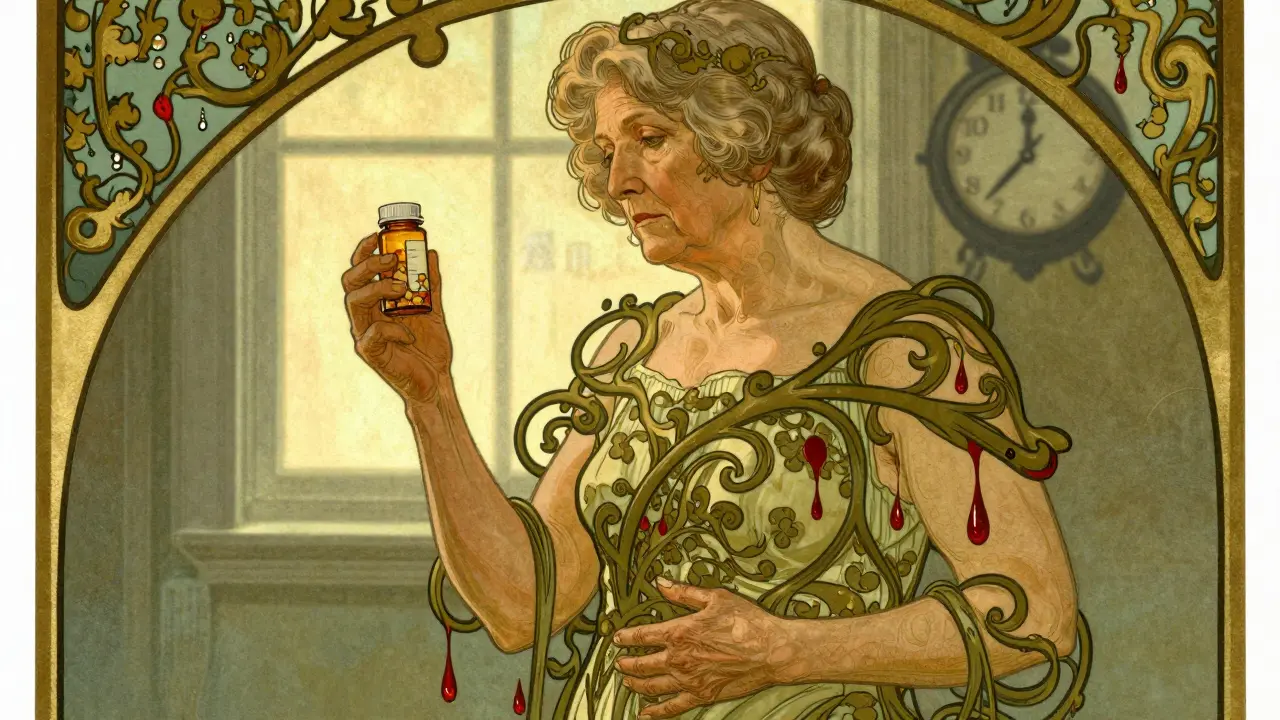
When you take a blood thinner to prevent a stroke or clot, you’re trading one risk for another. You might not realize it until it’s too late: the very drug saving your life could also trigger a life-threatening bleed. Severe bleeding on medications like warfarin, apixaban, or rivaroxaban isn’t rare - it’s predictable, preventable, and often missed until it’s urgent.
Why Blood Thinners Cause Severe Bleeding
Anticoagulants and antiplatelets work by slowing down your blood’s ability to clot. That’s good if you have atrial fibrillation, a replaced heart valve, or a history of deep vein thrombosis. But it means even a small cut, bump, or internal irritation can turn into a dangerous bleed. The National Health Service (NHS) confirms this directly: these drugs increase bleeding time, and that’s their main side effect.It’s not just about taking the pill. The real danger comes from how much of the drug is in your system. A 2024 study in Blood Advances found that 30% of bleeding events happened in people with the highest drug levels - but 58% occurred in those on low-dose regimens. Why? Because doctors often lower doses for older or frail patients, assuming it’s safer. But if their kidneys aren’t clearing the drug properly, even a low dose can build up to dangerous levels.
Warfarin requires regular blood tests (INR) to keep levels in the sweet spot: 2.0 to 3.0. Too low? Clots form. Too high? Bleeding starts. DOACs like apixaban or dabigatran don’t need those tests - but that’s also a trap. Without monitoring, you won’t know if your body is holding onto too much drug, especially if you’re over 75, have kidney problems, or take other meds that interfere.
Who’s at Highest Risk?
Risk isn’t random. It’s measurable. The data shows clear patterns:- Age: People over 80 have more than 3 times the bleeding risk of those under 60.
- Kidney function: Poor kidneys raise bleeding risk by 2.3 times. Most DOACs are cleared through the kidneys - if they’re weak, the drug lingers.
- Previous bleed: If you’ve had a major bleed before, your chance of another is 4.2 times higher.
- Combining drugs: Taking aspirin or clopidogrel with a blood thinner doubles your bleeding risk.
- First 90 days: 60.8% of all major bleeds happen within the first three months of starting the drug.
One study tracked 1,657 atrial fibrillation patients, mostly over 80. Half had at least two of these risk factors. Their annual major bleeding rate? 6.5%. That’s more than one in 15 people each year. And yet, many patients are never told they’re in this high-risk group.
What Counts as a Medical Emergency?
Not every bruise or nosebleed is an emergency. But some signs mean you need to go to the ER now:- Nosebleeds lasting longer than 10 minutes, even with pressure
- Red or brown urine - that’s blood
- Black, tarry, or bloody stools - a sign of internal GI bleeding
- Coughing or vomiting blood
- Severe headache, dizziness, confusion, or vision changes - possible brain bleed
- Unexplained bruising, especially large patches or around the eyes
- Joint swelling or pain after minor injury - blood pooling in the joint
- Excessive menstrual bleeding that soaks through a pad in under an hour
- Any cut or wound that won’t stop bleeding after 15 minutes of direct pressure
These aren’t vague warnings. They’re clinical definitions. The 2008 Blood journal defined severe bleeding as anything requiring a transfusion, surgery, or causing serious harm. The ISTH added: any bleed that lands you in the hospital counts as clinically relevant - even if it’s not labeled “major.”
Real people describe these moments. One user on Reddit said: “I had black stools for three days. Thought it was diet. Ended up in the ER with a bleeding ulcer and two units of blood.” Another wrote: “My nose bled for 45 minutes. I got dizzy. Didn’t realize I should go until I almost passed out.”
Why People Delay Getting Help
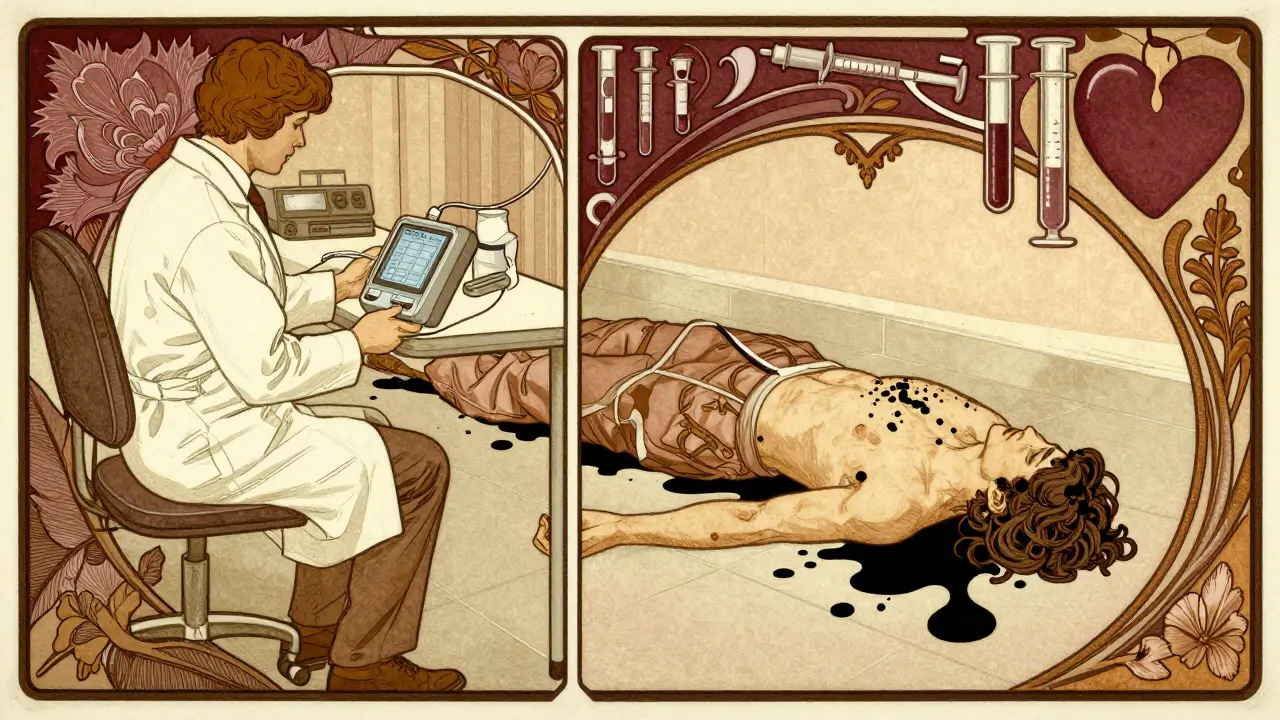
The biggest killer isn’t the bleed - it’s the delay.A 2023 survey of 1,050 patients found that 37% waited over two hours before seeking help. 19% waited more than six. Why? Because they didn’t recognize the symptoms. Mayo Clinic’s own survey of 4,312 patients showed 42% had a bleeding episode in their first year - and 28% didn’t think it was serious at first.
Doctors often assume patients know the signs. But patient education is rarely thorough. The Anticoagulation Forum found that when clinicians spend just 15 to 20 minutes reviewing symptoms during the first visit, emergency delays drop by 34%. That’s not magic. That’s basic communication.
And here’s the cruel twist: patients on low-dose DOACs are often told they’re “safer.” But they’re not. They’re just less monitored. They’re more likely to ignore symptoms because they think, “I’m on the low dose - it can’t be that bad.” That’s exactly when things go wrong.
What Happens in the Emergency Room
When you arrive with suspected bleeding, the ER team will move fast. They’ll check your blood pressure, heart rate, and hemoglobin level. If your hemoglobin dropped more than 5 g/dL, or you need more than 4 units of blood, it’s classified as severe.For warfarin users, they’ll give vitamin K and fresh frozen plasma to reverse the effect. For DOACs, it’s more complex:
- Dabigatran: Idarucizumab - a $3,500 antidote that works in minutes.
- Rivaroxaban, apixaban, edoxaban: Andexanet alfa - a $12,500 antidote that reverses factor Xa inhibitors.
These drugs exist. But they’re expensive. Not every hospital keeps them on hand. In rural areas or outside the U.S., access is limited. That’s why prevention matters more than reversal.
There’s also a new tool: point-of-care DOAC level testing. Approved by the FDA in January 2024, this device lets clinics check your drug level in under 30 minutes - no lab wait. It’s already being used in Europe for patients over 75 or with kidney issues. Soon, it may become standard.
How to Stay Safe on Blood Thinners
You don’t have to live in fear. You just need to be informed and proactive.- Know your risk score. Ask for your HAS-BLED score at your first visit. A score of 3 or higher means you need extra safety planning.
- Ask about DOAC levels. If you’re over 75, have kidney disease, or are on a low dose, request a blood level test 2-4 weeks after starting.
- Never stop or change your dose. Even if you feel fine. If you miss a dose, call your doctor - don’t guess.
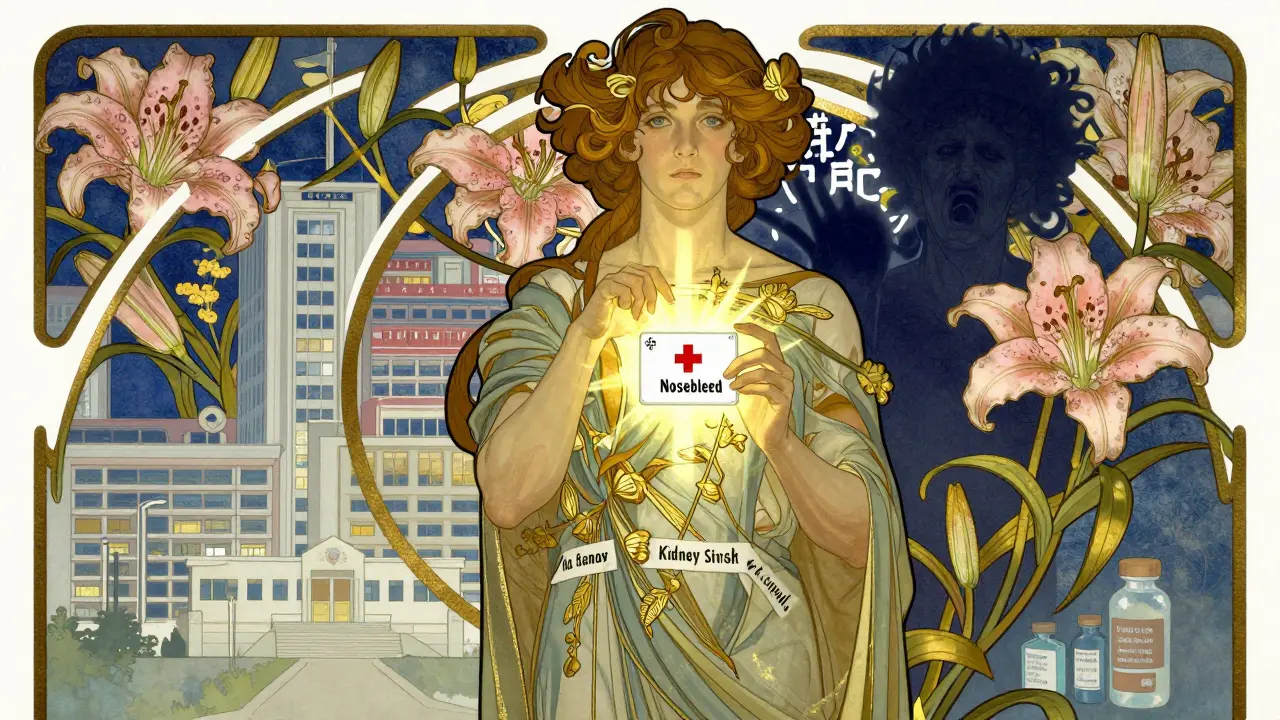
- Carry a medical alert card. List your medication, dose, and emergency contact. Include the antidote name if you’re on a DOAC.
- Get a bleed action plan. Write down the 12 emergency symptoms. Put it on your fridge. Show it to family.
- Avoid NSAIDs. No ibuprofen, naproxen, or aspirin unless your doctor says yes. Tylenol (acetaminophen) is safer.
- Use a soft toothbrush and electric razor. Small cuts add up.
And if you’re worried? Call your doctor before you panic. But if you see blood in your stool, urine, or vomit - or you feel dizzy, weak, or confused - go to the ER. Don’t wait. Don’t call your GP. Don’t Google it. Go.
The Bigger Picture
The global anticoagulant market hit $22.7 billion in 2023. Over 4.7 million Americans are on DOACs. But emergency visits for bleeding have jumped 27% since 2018. That’s not because the drugs are bad. It’s because we’re using them more - and managing them worse.The FDA and EMA now require drug labels to highlight the first-month bleeding risk. That’s progress. But real change needs more: routine monitoring, better patient education, and access to reversal agents everywhere.
By 2030, anticoagulant-related bleeds could cause 15-18% of preventable hospitalizations in older adults. That’s not just a medical issue - it’s a system failure. We’ve made these drugs safer than warfarin. But we haven’t made their use safer.
The truth? Blood thinners save lives. But they demand respect. You can’t take them on autopilot. You need to know your body, your risks, and when to act. The next time you pick up that pill bottle, remember: it’s not just medicine. It’s a responsibility.
What should I do if I start bleeding while on a blood thinner?
Stop what you’re doing and assess the bleeding. If it’s a minor cut, apply firm pressure for at least 15 minutes. If it’s a nosebleed, pinch your nose and lean forward. If bleeding doesn’t stop, or if you’re coughing/vomiting blood, have black stools, notice blood in urine, or feel dizzy or weak - go to the nearest emergency room immediately. Do not wait. Call 911 or have someone drive you. Bring your medication list and any recent blood test results.
Can I still take aspirin or ibuprofen if I’m on a blood thinner?
No - unless your doctor specifically says so. Aspirin, ibuprofen, naproxen, and other NSAIDs increase bleeding risk by interfering with platelet function. Even low-dose aspirin can double your chance of a GI bleed when taken with a DOAC or warfarin. Use acetaminophen (Tylenol) for pain instead. Always check with your doctor before adding any new medication, including over-the-counter ones.
Are newer blood thinners (DOACs) safer than warfarin?
Overall, yes - but not always. Studies show apixaban has the lowest bleeding risk among DOACs, at 2.13% per year compared to warfarin’s 3.09%. Dabigatran and rivaroxaban have similar or slightly higher rates. DOACs don’t need frequent blood tests and have fewer food interactions. But they’re harder to reverse in emergencies, and their levels aren’t routinely checked. Warfarin requires monitoring but has a well-established antidote (vitamin K). The safest choice depends on your age, kidney function, history of bleeding, and ability to follow up.
How often should I get blood tests if I’m on a blood thinner?
If you’re on warfarin, you’ll need an INR test weekly for the first month, then every two weeks for months 2-3, and monthly once stable. For DOACs, routine blood tests aren’t required - but if you’re over 75, have kidney disease, or have had a prior bleed, ask your doctor about checking your drug level. A point-of-care test now exists that gives results in under 30 minutes. This is becoming standard in Europe and may soon be recommended in the U.S. for high-risk patients.
What are the signs that my blood thinner dose might be too high?
Signs include unexplained bruising, especially large or dark patches; frequent nosebleeds; bleeding gums; blood in urine or stool; heavy or prolonged menstrual bleeding; and prolonged bleeding from minor cuts. You may also feel unusually tired, dizzy, or short of breath - signs of anemia from slow blood loss. If you notice any of these, contact your doctor. Don’t wait for a major bleed. Early intervention can prevent hospitalization.
Can I travel while on a blood thinner?
Yes - but plan ahead. Always carry your medication in its original bottle with your name on it. Bring extra doses in case of delays. If you’re flying, walk every hour to prevent clots, but avoid long periods of sitting. Carry a medical alert card with your drug, dose, and emergency contact. Know where the nearest hospital is at your destination. Avoid alcohol and dehydration, which can affect drug levels. If you’re on warfarin, schedule an INR check before you leave and ask your doctor if you need one while away.
Is there a way to reverse the effects of a DOAC if I bleed?
Yes - but only with specific antidotes. For dabigatran, the antidote is idarucizumab. For rivaroxaban, apixaban, and edoxaban, it’s andexanet alfa. These work quickly - often within minutes - but they’re expensive and not available everywhere. Hospitals in major cities usually stock them, but rural or international facilities may not. That’s why prevention and early recognition are more important than reversal. If you’re on a DOAC, ask your doctor if your local ER has the antidote on hand.
What should I do if I forget to take my blood thinner?
Don’t double up. If you miss a dose and remember within 6 hours of your usual time, take it right away. If it’s been longer than 6 hours, skip the missed dose and take your next one at the regular time. Never take two doses at once. If you miss two or more doses in a row, call your doctor. Missing doses increases your risk of clots - but doubling up increases your risk of bleeding. Consistency is key.
How do I know if my kidney function affects my blood thinner?
Your doctor checks your creatinine clearance (CrCl), which estimates how well your kidneys filter waste. Most DOACs require dose adjustments if CrCl is below 50 mL/min. For example, rivaroxaban is reduced from 20 mg to 15 mg daily if CrCl is between 15 and 50. If it’s below 15, DOACs may not be safe at all. Ask for your CrCl number - don’t just assume it’s fine. Kidney function declines with age, so even if you felt fine last year, it might be different now.
Are there new blood thinners coming that are safer?
Yes. Two new drugs - milvexian and asundexian - are in late-stage trials and show 20-25% lower bleeding rates than current DOACs while still preventing strokes. They’re designed to target clotting more precisely, leaving normal clotting functions less affected. A universal reversal agent called Ciraparantag (PER977) is also in Phase III trials and could reverse all types of anticoagulants with one drug. These aren’t available yet, but they represent the future: safer, smarter, and more controllable.


