
Adverse Drug Reactions Classification: Types, Risks, and How to Spot Them
When your body reacts badly to a medicine, it’s not always a simple side effect—it could be a serious adverse drug reaction, an unintended and harmful response to a medication at normal doses. Also known as ADR, these reactions range from mild rashes to life-threatening organ damage, and they’re one of the leading causes of hospital admissions worldwide. Not all bad reactions are the same. They’re grouped into categories based on how they happen, how severe they are, and whether they’re predictable. Some are just annoying, like dizziness from blood pressure meds. Others, like rhabdomyolysis, a dangerous breakdown of muscle tissue triggered by certain drug combos, can shut down your kidneys in days. And then there are the sneaky ones—like euglycemic DKA, a form of diabetic ketoacidosis that happens without high blood sugar, often missed until it’s too late—that fly under the radar because they don’t match what you’d expect.
Understanding adverse drug reactions classification isn’t just for doctors. It’s for anyone taking more than one pill. The FDA and global health agencies track these reactions through systems like MedWatch, the official U.S. system for reporting drug and vaccine side effects, and VAERS, a public database that flags patterns in vaccine and drug harms. These tools help spot trends: like how statins plus certain antibiotics can trigger muscle damage, or how St. John’s wort can make your antidepressant useless. Even something as simple as a first-generation antihistamine like Benadryl can pile up with sleep aids or painkillers, turning a sleepy night into a fall risk or worse. The key is knowing which reactions are common, which are rare but deadly, and which ones you can prevent by asking your pharmacist about interactions before you take that new pill.
What you’ll find in these posts isn’t theory—it’s real cases. From opioid-induced adrenal failure that mimics chronic fatigue, to SSRI sexual side effects that make people quit their meds, to how kidney problems can turn a regular antidepressant into a heart risk. These aren’t rare edge cases. They’re the hidden dangers in everyday prescriptions. You’ll learn how to read the fine print on your meds, recognize early warning signs, and know when to push back. No jargon. No fluff. Just what you need to stay safe while taking the drugs you need.
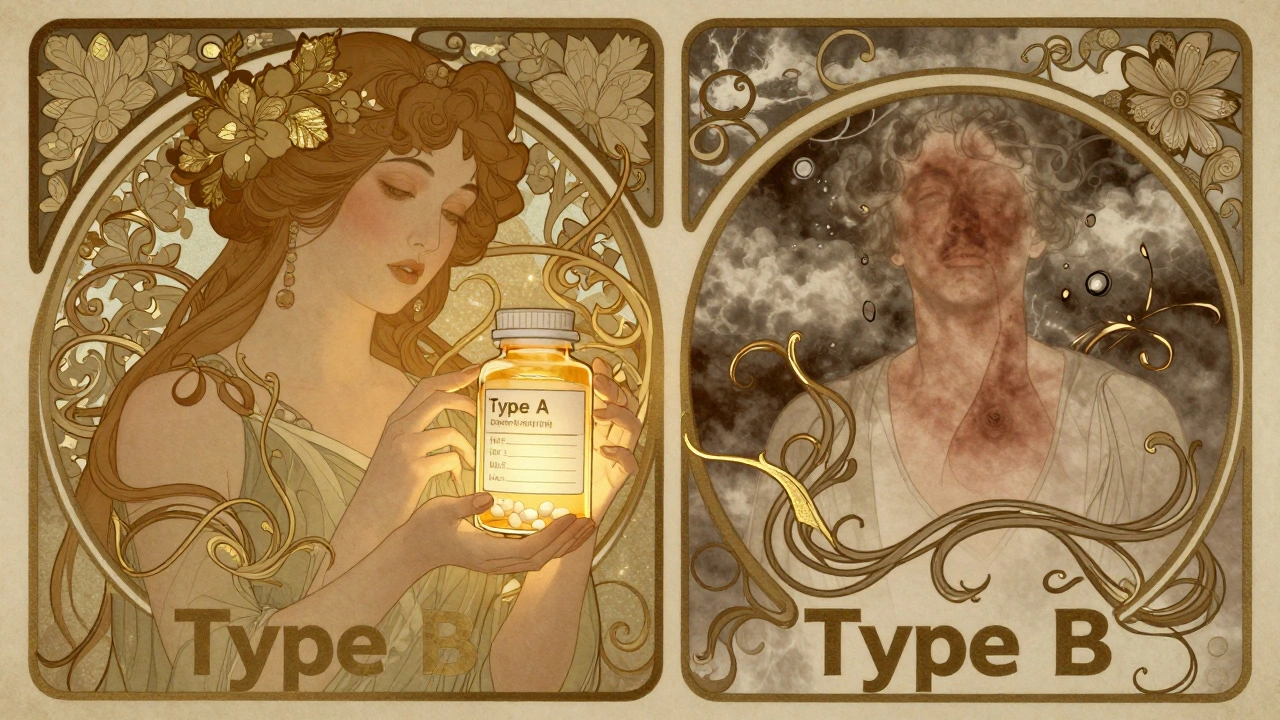
Type A vs Type B Adverse Drug Reactions: What You Need to Know
Caspian Mortensen Dec, 1 2025 9Understand the difference between Type A and Type B adverse drug reactions - why some side effects are predictable and dose-related, while others are rare, dangerous, and genetic. Learn how to recognize them and stay safe.
More Detail