
Why Generic Drug Prices Vary So Much Between States
Dec, 18 2025
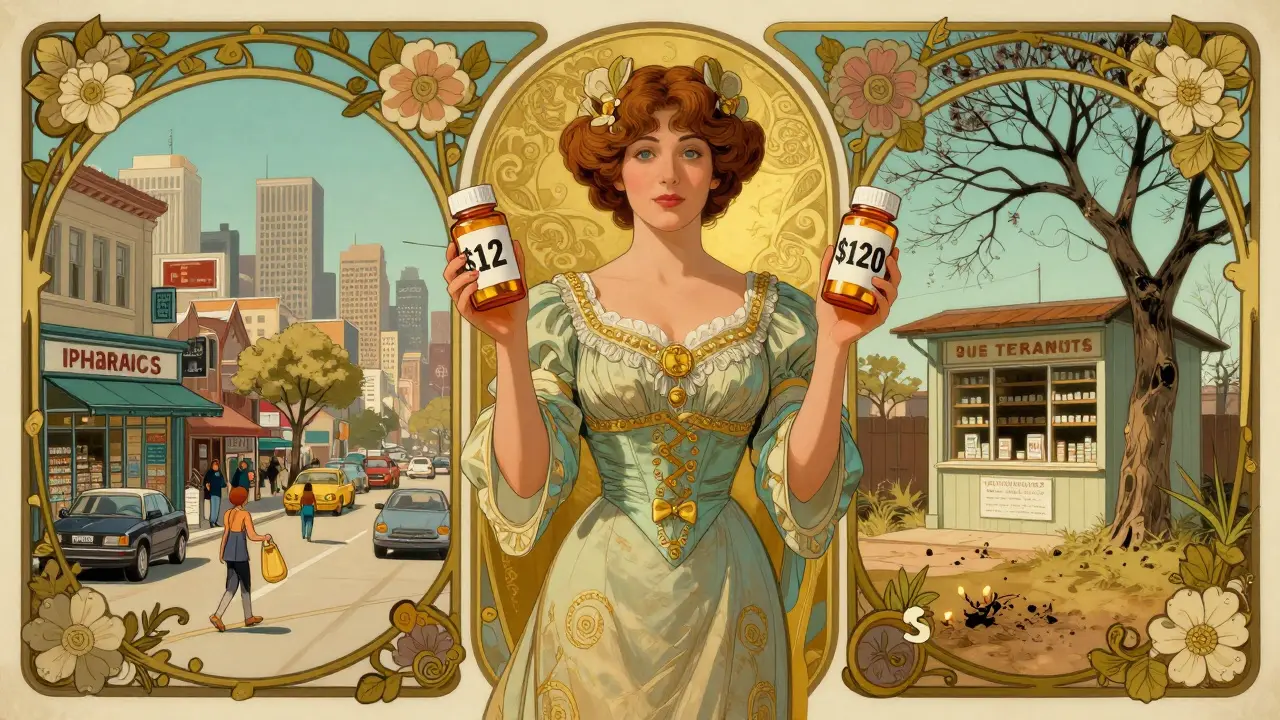
Have you ever filled a prescription for a generic drug and been shocked by the price-only to find out your friend in another state paid half as much for the exact same pill? It’s not a mistake. It’s not a glitch. It’s the system. Generic drugs, which make up 90% of all prescriptions in the U.S., don’t have one price. They have dozens. And where you live can mean the difference between paying $12 or $120 for a 90-day supply of atorvastatin, the generic version of Lipitor.
Why the Same Drug Costs Different Amounts
The reason generic drug prices vary so wildly from state to state comes down to three things: how pharmacies get paid, who controls the pricing rules, and whether your state has laws that force transparency. Pharmacy benefit managers, or PBMs, are the middlemen between drug manufacturers, insurers, and pharmacies. They negotiate prices, set reimbursement rates, and decide what you pay at the counter. But here’s the catch: PBMs aren’t required to tell anyone what those negotiated prices are. That secrecy lets them mark up costs in some states while keeping them low in others. A 2022 study from the USC Schaeffer Center found that U.S. consumers pay 13% to 20% more for generics than they should because of these opaque deals. States with strong transparency laws-like California, Vermont, and Maryland (before its law was struck down)-have forced PBMs to report pricing data. In those states, patients pay 8% to 12% less on average for generics than in states with no such rules. That’s not because the drugs are cheaper to make. It’s because the public can see what’s happening and push back.Medicaid and Reimbursement Rules Are a Wild Card
Medicaid, which covers nearly 80 million Americans, sets the baseline for what many pharmacies get paid for generics. But each state runs its own Medicaid program, and each uses a different formula to calculate reimbursement. Some states use the National Average Drug Acquisition Cost (NADAC), which updates monthly based on actual wholesale prices. Others use older benchmarks like the Average Wholesale Price (AWP), which is often inflated and outdated. A 2019 FDA report showed that the gap between what pharmacies pay for a drug and what they get reimbursed can vary by over 40% depending on the state’s chosen method. This doesn’t just affect Medicaid patients. Private insurers often use the same benchmarks as Medicaid when setting their own rates. So if your state pays pharmacies poorly for generics, pharmacies make up the difference by charging more to cash-paying customers or people with high-deductible plans.Competition Matters-Especially in Rural Areas
In big cities, you’ve got CVS, Walgreens, Walmart, Target, and local pharmacies all competing for your business. That competition drives prices down. But in rural areas? You might have one pharmacy for 50 miles. No competition. No pressure to lower prices. GoodRx data from 2022 showed that in some rural counties, the same generic drug cost up to 300% more than in nearby urban areas. That’s not about the drug. It’s about the lack of options. Pharmacies in isolated areas know patients have nowhere else to go. So they charge more. Even the type of pharmacy matters. Cash-only pharmacies like Mark Cuban’s Cost Plus Drug Company or Blueberry Pharmacy have popped up in states where traditional pricing is broken. They sell generics at near-wholesale prices-no insurance, no PBM middleman. But they’re not everywhere. If you live in a state with few of these options, you’re stuck with the system.
Cash Beats Insurance for Generics-Here’s Why
It sounds backwards, but paying cash for a generic drug often costs less than using your insurance. Why? Because when you use insurance, your PBM sets a copay based on a secret price list. That copay might be $20, but the real cost of the drug to the pharmacy might be only $5. The rest? That’s profit for the PBM. A 2021 study found that retail generic prices averaged 66% of the brand drug’s price. But wholesale prices were only 45%. That 21-point gap? That’s where PBMs and wholesalers take their cut. When you pay cash, you skip that whole chain. You pay the pharmacy’s actual cost plus a small markup. In states like Texas and Florida, where PBM practices are less regulated, up to 4% of all prescriptions are paid in cash-and 97% of those are for generics. People aren’t doing it because they don’t have insurance. They’re doing it because it’s cheaper.State Laws Tried to Fix This-Then Got Blocked
In 2017, Maryland passed a law making it illegal for drug companies to charge “excessive” prices for generic drugs. It was a direct attempt to stop price gouging. But in 2018, a federal appeals court ruled the law unconstitutional. Why? Because it interfered with interstate commerce. The court said states can’t regulate prices set by companies operating across state lines. Nevada tried something similar with diabetes drugs. But the lawsuit was dropped-not because it was weak, but because manufacturers threatened to sue under the Defend Trade Secrets Act to block the release of pricing data. The message was clear: fight the state, and we’ll bury you in legal bills. Now, 18 states have created drug affordability boards to review prices and recommend caps. But without the power to enforce them, these boards are mostly advisory. They can point out the problem. They can’t fix it.
What You Can Do Right Now
You don’t need a law change to save money on generics. You need a few simple moves:- Use GoodRx or SingleCare before you pay. Compare cash prices at multiple pharmacies in your area. Sometimes the difference is $80.
- Ask if the pharmacy offers a discount program. Many independent pharmacies have their own.
- Pay cash-even if you have insurance. Your copay isn’t the real price.
- If you’re on Medicare, check if your drug is covered under the new $35 monthly cap on insulin or the $2,000 annual out-of-pocket limit starting in 2025.
- Move your prescription to a cash-only pharmacy if one’s nearby. Cost Plus Drug Company ships nationwide.
The Bigger Picture: Why This Isn’t Getting Fixed
Generic drugs are supposed to be the solution to high drug costs. They’re chemically identical to brand-name drugs but cost a fraction. Yet, because of how the system is built, they’ve become another source of profit-not savings. The FDA approved 843 generic drugs in 2017, the most in its history. That should’ve driven prices down. But instead, PBMs and wholesalers captured most of the savings. In 2020, generics made up 90% of prescriptions but only 18% of total drug spending. That’s because the prices are artificially inflated by middlemen. The Inflation Reduction Act of 2022 tried to fix this for Medicare patients. But it doesn’t help the 70% of Americans who aren’t on Medicare. And even for those who are, the savings depend on your state’s existing rules. If your state doesn’t track prices, you won’t know if you’re getting a good deal.What’s Next?
Experts believe state-level variations will keep growing unless federal action forces PBMs to disclose their pricing. Some states are pushing for “all-payer claims databases” that collect every prescription price paid in the state. That data could reveal patterns, expose gouging, and empower consumers. Until then, the system stays broken. And you’re the one paying the price.Why do generic drugs cost more in some states than others?
Generic drug prices vary by state because of differences in pharmacy benefit manager (PBM) contracts, Medicaid reimbursement formulas, state transparency laws, and local pharmacy competition. PBMs set secret prices that pharmacies use to bill insurers, and without state oversight, those prices can be inflated. States with strong disclosure rules, like California, tend to have lower prices than states with little regulation.
Can I save money by paying cash instead of using insurance for generics?
Yes, often you can. Insurance copays are based on inflated prices set by PBMs. When you pay cash, you bypass those middlemen and pay closer to the pharmacy’s actual cost. Many people save 30% to 70% by using cash-price apps like GoodRx or buying from direct-to-consumer pharmacies like Cost Plus Drug Company.
Are there any states where generic drugs are consistently cheaper?
States with strong drug pricing transparency laws, such as California, Vermont, and New York, tend to have lower generic prices. These states require PBMs and pharmacies to report pricing data, which increases competition and reduces hidden markups. Rural areas in any state usually have higher prices due to fewer pharmacy options.
Why did Maryland’s law against price gouging get struck down?
A federal appeals court ruled in 2018 that Maryland’s law violated the U.S. Constitution’s Commerce Clause, which prohibits states from regulating interstate commerce. The court said states can’t set price caps on drugs sold across state lines by manufacturers and PBMs operating nationwide. This ruling blocked similar laws in other states and shifted the focus to federal action.
Does the Inflation Reduction Act help with generic drug prices?
It helps only Medicare beneficiaries. Starting in 2025, Medicare enrollees will pay no more than $35 per month for insulin and $2,000 total out-of-pocket for all drugs annually. But these caps don’t apply to people with private insurance or those without insurance. For most Americans, the law doesn’t directly lower generic prices-it just caps costs for seniors.
What’s the easiest way to find the lowest price for my generic medication?
Use a free price-comparison tool like GoodRx or SingleCare. Enter your drug name, dosage, and zip code. It will show you cash prices at nearby pharmacies. Often, the lowest price is at a local pharmacy, not a chain. Always ask the pharmacist if they have a discount program-even if you have insurance.


