
How to Use Refill Synchronization to Improve Medication Adherence

Dec, 19 2025
Managing multiple medications every month can feel like juggling too many balls at once. You’ve got pills for blood pressure, diabetes, cholesterol, maybe depression or arthritis-all with different refill dates. One runs out on the 5th, another on the 12th, and suddenly you’re scrambling, forgetting doses, or worse, running out completely. This isn’t just inconvenient. It’s dangerous. Nearly half of people with chronic conditions don’t take their meds as prescribed, according to the World Health Organization. That’s where refill synchronization comes in. It’s not magic. It’s simple, practical, and backed by real data. And if you’re taking three or more maintenance medications, it could be the single best thing you do for your health this year.
What Is Refill Synchronization (Med Sync)?
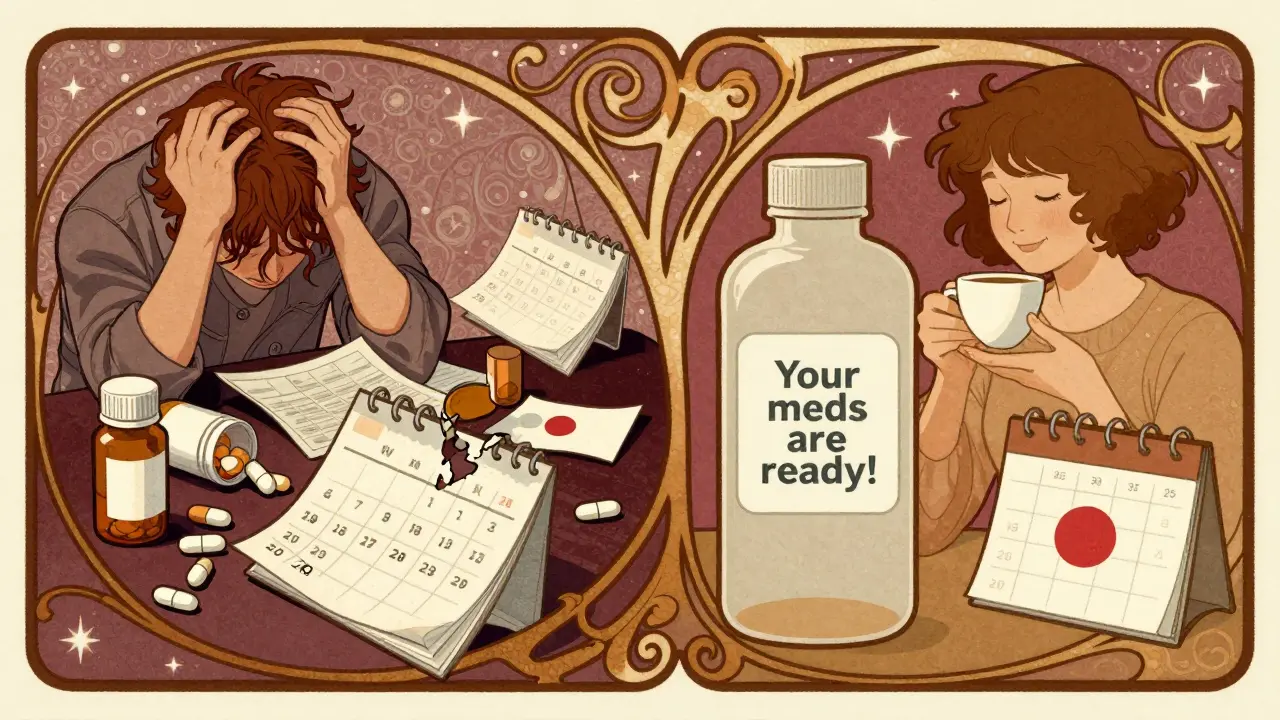
Refill synchronization, often called med sync, is when your pharmacy aligns all your regular prescriptions to one monthly refill date. Instead of showing up every few weeks for a different pill, you come in once a month-say, the 15th-and walk out with everything you need for the next 30 days. It sounds obvious, right? But for years, pharmacies just handed out prescriptions as they came due. No coordination. No plan. That changed around 2010 when pharmacists started noticing how many patients missed doses simply because they couldn’t keep track. The goal is straightforward: reduce complexity. When your meds are synced, you don’t have to remember five different dates. You don’t have to call the pharmacy five times. You don’t have to worry about running out on a weekend. And because your pharmacist knows your full schedule, they can catch problems before they happen-like a new drug interaction or a dose that’s too high. Studies show this works. A 2017 analysis in Health Affairs tracked nearly 23,000 patients and found that those enrolled in med sync had a 3 percentage point higher Proportion of Days Covered (PDC)-a clinical measure of adherence-than those who didn’t. That might sound small, but in real terms, it means fewer hospital visits, fewer ER trips, and lower costs. For someone with diabetes or heart disease, that 3% can mean the difference between stable health and a serious complication.How It Works: The Four-Step Process
Getting started isn’t complicated, but it does require a conversation with your pharmacist. Here’s what happens:- Initial Medication Review - Your pharmacist sits down with you (or calls you) and lists every medication you take regularly. This includes prescriptions, over-the-counter drugs, and supplements. They check for duplicates, expired meds, or doses that might be too high.
- Synchronization Plan - Based on your refill dates, they adjust your prescriptions so everything lines up. For example, if your blood pressure pill runs out on the 10th and your statin on the 20th, they might give you a 10-day extra supply of the statin so both now refill on the 10th. This is legal and safe when done under pharmacist supervision.
- Monthly Refill Day - You pick up all your meds on the same day each month. No more guessing. No more last-minute calls. Many pharmacies now offer text reminders or even home delivery on your sync day.
- Monthly Check-In - Your pharmacist reviews your medications again each month. Did your doctor change a dose? Did you start a new drug? Are you having side effects? This isn’t just a refill-it’s ongoing care.
Who Benefits Most?
Med sync isn’t for everyone. It works best for people taking chronic, maintenance medications-drugs you take every day for conditions like:- Hypertension (blood pressure)
- Diabetes
- High cholesterol
- Thyroid disorders
- Depression or anxiety
- Osteoporosis

Why It Beats Mail Order and Standard Refills
You might think, “Why not just use mail order?” Many insurers push mail-order pharmacies because they’re cheaper. But here’s the catch: mail order doesn’t sync. You get your blood pressure pills in a 90-day supply on the 1st, your statin on the 15th, your diabetes med on the 20th. You’re still managing multiple dates. You’re still at risk of running out between shipments. A 2017 study in the American Journal of Managed Care found that patients using retail pharmacies with med sync had 3 to 11 percentage point higher adherence gains than those using mail order-even when mail order provided 90-day supplies. Why? Because retail pharmacies with med sync offer personal contact. They call you. They ask how you’re doing. They notice if you haven’t picked up your meds in two months. And compared to just refilling as you go? The difference is stark. One study showed patients in med sync programs were three to six times more likely to stay on their meds long-term. That’s not a slight improvement. That’s a game-changer.Barriers and How to Overcome Them
It’s not perfect. There are hurdles. The biggest one? Insurance. Many plans don’t allow early refills unless you’ve used 80% of your supply. That breaks the sync. If your pill runs out on the 15th but your plan won’t refill until the 20th, you’re stuck. Pharmacists often work around this by getting a one-time early refill authorization from your doctor. Ask your pharmacist to help with this. Most are used to it. Another issue? Patient confusion. Some people think, “Why are you giving me extra pills?” They worry it’s a trick or that they’ll be charged more. But the extra doses are temporary-just enough to bridge the gap to your sync date. After that, it’s just one refill per month. A 2018 survey in U.S. Pharmacist found 23% of patients had trouble getting early refills approved. That’s why it’s important to choose a pharmacy that’s experienced with med sync. Chain pharmacies like CVS and Walgreens have systems built in. Independent pharmacies often do a better job of explaining it face-to-face.What to Ask Your Pharmacist
If you’re considering med sync, don’t wait for them to offer it. Ask. Here’s what to say:- “Do you offer medication synchronization?”
- “Can you check if all my maintenance meds can be synced to one date?”
- “Will you help me get early refills approved if my insurance won’t let me refill on time?”
- “Can I get text reminders when my meds are ready?”
- “Will you review all my meds each month-just to make sure nothing’s changed?”
The Bigger Picture: Why This Matters
This isn’t just about you taking your pills. It’s about the whole system. Poor adherence costs the U.S. healthcare system $300 billion a year in avoidable hospitalizations and ER visits. A 1 percentage point increase in adherence for heart disease meds alone could save Medicare $206 million annually, according to Health Affairs. Med sync is one of the few pharmacy services that directly ties to quality metrics. Medicare Advantage plans are scored on how well they help patients stay on their meds. The more people enrolled in med sync, the higher the plan’s Star Rating-and the more money the plan makes. That’s why insurers are now pushing it hard. And it’s growing fast. In 2014, about 355,000 people were enrolled. By 2022, that number jumped to 12-15 million. The American Pharmacists Association predicts 75% of U.S. pharmacies will offer med sync by 2025. It’s becoming standard.Real Stories, Real Results
One Reddit user, u/MedicationMama, wrote: “Since my pharmacist synced my 5 medications to the 15th of each month, I haven’t missed a single dose in 18 months-this has literally changed my diabetes management.” Another patient, a 68-year-old woman in Ohio, said she used to skip her cholesterol pills because she forgot. After syncing, she started picking them up every month with her coffee. “Now I don’t even think about it,” she told her pharmacist. “It’s just part of my routine.” These aren’t outliers. They’re the norm. When you remove the friction-when you simplify the process-people take their meds. It’s not about willpower. It’s about design.Next Steps: How to Get Started Today
If you’re on three or more maintenance meds, here’s what to do:- Call your pharmacy and ask if they offer medication synchronization.
- Bring a list of all your medications-including doses and refill dates.
- Ask if they can adjust your refills to align on one date.
- Request a monthly reminder via text or phone call.
- Confirm they’ll review your meds each month and contact your doctor if needed.
Is medication synchronization the same as a pill organizer?
No. A pill organizer helps you sort your pills for the week, but it doesn’t fix refill timing. Med sync fixes the root problem: you’re running out of meds because your refills are spread out. A pill organizer won’t help if your prescription expires before you can refill it. Med sync ensures you always have your meds ready.
Can I sync medications from different pharmacies?
Not easily. Med sync works best when all your prescriptions are filled at one pharmacy. If you use multiple pharmacies, your refills will stay out of sync. Talk to your pharmacist about transferring all your meds to one location. Most pharmacies will help you do this, even if you’ve been with another one for years.
Does med sync cost extra?
No. Medication synchronization is a free service offered by pharmacies. You still pay your regular copay or insurance cost for each medication. The synchronization itself-adjusting refill dates, sending reminders, monthly check-ins-is included at no extra charge.
What if I miss my sync day?
If you miss your refill day, call your pharmacy right away. Most will hold your meds for a few extra days or let you pick them up early. Some even offer weekend hours or home delivery. The key is to communicate. Your pharmacist wants you to stay on track-they’re not trying to trap you.
Can I still use mail-order for some meds?
You can, but it breaks the sync. If you use mail order for one medication, that pill will have a different refill date than the others. This defeats the purpose. For best results, keep all your maintenance meds at your local pharmacy. If cost is an issue, ask your pharmacist if they can match a mail-order price or help you find savings programs.


