
Type B Adverse Drug Reaction: Unpredictable, Dangerous, and Often Missed
When a drug causes harm that no one saw coming—no matter the dose—that’s a Type B adverse drug reaction, an unpredictable, immune-mediated or idiosyncratic response to medication that isn’t related to its known pharmacological effects. Also known as idiosyncratic drug reactions, these events don’t follow the rules. They’re not dose-dependent like Type A reactions. You can take a tiny amount or a full dose, and either way, your body might suddenly turn against the drug. This is the kind of reaction that sends people to the ER with rashes, liver failure, or anaphylaxis, even when they’ve taken the same pill for years without issue.
Type B reactions are often linked to drug hypersensitivity, an immune system overreaction triggered by a medication, sometimes involving genetic factors like HLA alleles. Think of it like a faulty alarm system: your body mistakes the drug for an invader and goes into full attack mode. These reactions are rare—maybe 1 in 1,000 or even rarer—but they’re responsible for a huge chunk of serious drug-related hospitalizations. And they’re not always obvious. A fever, swollen lymph nodes, or a sudden drop in white blood cells might be the only early signs. That’s why doctors often miss them, especially if they’re looking for the usual side effects like nausea or dizziness.
Some drugs are notorious for triggering these reactions. antibiotics, especially penicillin and sulfonamides, are among the most common culprits. But it’s not just antibiotics. Anticonvulsants like carbamazepine, allopurinol for gout, and even some NSAIDs can cause severe Type B reactions. And here’s the twist: if you’ve had one, you’re at higher risk for another—even with a different drug. That’s why knowing your history matters more than you think.
Unlike Type A reactions, which you can often avoid by lowering the dose or switching to a similar drug, Type B reactions don’t play by those rules. There’s no safe threshold. The only way to prevent them is to stop the drug—and sometimes, that’s not easy if it’s the only thing keeping you alive. That’s why reporting these events through systems like MedWatch, the FDA’s official channel for tracking unexpected drug reactions is so critical. Every report helps build a clearer picture of which drugs are dangerous for whom.
What you’ll find in the posts below aren’t just stories—they’re real cases. From a patient who developed life-threatening skin reactions after taking a common painkiller, to someone who had a silent liver crash after starting a new antidepressant. These aren’t outliers. They’re warnings. And they’re why understanding Type B reactions isn’t just for doctors—it’s for anyone taking medication. You don’t need to be an expert to spot the red flags. You just need to know what to look for.
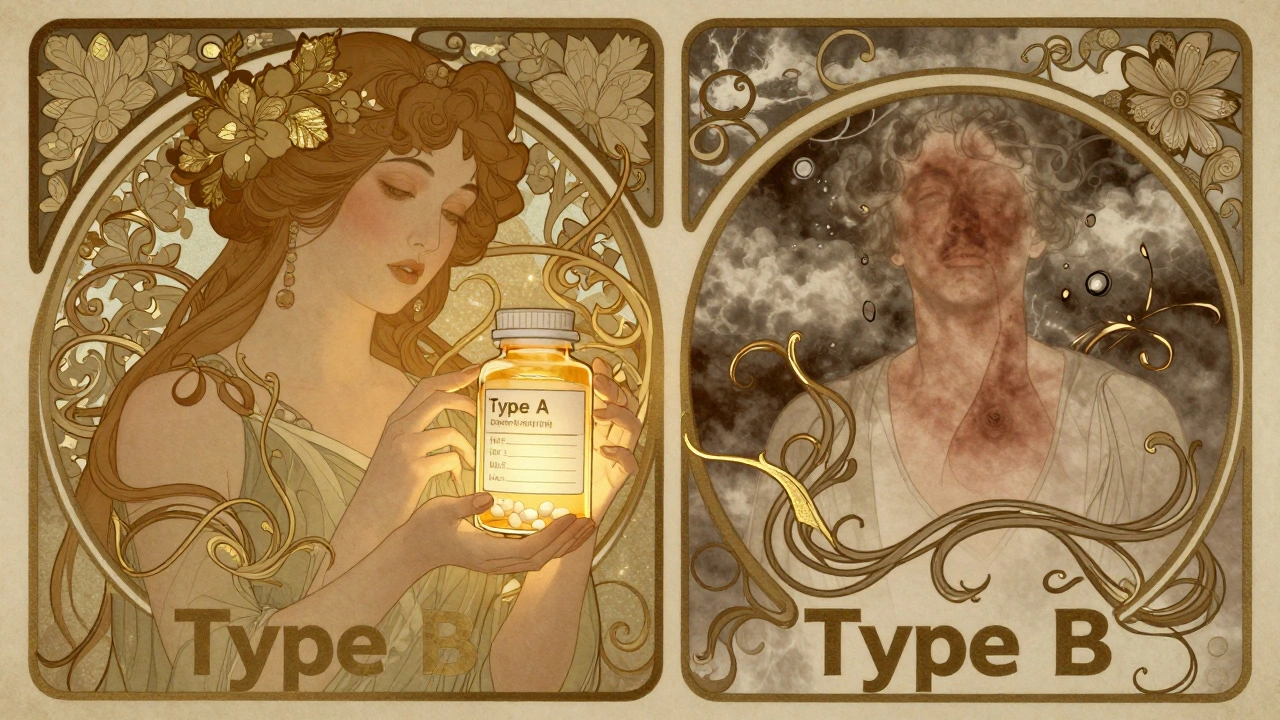
Type A vs Type B Adverse Drug Reactions: What You Need to Know
Caspian Mortensen Dec, 1 2025 9Understand the difference between Type A and Type B adverse drug reactions - why some side effects are predictable and dose-related, while others are rare, dangerous, and genetic. Learn how to recognize them and stay safe.
More Detail