
Generic vs Brand-Name Drugs: Key Differences Explained

Nov, 17 2025
Let’s cut through the noise: if you’re picking up a prescription and see a generic version on the shelf, you’re not getting a lesser drug. You’re getting the same medicine - just cheaper. That’s not marketing spin. It’s science. The generic drugs you pick up at your pharmacy have the same active ingredients, work the same way, and are held to the exact same safety standards as the brand-name version. So why do they cost so much less? And when should you stick with the brand? Let’s break it down.
What Makes a Generic Drug the Same?
Generic drugs aren’t copies. They’re exact replicas of the active ingredient in brand-name medications. The FDA requires that every generic drug contains the same active ingredient, in the same strength, same dosage form (pill, injection, patch, etc.), and same route of administration (oral, topical, etc.) as the original. That means if your doctor prescribes 10 mg of lisinopril, the generic version must deliver exactly 10 mg of lisinopril - no more, no less.
But here’s the catch: the FDA doesn’t just trust the manufacturer’s word. To get approved, a generic drug must prove it’s bioequivalent to the brand-name drug. That means it must enter your bloodstream at the same rate and to the same extent. The FDA requires the amount of drug absorbed to fall between 80% and 125% of the brand-name version. For drugs with a narrow therapeutic index - like warfarin or levothyroxine - that range tightens to 90-111%. This isn’t a loophole. It’s a strict standard.
And yes, the FDA inspects the factories where generics are made. Same rules. Same inspections. Same quality controls. In fact, many brand-name companies actually make their own generic versions under different labels. The difference isn’t in the medicine. It’s in the price tag.
Why Are Generics So Much Cheaper?
Brand-name drugs cost thousands to develop. A single drug can take 10-15 years and over $2 billion to get from lab to pharmacy. That includes years of clinical trials, regulatory paperwork, marketing campaigns, and patent protection. When the patent runs out - usually after 20 years from filing - other companies can step in and make the same drug without repeating those expensive steps.
Generic manufacturers only need to prove bioequivalence. That cuts development time to 2-3 years and slashes costs by 80-85%. That’s why a 30-day supply of brand-name Lipitor might cost $200 out-of-pocket, while the generic atorvastatin runs $12. According to University Hospitals’ 2022 analysis, the average savings per prescription is $313. Over a year, that adds up to thousands.
And the numbers don’t lie. In the U.S., generics make up 90% of all prescriptions filled. But they account for only 25% of total drug spending. Brand-name drugs, which make up just 10% of prescriptions, take up 75% of the money spent. That’s the power of generics: they keep the system from collapsing under its own weight.
What’s Different About Generics?
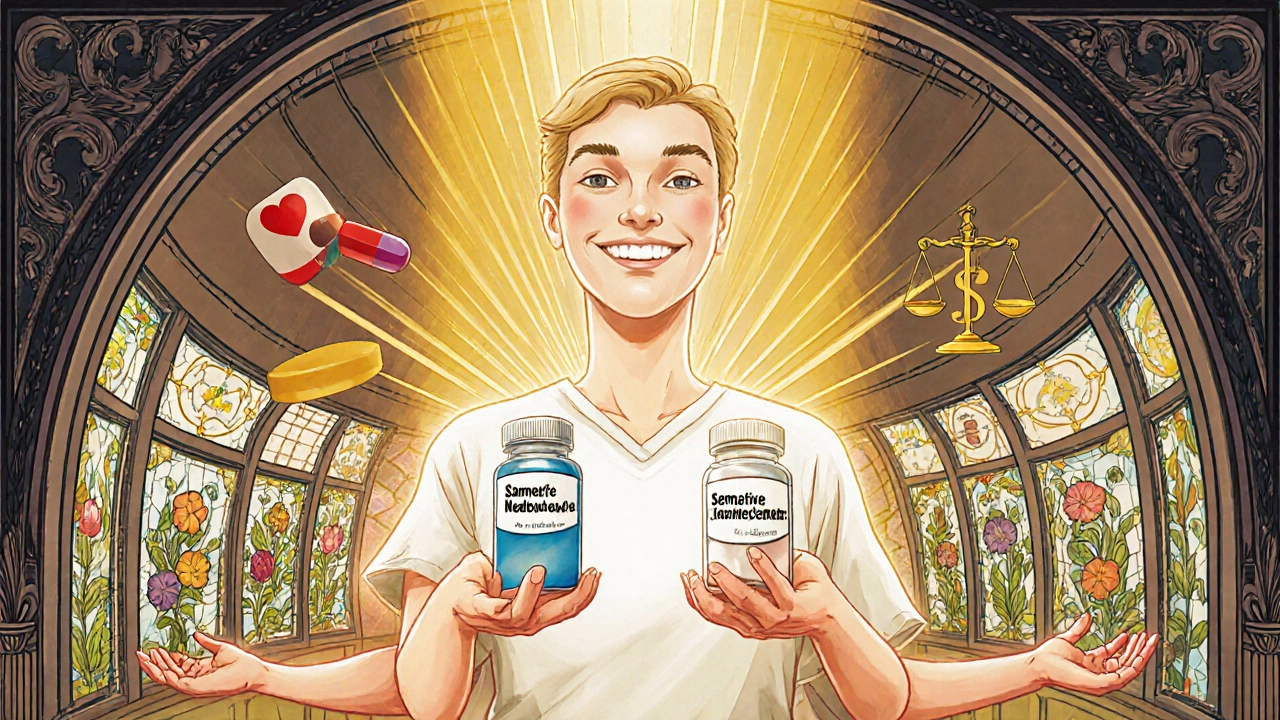
Here’s where people get confused. Generics can look different. They might be a different color, shape, or size. They might have different fillers, dyes, or flavors. Why? Because U.S. trademark laws say a generic can’t look exactly like the brand-name version. That’s why your blue, diamond-shaped pill from the brand might be a white, oval pill from the generic - same medicine, different packaging.
These differences in inactive ingredients are usually harmless. But for a small number of people, they can cause issues. If you’re allergic to a dye or filler in one version, you might react differently to another. That’s why it’s smart to note what version you’re taking - brand or generic - and keep a record. If you notice a change in side effects after switching, talk to your pharmacist or doctor.
Also, generics don’t always come in the same packaging. Brand-name drugs often come in blister packs or child-resistant bottles with fancy labeling. Generics? Usually in simple bottles. That doesn’t mean they’re less safe. It just means they’re built for function, not marketing.
When Should You Stick With the Brand?
Most of the time, generics are the smart choice. But there are exceptions.
First, some drugs just don’t have generics yet. About 30% of brand-name medications are still under patent protection or are too complex to replicate. Think of newer biologics - drugs made from living cells, like Humira or Enbrel. These are hard to copy, so generics (called biosimilars) are limited and expensive.
Second, for drugs with a narrow therapeutic index - where tiny changes in blood levels can cause big problems - some doctors still prefer brand-name versions. Levothyroxine (for hypothyroidism) is a classic example. While a 2019 JAMA study of 38,000 patients found no clinical difference between brand and generic versions, some endocrinologists still recommend sticking with one version to avoid even small fluctuations. If you’re on one and it’s working, don’t switch unless your doctor says so.
Third, some patients report feeling different after switching - even if tests show no difference. This isn’t always a medical issue. Sometimes it’s psychological. But if you genuinely feel worse, or your condition becomes harder to control, speak up. Your doctor can write “dispense as written” on the prescription to block automatic substitution.
What Do Real Patients Say?
Ask people who’ve used both, and the story is clear: most don’t notice a difference.
On Reddit’s r/Pharmacy, over 120 users shared experiences switching from brand to generic for medications like metformin, atorvastatin, and lisinopril. Nearly 90% reported zero change in how they felt or how well the drug worked. One user wrote: “Switched from brand Advair to generic fluticasone/salmeterol and saved $400/month with zero difference in asthma control.”
But not everyone. About 14% of users in that thread reported problems - mostly with seizure meds like lamotrigine (Lamictal). One user shared their mother’s seizures returned after switching to generic. She went back to brand, and it stabilized. That’s rare, but it happens.
Consumer Reports surveyed 1,247 people in 2022. 89% said generics were just as effective. Only 7% reported occasional issues. Pharmacy Times found 92% of patients preferred generics when available - mostly because of cost. The average out-of-pocket cost? $12.50 for generic vs $68.30 for brand with insurance.
How to Use Generics Wisely
Here’s how to make sure you’re getting the most out of generics:
- Ask if a generic is available. Your pharmacist can tell you right away. Don’t assume your doctor knows - they might not check.
- Know the generic name. If your doctor prescribes “Lipitor,” ask if “atorvastatin” is an option. Write it down.
- Stick with one version. Especially for critical meds like thyroid or seizure drugs. Once you find one that works, stay with it unless advised otherwise.
- Check your state’s laws. In 49 states, pharmacists can automatically switch to generic unless the doctor says “dispense as written.” That’s legal. But you can always ask them not to.
- Use tools like GoodRx. Compare prices between brand and generic at your local pharmacy. Sometimes the brand is cheaper with a coupon.
The Bigger Picture
Generics aren’t just a cost-saving trick. They’re a public health win. From 2007 to 2016, generic drugs saved the U.S. healthcare system $1.67 trillion. Since 2017, that’s been $253 billion a year. Without generics, millions of people couldn’t afford their meds. Diabetics would skip doses. Heart patients would stop taking their pills. The system would buckle.
The FDA is working to speed up approvals. Their GDUFA III plan aims to cut review times for generic applications to 10 months by 2027. More than 450 brand-name drugs will lose patent protection by 2028, opening the door for new generics.
But challenges remain. Complex drugs - like inhalers, topical creams, and injectables - are harder to copy. And some brand-name companies use legal tricks to delay generics, like making tiny changes to extend patents. That’s why the 2022 CREATES Act was passed - to stop brand manufacturers from blocking generic access.
For now, the message is simple: if a generic is available, it’s safe. It’s effective. And it’s the smarter financial choice for almost everyone. The only time to hesitate is when your doctor advises otherwise - and even then, it’s usually about consistency, not superiority.
Are generic drugs as safe as brand-name drugs?
Yes. The FDA requires generic drugs to meet the same strict standards for safety, strength, quality, purity, and performance as brand-name drugs. They’re held to identical manufacturing and testing rules. The FDA inspects the same facilities and monitors both types of drugs equally after they’re on the market.
Why do generics look different from brand-name drugs?
U.S. trademark laws prevent generic drugs from looking exactly like the brand-name version. That means the color, shape, size, or packaging can be different. But the active ingredient - the part that treats your condition - is identical. The differences are only in inactive ingredients like dyes or fillers, which don’t affect how the drug works.
Can I switch from a brand-name drug to a generic safely?
For most medications, yes - and it’s often recommended. For drugs like antibiotics, blood pressure meds, or cholesterol pills, switching to generic is routine and safe. For drugs with a narrow therapeutic index - such as warfarin, levothyroxine, or seizure medications - your doctor may advise sticking with one version to avoid small fluctuations. Always talk to your provider before switching.
Do all brand-name drugs have a generic version?
No. About 30% of brand-name drugs don’t have generics yet. This is usually because they’re still under patent protection, or they’re complex biologics (like Humira) that are hard to copy. Some drugs are also too difficult to manufacture at scale, like certain inhalers or topical creams. But over 450 brand-name drugs are expected to lose patent protection by 2028, which will open the door for new generics.
Will my insurance cover generic drugs?
Yes - and they usually cost much less. Most insurance plans have lower copays for generics. In many cases, the generic version is the only one covered unless your doctor specifically requests the brand. Some plans even require you to try the generic first before approving the brand-name version. Always check your plan’s formulary to see what’s covered and at what cost.
What should I do if I think the generic isn’t working?
Don’t stop taking it. First, check if you switched versions recently - even small changes in inactive ingredients can affect how you feel. Talk to your pharmacist about the specific generic you’re using. Then schedule a visit with your doctor. They can check your blood levels (if applicable) or adjust your dose. In rare cases, going back to the brand-name version may be necessary. But for most people, the issue isn’t the drug - it’s the body adjusting to a new pill shape or filler.


