
Drug Side Effects: What You Need to Know Before Taking Any Medication
When you take a drug side effect, an unintended reaction to a medication that isn’t the intended therapeutic outcome. Also known as medication side effects, it’s not a sign you’re doing something wrong—it’s a normal part of how your body reacts to chemicals designed to change how it works. Almost every pill, injection, or patch you use has the potential to cause something unexpected. Some are mild, like a dry mouth or a little dizziness. Others? They can be serious enough to land you in the hospital.
It’s not just about the drug itself. Your age, what else you’re taking, your liver and kidney function, even your diet can turn a harmless side effect into a big problem. For example, SGLT2 inhibitors, a class of diabetes drugs that help the kidneys remove sugar through urine can cause euglycemic DKA—a dangerous condition where your body starts burning fat for fuel even when your blood sugar isn’t high. Or take SSRIs, common antidepressants that boost serotonin levels: up to 70% of people on them deal with sexual side effects like low libido or trouble reaching orgasm. And first-generation antihistamines, like Benadryl, used for allergies and sleep, can mix dangerously with painkillers, sleep aids, or even alcohol, increasing the risk of falls, confusion, or breathing problems.
Most people don’t realize that side effects aren’t random. They’re predictable. Doctors and pharmacists know which drugs are most likely to cause brain fog, weight gain, nausea, or muscle pain. The problem? You rarely get a full list when you pick up your prescription. That’s why so many people stop taking their meds—not because they don’t work, but because the side effects feel worse than the condition they’re treating. The good news? You don’t have to suffer through them. Sometimes, a simple dose change, switching to a different drug, or adding a helper medication can fix it without losing the benefit.
This collection pulls together real, practical guides on the most common and most dangerous drug side effects you’ll actually encounter. From how metformin messes with your gut to why calcium supplements might raise your heart risk, from the hidden dangers of mixing antihistamines with sedatives to how diabetes drugs can trigger life-threatening ketoacidosis without high blood sugar—you’ll find clear, no-fluff answers here. No jargon. No scare tactics. Just what you need to know to ask the right questions, spot trouble early, and work with your provider to find a safer path forward.
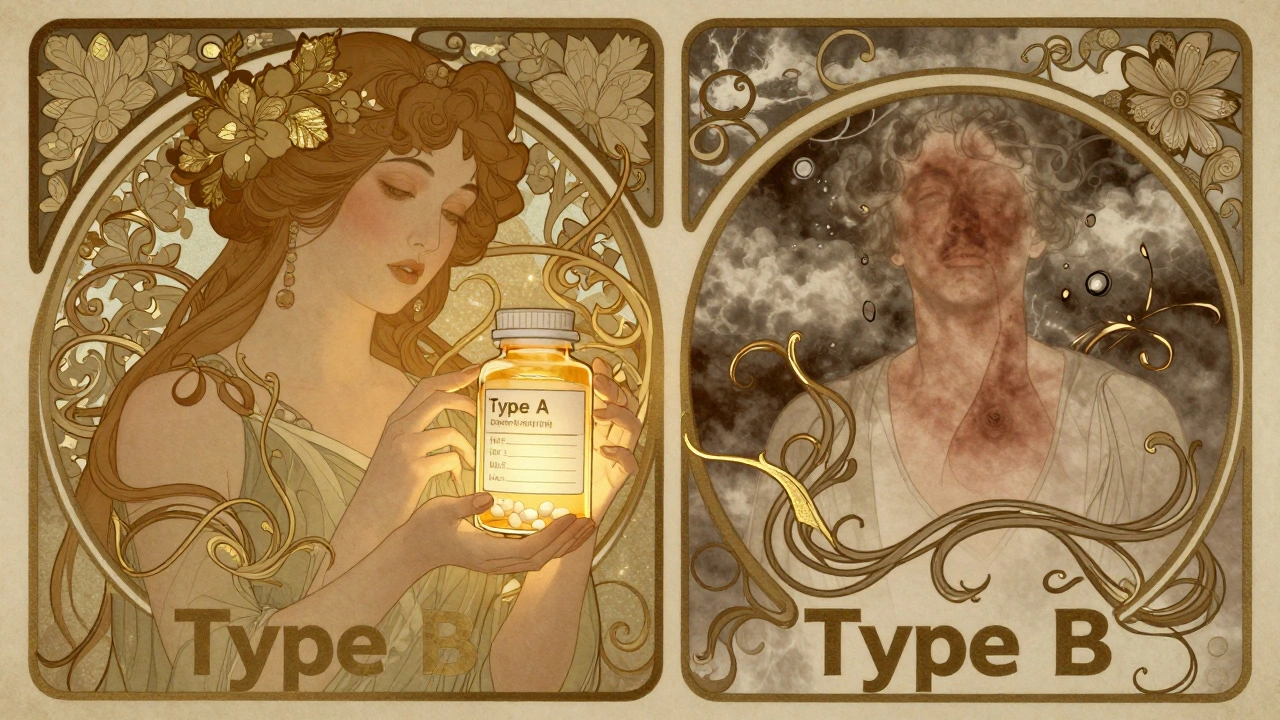
Type A vs Type B Adverse Drug Reactions: What You Need to Know
Caspian Mortensen Dec, 1 2025 9Understand the difference between Type A and Type B adverse drug reactions - why some side effects are predictable and dose-related, while others are rare, dangerous, and genetic. Learn how to recognize them and stay safe.
More Detail
The Impact of Dosulepin on Kidney Function: What to Expect
Caspian Mortensen Nov, 18 2025 9Dosulepin can build up in your system if your kidneys aren't working well, raising risks of heart problems and low sodium. Learn how to monitor kidney function, recognize warning signs, and choose safer alternatives if needed.
More Detail